
Studeničani: 35-year-old dies after being electrocuted while washing his car with a pressure washer
18.09.2026


18.09.2026

18.09.2026

18.09.2026

18.09.2026

18.09.2026
18.09.2026

18.09.2026

17.09.2026

16.09.2026

18.09.2026

18.09.2026

17.09.2026

18.09.2026

18.09.2026

18.09.2026

18.09.2026

17.09.2026

16.09.2026

18.09.2026

18.09.2026

18.09.2026

18.09.2026

17.09.2026

17.09.2026

09.03.2026

27.02.2026

19.02.2026

18.09.2026

17.09.2026

16.09.2026

23.04.2026

23.04.2026

12.04.2026


The state paid out 3.97 billion denars - around 64.4 million euros - on court proceedings arising from labour disputes. Of that sum, 95.36 percent was not paid voluntarily but collected by force, through bailiffs.
These are the findings of a performance audit by the State Audit Office on the effects of labour dispute litigation on the state budget. The data was gathered from 69 institutions represented by the State Attorney's Office, covering the period from 2020 to September 2025.
Half the money is not debt - it is the price of being late
The principal debt is 2.05 billion denars, or 51.61 percent. The remaining 1.92 billion denars - 48.39 percent, over 31 million euros - is default interest, litigation costs and enforcement costs.
Which means that for every two denars the state owed its own employees, it paid almost two more because it did not pay on time. The institutions did not just lose cases - they paid a penalty for ignoring final judgments until a bailiff turned up.
The prison paying a fifth of its budget in interest
Idrizovo prison has it worst. It paid out 154.6 million denars on labour disputes, of which 63.68 percent - over 98 million denars - went on interest and court enforcement costs. According to the auditors, that is around 20 percent of the institution's total approved budget, which directly constrains how it can operate financially.
The Interior Ministry paid out 1.39 billion denars, of which 832 million denars, almost 60 percent, is interest and costs. At the Defence Ministry, 98.8 percent of the 1.83 billion denars paid out went through bailiffs, with interest and enforcement costs of 712.5 million denars.
The one positive exception is the Customs Administration, where payments under judgments are made regularly and voluntarily. So it can be done.
The cause is known and it keeps repeating
The main causes of the disputes, according to the Audit Office: unpaid meal allowance for night work, failure to apply the legal provisions on length of service, and unpaid overtime above the limit of 32 hours a month.
At the Interior and Defence ministries, overtime is paid only up to 32 hours a month, and for the remaining hours time off in lieu is meant to be granted. Because of staff shortages, in practice those days off often are not given. The Finance Ministry's MPIN system has no technical capacity to enter more than 32 hours.
So the limit sits in one piece of software, the consequence is mass lawsuits the institutions lose, and the budget pays the bill. With interest.
Paper registers in 2026
The State Attorney's Office, which represents public bodies in court, still runs its cases by hand, in paper registers, with no electronic system. Because of that, the office had no data on case outcomes, on their value, or on the value of the enforcement orders issued.
Institutions are late responding to lawsuits because post moves slowly between central archives and legal departments. Proceedings before basic courts run from 1 to 33 months instead of the statutory six. Before the appellate courts, not one of 22 analysed appeal cases was resolved within the legal 30-day deadline.
The number of active cases rose from 9,361 in 2021 to 24,556 in 2025.
The mechanism that exists on paper
Alternative dispute resolution is faster and considerably cheaper. Of 59 institutions that submitted complete data, 41 - seventy percent - never used an alternative mechanism at all between 2020 and September 2025.
The National Mediation Council was not made operational within the legal deadline. The Chamber of Mediators has not functioned since February 2024 because mandates expired. The mediators' exam was last held in October 2021.
The government, for its part, reviewed the Attorney's Office annual reports for information only, with no analysis of fiscal risk.
The auditors recommend setting up an effective system for managing labour disputes, improving the legal framework and the record-keeping. The recommendations are correct. The question is who will read them, when for five years nobody has read their own reports.
The latest 10 news from this category

A smaller crop after frost, higher daily rates for pickers, two years of unpaid subsidies - and a price cut...
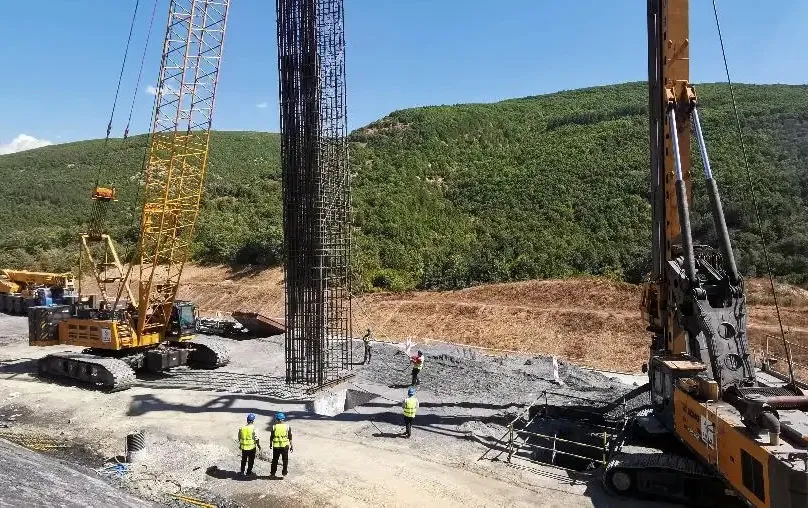
Reinforcement cages weighing 30 tonnes each, 130-tonne machines, and black graphite soil that turns to slurry with water. Nobody will...

When a model learns to lie and the same company that caught it decides how much we get to see....
An eight-year-old firm that started out mining crypto has tripled its value in ten months. It did not discover anything...

The German regulator spent years on an investigation to get one screen changed. The question is not whether the rule...

In January it was "excellent news from Brussels". In September the same minister says the dialogue is bearing no serious...

Both claims can be true at the same time - and that is the most uncomfortable part. What is missing...

Dozens of institutions calculate salaries under their own rulebooks, and nobody has the full picture of what the state pays...

Three days to check the most aligned model yet: the evaluators want a law, not an essay from the CEOs.

The price of uranium has jumped 75 percent in five years, and the list of countries that mine it reads...
This site uses cookies - is that okay? Learn more
Be the first to know when Metla launches something new
Leave your email and we will write when there is a new guide or something new on Metla.