


Two Schoolyard Assaults Reported in a Single Day: the Police Promised Measures, the Education System Said Nothing
19.09.2026


19.09.2026
19.09.2026

19.09.2026

19.09.2026
19.09.2026
19.09.2026
19.09.2026
18.09.2026

17.09.2026

19.09.2026

19.09.2026

18.09.2026

19.09.2026

19.09.2026

19.09.2026
19.09.2026
18.09.2026

17.09.2026

19.09.2026

19.09.2026

19.09.2026
19.09.2026

19.09.2026
18.09.2026

09.03.2026

27.02.2026

19.02.2026

19.09.2026

18.09.2026

17.09.2026

23.04.2026

23.04.2026

12.04.2026

An eight-year-old firm that started out mining cryptocurrency on flared natural gas is now worth 30.9 billion dollars. Crusoe announced on Thursday that it had raised 3.9 billion dollars in a Series F round co-led by Atreides Management, Mubadala Capital and Valor Equity Partners. Founders Fund, GIC, Nvidia, Qatar Investment Authority, Radical Ventures and TPG also joined.
The more telling figure is the one from ten months ago. In October the same firm raised 1.38 billion dollars at a valuation of 10 billion. In ten months its value has tripled, and that did not happen because it discovered something new - it happened because everyone building artificial intelligence simultaneously realised they are short of power and space.
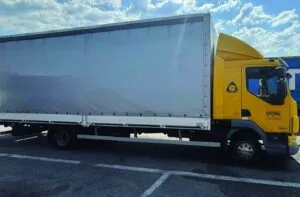
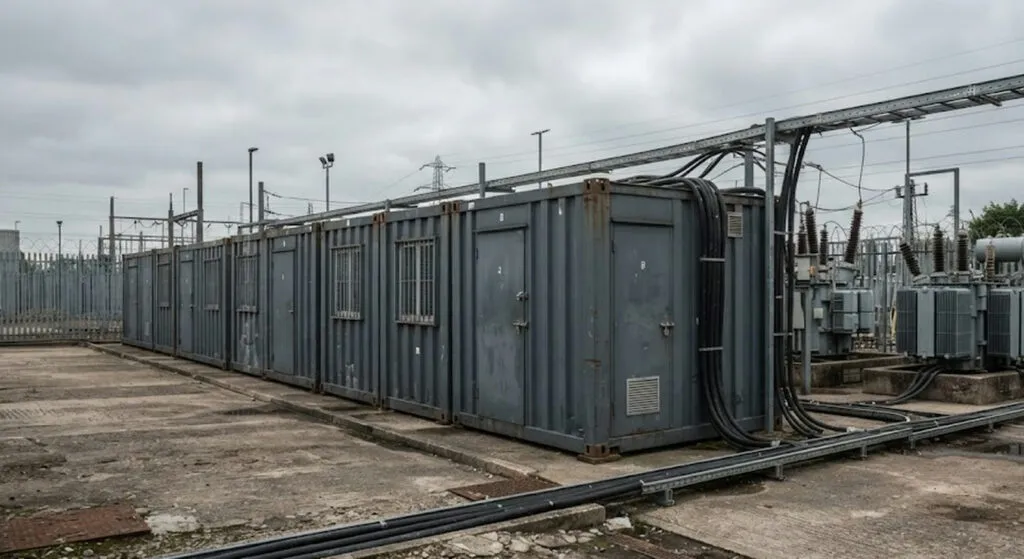
The money goes on two things. The first is the existing data centres, among them the large facility in Abilene, Texas, used by OpenAI. The second is more interesting: modular units called Spark, which the company builds in its own plants, transports by lorry and plugs in wherever there is a strong enough power source. No construction site, no hundreds of workers, no years of permits.
The announcement says this deploys computing power faster. There is a second reason that was not put front and centre - this is how you get around the resistance of people who live next to these complexes. That topic is no longer marginal: seven in ten Americans do not want a data centre in their neighbourhood. A smaller facility, fewer neighbours, fewer questions. The infrastructure does not disappear, it just stops looking like infrastructure.
The business model stands on three legs: renting space to clients who bring their own graphics processors, leasing out its own processors, and selling computing power for running models. According to published reports, the firm recently signed a five-year contract worth 13 billion dollars to supply the trading firm Jane Street with processors and infrastructure. Its clients include Meta, Microsoft and Oracle. Company representatives, again according to published reports, have spoken with Goldman Sachs and Morgan Stanley about a possible stock market listing.
Co-founder and chief executive Chase Lochmiller says in his statement that he believes artificial intelligence brings an era of abundance, but that the road to it means "control over the infrastructure from electrons to tokens". The sentence sounds like a vision. Read soberly, it means one supplier wants to hold both the generation of electricity and the sale of computation - the entire chain, from both ends.
Three new names join the board, among them Cloudflare chief financial officer Thomas Seifert and Redwood Materials founder JB Straubel, who also sits on Tesla's board. Straubel personally invested in Crusoe back in 2021.
In the whole published list of investors and clients there is not a single European name. The capital comes from America and the Gulf, the plants are in Texas, and the decision about where the next transport module stops is made by a firm that answers to no European regulator. When infrastructure becomes mobile, the question is no longer who builds it - but who even has the right to say where it may plug in.
The latest 10 news from this category

Sold for two billion, blocked by the state, bought back by its own investors - and now worth twice as...
The price of uranium has jumped 75 percent in five years, and the list of countries that mine it reads...
Exein raised 270 million dollars and its valuation jumped thirtyfold in two years. The European regulation coming into force in...
A startup valued at 94 million dollars changed hands, and both sides said openly what was being bought - not...
A technology sold for decades as the answer to the climate is now taking money from the defence industry. The...
The board voted, the founder kicked the administrators out of Slack and held out for three days. What does a...

Three months ago the company raised 60 million. Now it is worth almost ten times that, and its product is...

After Ohridska Banka, Sparkasse has gone after a second one. The approvals come from Podgorica, Belgrade and Frankfurt. The market...

They had offers and visas to stay in the US. They went back to Munich because the numbers worked better...

A signed term sheet in venture capital is treated as a word of honour. When the buyer offers sixty-seven years...
This site uses cookies - is that okay? Learn more
Be the first to know when Metla launches something new
Leave your email and we will write when there is a new guide or something new on Metla.
