
"Being careful" is Macedonia's most-used contraceptive: 43.9% of couples, against 14% using a modern method
28.09.2026


28.09.2026

28.09.2026

28.09.2026

28.09.2026
28.09.2026

28.09.2026

28.09.2026

27.09.2026

27.09.2026

28.09.2026

28.09.2026

27.09.2026

28.09.2026
28.09.2026

28.09.2026

28.09.2026

27.09.2026

26.09.2026

28.09.2026

28.09.2026

28.09.2026

09.03.2026

27.02.2026

19.02.2026

28.09.2026

27.09.2026

27.09.2026

23.04.2026

23.04.2026

12.04.2026

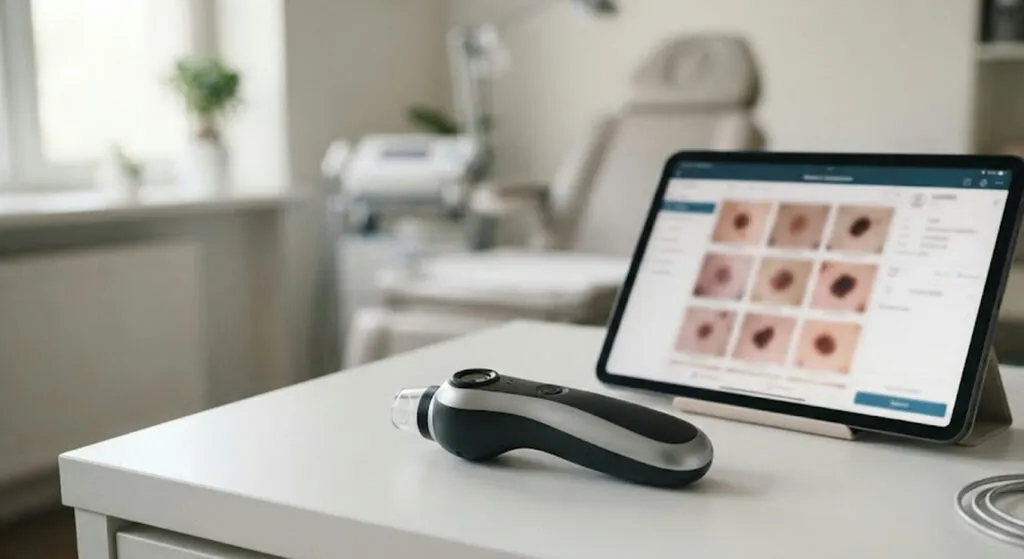
A mole that doesn't look suspicious today can become important if, compared with a photo from a year ago, it turns out to have changed. That's the basis of digital dermoscopy - an examination that creates a photographic map of the skin to see whether new moles have appeared or whether any of the old ones have changed shape, size or colour.
Early detection is key. In Spain alone, according to estimates from the Spanish Society of Medical Oncology, more than 8,000 melanomas will be diagnosed this year. But dermatologist José Luis Ramírez Bellver of the IMR clinic is clear: photographing every mole every year isn't necessary for everyone. The check is meant for people at higher risk. For everyone else, the chance that monitoring will catch a melanoma that would otherwise have been missed is much smaller.
How it works
The examination combines general photos, used to build a map of the body, with magnified images of specific moles taken with a dermatoscope. All of them are kept for comparison at the next check. "If I have an image of all your moles from a year ago and you come back the next year, there might be one that wouldn't have caught my attention without the earlier image," Ramírez Bellver explains. The comparison can show that a mole has changed and help the specialist decide whether to watch it more closely or remove it.
The technology spots differences, but it doesn't make a diagnosis on its own. The machine might flag a hair as a lesion, or highlight a seborrhoeic keratosis - a benign growth that sometimes looks worrying. "The machine detects changes, and the dermatologist has to see whether they matter," the doctor says. Not every change is alarming either: new moles appear over the years and old ones change. The skill is in separating normal evolution from a change that needs investigating.
Melanoma doesn't always start from an old mole
A review published by the US National Cancer Institute found that around 71% of the melanomas analysed appeared directly on the skin, while around 29% were linked to an existing mole. That's why a body map isn't just for tracking moles that already draw attention - it also shows whether a new one has appeared, even in places that are hard to see at home, like the back. You don't have to remember what every mole looked like a few months ago. The doctor puts the images side by side and looks for a real difference.
The examination itself
It starts with a manual check: the dermatologist examines the skin and marks the moles they want to look at in more detail. Then general photos of the body are taken from different positions, and finally magnified images of the selected moles. You stay in your underwear, the feet can be photographed too, and the scalp is examined by hand. It's quick and painless and needs no special preparation. If a particular mole worries you, say so at the start. For those who need it, the check is usually repeated once a year, and more often if a specific mole needs monitoring. If the suspicion is clear, the mole is removed straight away; if it's slight, a closer follow-up is scheduled.
Who really needs it
Ramírez Bellver especially recommends it for people with many moles, a personal history of melanoma, or close relatives who have had melanoma. Very fair skin, red hair and long sun exposure, sunburn in childhood and youth, and sunbeds also raise the risk. That doesn't mean everyone with fair skin needs a digital map - the decision is made after assessing the whole picture. If everyone had the check, a lot of low-risk people would be monitored routinely. Melanoma does occur in children but is extremely rare, so monitoring only makes sense with a strong family history or many moles.
Between two checks, IMR's medical director, José María Ricart, recommends the ABCDE rule: see a doctor if a mole is asymmetrical, has irregular borders, several colours, is larger than six millimetres, or has changed. The same goes if it starts to itch, bleed or become inflamed. It's a guide for when to get an opinion, not a way to diagnose melanoma at home.
Not every skin cancer starts as a mole
Basal cell carcinoma looks different. The doctor advises getting checked for a change that looks like a pimple that won't go away, a sore that won't heal, or a spot where a scab falls off and comes back - if it lasts more than two months. This cancer is much more common than melanoma and usually has a better prognosis, but it often appears on the nose, eyelids and ears, where a neglected lesion is hard to reconstruct later. How many of us remember our first beach sunburn - and how many have had our moles checked even once?
The latest 10 news from this category

Златниот вез, ѕвездата на Редот на слонот и сината лента на данската кралица не се модни детали. Секој од нив...

A five-year engagement ended in Athens cathedral, in a dress with over half a million crystals sewn on by hand....
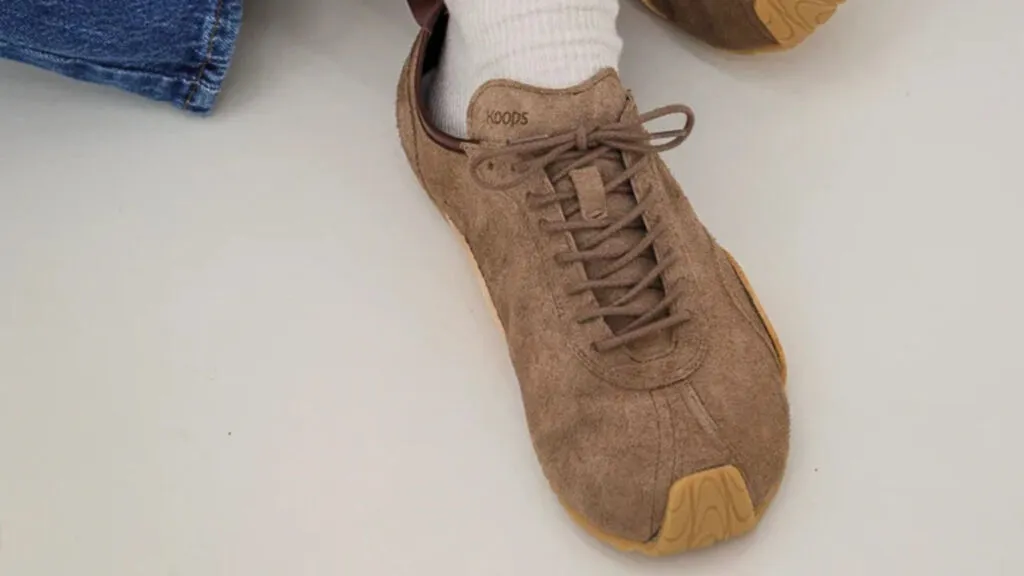
For centuries, shoes showed who didn't have to walk. Today a queen in flat, wide-toed sneakers is raising a question...

The Hollywood star has an alarm for going to bed and keeps her bedroom no warmer than 24 degrees. Skin...

Over 600 guests from Spanish business, politics and media, yet the most talked-about thing was a tiny detail at the...

After six years the Belgian designer leaves for Maison Margiela, signing off with a collection where nothing is what it...

When summer fades, plenty of people reach for a foundation one shade darker. Make-up artists say a tan is built...

Silk crêpe from a bridal atelier with four decades behind it, a waltz and guests from the Spanish aristocracy. The...

An industry that sells something new every season, and one of its biggest fashion houses came out with one garment...

For years we were scared off with blue light. Now even skincare experts say eight hours in front of a...
This site uses cookies - is that okay? Learn more
Be the first to know when Metla launches something new
Leave your email and we will write when there is a new guide or something new on Metla.