
НАУЧНИЦИТЕ ОТКРИЈА: ТАЈНАТА НА ПОБАВНОТО СТАРЕЕЊЕ МОЖЕ ДА СЕ КРИЕ ВО НАШИТЕ ЦРЕВА!
27.10.2026


27.10.2026

27.10.2026

27.10.2026

27.10.2026
27.10.2026

27.10.2026

27.10.2026

27.10.2026

26.10.2026

27.10.2026

27.10.2026

26.10.2026

27.10.2026

27.10.2026

27.10.2026

27.10.2026

26.10.2026

25.10.2026

27.10.2026

27.10.2026

27.10.2026

27.10.2026

26.10.2026
26.10.2026
27.10.2026
26.10.2026

24.10.2026

23.04.2026

23.04.2026

12.04.2026

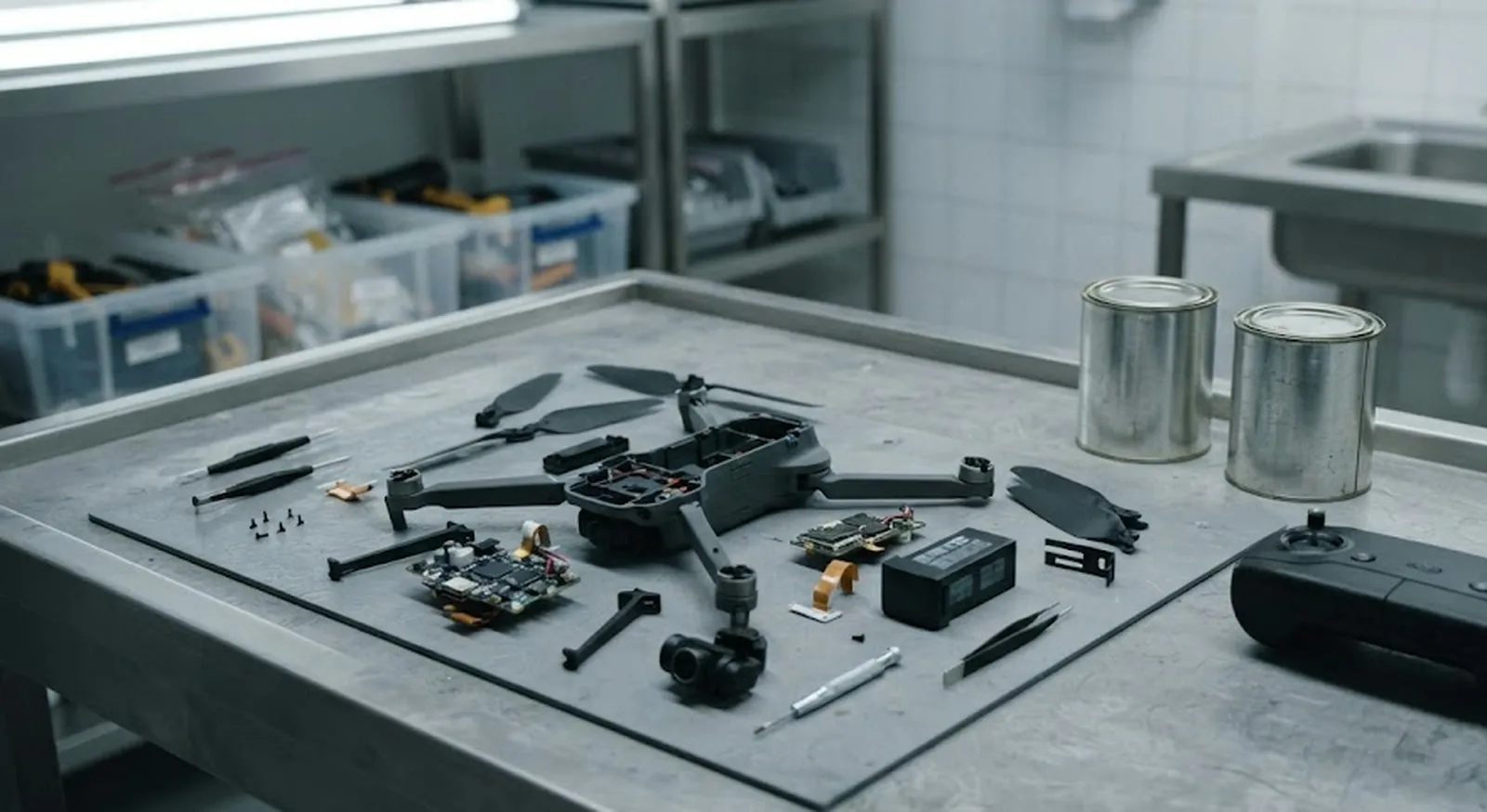
Two people were arrested on the Serbian-Hungarian border on 11 June. On them: drone parts, remote control devices and two tins packed with explosives. At the time it looked like a local case. Now German investigators say the way those devices were built almost exactly matches what they found at the airport in Leipzig.
In both cases the explosive was placed in tins and attached to an aircraft. That is not a universal solution anyone would arrive at on their own - it is the signature of someone who has already done the same thing. The security services of three countries are now working on that detail: Germany, Serbia and Poland.
What happened in Leipzig
On 4 August, at one of Europe's largest cargo airports, a drone carrying explosives was found beside Ukrainian cargo planes. Investigators believe there was more than one - three drones or their parts have been discovered so far. DNA was found on the devices, inside the drone and on the antenna, and that DNA produced matches in Lithuanian and Finnish databases.
One of those arrested at the border is a Serbian citizen, the other holds dual Serbian-Russian citizenship. According to what has been published, one of them is also linked to an arson attack in July 2024 at a builders' merchant in Łódź, Poland.
Germany has already named the culprit
Interior minister Alexander Dobrindt openly accused Russia on 1 September, saying the operations match "the known patterns of Russian hybrid operations in Europe". Moscow categorically denies it. That is routine by now - accusation, denial, silence, next incident.
What is new is the geography. Until now the hybrid war story read like something happening in the Baltics, in Poland, in Germany. Now the threads lead to a border point between Serbia and Hungary, and that is three hundred kilometres from Skopje.
Here is the part that concerns us
For decades the Balkans has sold itself as a transit zone - a place everything passes through and nobody asks too much. That works while the goods are goods. When the goods become drones carrying explosives, the transit zone stops being neutral and becomes part of somebody's operation.
And then the question is not whether somebody planned something here, but whether we have any capacity to notice it at all. The two at the border were arrested - that is good. But how many similar shipments passed unnoticed, through how many crossings, and who is keeping that count?
Until now the region learned its place in other people's conflicts after that place had already been assigned to it. This time the accusation points at Moscow, the arrest happened in Serbia, and the evidence is in Germany - and nobody asked whether we want to be on that map.
The latest 10 news from this category

Two Belarusians arrested in Germany, a European arrest warrant for a Ukrainian. Hybrid war has no front line - it...
The ceasefire took effect at 3 a.m. A few minutes later, Russian ballistic missiles were flying towards Kyiv. That's what...

Trump says Zelensky is a harder partner than Putin. Behind the scenes, American intelligence is sending Kyiv strike data and...

One dead, three missing, and no official cause. Before it, in October alone, drones attacked at least seven cargo ships...

Security guarantees and ten years of funding for the army - that's Kyiv's price. Putin, meanwhile, doesn't want a short-lived...

Seven sailors went missing after a drone attack on a tanker off the Romanian coast, and the union says there's...

Ukraine has revealed details of the secret offensive near Lyman: 277 square kilometres and 16 villages, but also more than...

An empty tanker, a distress call at seven in the morning and seven missing, among them a Croatian officer. Off...

Kyiv is ready to freeze the war on the current line, but not to abandon positions it spent years preparing....

Storing dangerous pathogens doesn't by itself prove biological weapons. But at the UN, "the documents show" is often enough for...
This site uses cookies - is that okay? Learn more
Be the first to know when Metla launches something new
Leave your email and we will write when there is a new guide or something new on Metla.