

They Rode In on Scooters, Torched the Shops and Left: The Fire in Shuto Orizari Burned for Three Hours, Setting It Took Fifty Seconds
13.09.2026


13.09.2026

13.09.2026

13.09.2026

13.09.2026

13.09.2026

13.09.2026
13.09.2026

12.09.2026

11.09.2026

13.09.2026
13.09.2026

12.09.2026

13.09.2026

13.09.2026

13.09.2026

13.09.2026

12.09.2026

11.09.2026

13.09.2026

13.09.2026

13.09.2026
13.09.2026

13.09.2026

12.09.2026

09.03.2026

27.02.2026

19.02.2026

13.09.2026

12.09.2026

11.09.2026

23.04.2026

23.04.2026

12.04.2026

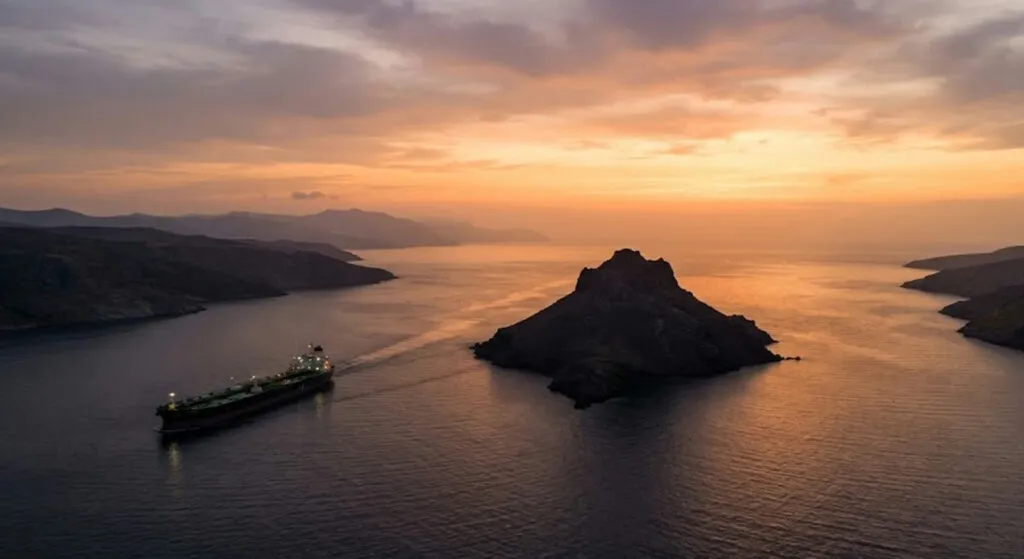
One barren volcanic rock in the middle of the sea, roughly the size of a Skopje neighbourhood, changed the arithmetic of the world oil market on Thursday. The Houthis, the Iran-backed Yemeni rebels, seized the island of Mayun in the Bab el-Mandeb strait - their largest territorial gain in several years. A day earlier the Saudi East-West pipeline was hit by drones, and Riyadh shut it down.
The price of crude oil this week jumped back above 100 dollars a barrel. That is not some analyst's speculation - that is the number being traded on as you read this.
Drones launched from Iraq, with Saudi Arabia as the target
The Saudi energy ministry described the pipeline shutdown with the textbook phrase "a precautionary measure". The foreign ministry was more specific: the drones were launched from Iraq. And here comes the part worth reading twice - the kingdom announced it would not strike back, in order to give the Iraqi government "the opportunity to take the necessary measures".
Iraqi prime minister Ali al-Zaidi, who is also commander-in-chief of the army, ordered an investigation into the operations command in Maysan province and replaced its commander, after authorities established the attacks had come from exactly there. As a precaution, Iraq also closed the Shalamcheh crossing on the border with Iran.
So: a state that suffers an attack does not retaliate, and the state from whose territory the attack was launched replaced one commander and closed one border crossing. How many "accountability investigations" like that have we already watched in regions where nobody wants to say the truth out loud?
Why one rock weighs more than an entire army
Mayun, also known as Perim, is a small, barren volcanic island in a strait 28 kilometres wide. The seizure was confirmed by a senior military official of the internationally recognised Yemeni government and by a Houthi representative, both on condition of anonymity as they were not authorised to speak to reporters.
Geography is everything here. Saudi Arabia, the world's largest oil exporter, had increasingly relied on the Red Sea as an alternative route to the Strait of Hormuz, where Iran attacks ships. By early June it had more than doubled exports through the port at the end of the pipeline - to over five million barrels a day, according to International Energy Agency data. Now that alternative, too, has a rock flying a hostile flag at its entrance.
Traffic through Bab el-Mandeb is down by around 60 percent since the Houthis began attacking ships there in late 2023. This year it had been recovering - and the new threats have restricted it again, according to Lloyd's List Intelligence.
Every new detour is longer and more expensive
Riyadh now has to find a third option: sending oil north of the Red Sea toward the Mediterranean, either through the Suez Canal or by pipeline across Egypt. For buyers in Asia that is a considerably longer journey. And the Houthis have already threatened that route too - in late August they attacked a Saudi vessel in the northern Red Sea.
The Houthis' message is almost comic in its calculation: shipping is "safe for all companies except Saudi vessels". In other words, world trade may pass - but only if it pays by looking the other way. The Houthis threaten "escalation of the escalation", and the markets read them as unpredictable, which is the most expensive thing a trader can hear.
Not a single plane took off
The most interesting detail in this whole story is what did not happen. A senior military official of the Yemeni government admitted he was taken aback that the Saudi air force made no attempt at all to prevent the capture of Mokha - a town some 80 kilometres from the strait. His assessment is that Saudi Arabia did not get a green light from Washington for a broad air campaign. He also blamed the "lack of coordination" between the Yemeni army and several allied militias, which handed the Houthis an "invaluable opportunity".
Saudi Arabia did nonetheless strike the airport infrastructure in Mokha after the town fell on Thursday, a Houthi-linked television station reported. There are no reports of damage or casualties.
Iran is already putting Yemen on the negotiating table
The Iranian government called for an end to the Saudi blockade of Houthi-controlled areas and for a return to negotiations. But the real signal came from elsewhere: a spokesman for the Iranian Revolutionary Guard on Wednesday demanded that Yemen be included in any eventual agreement with the United States. It is the first time that party has been explicitly mentioned in the context of the talks.
Translated: the rock in the middle of the strait is not a war trophy, it is a bargaining chip. When a supposedly local militia suddenly becomes a line item in a deal between Tehran and Washington, the question "whose war is this" gets a very uncomfortable answer.
Saudi Arabia maintains it has always offered "opportunities for negotiation" and that it has the right to self-defence. Iranian foreign minister Abbas Araghchi posted on social media that on Thursday he spoke with his Saudi counterpart about diplomatic efforts to "restore stability".
The escalation threatens to break the fragile truce that has largely halted Yemen's civil war since 2022. The war that began in 2014 was never news anyone read in the Balkans - it was something distant, in the poorest Arab country. Now that war is being fought across 28 kilometres of seawater through which a large share of the oil that moves the world passes. When the flows change, nobody asks who started it all.
The latest 10 news from this category
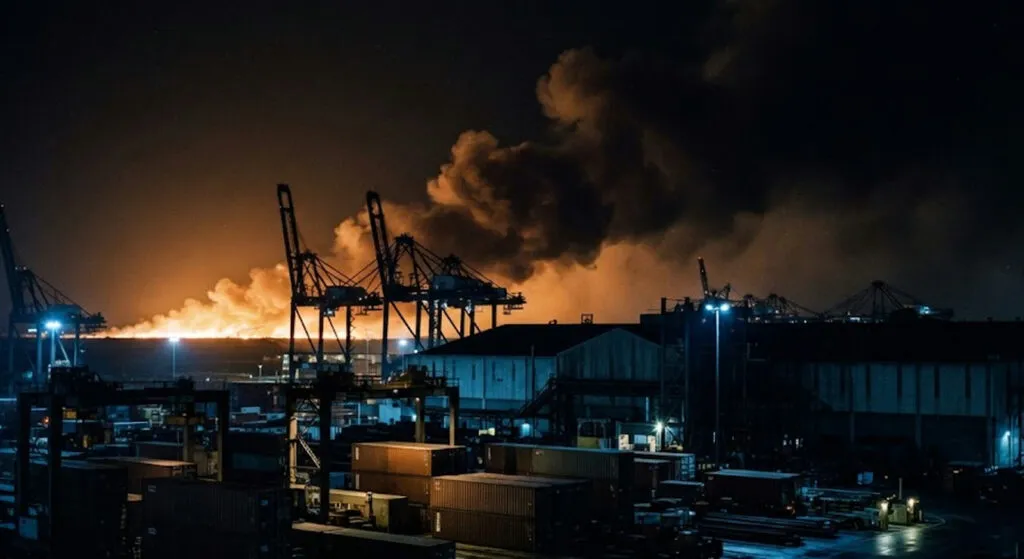
Hostomel, Odesa, Kryvyi Rih - targets that are not the front line but the supply chain. A war against the...

We don't want war with Europe, but here is exactly how that war would start. He said both sentences in...

When an army recalls its special forces with a 12-hour deadline, that is not a rota but a signal. The...

Port infrastructure in Makhachkala and the theatre building caught fire, the governor said. Moscow claims it shot down 448 drones...
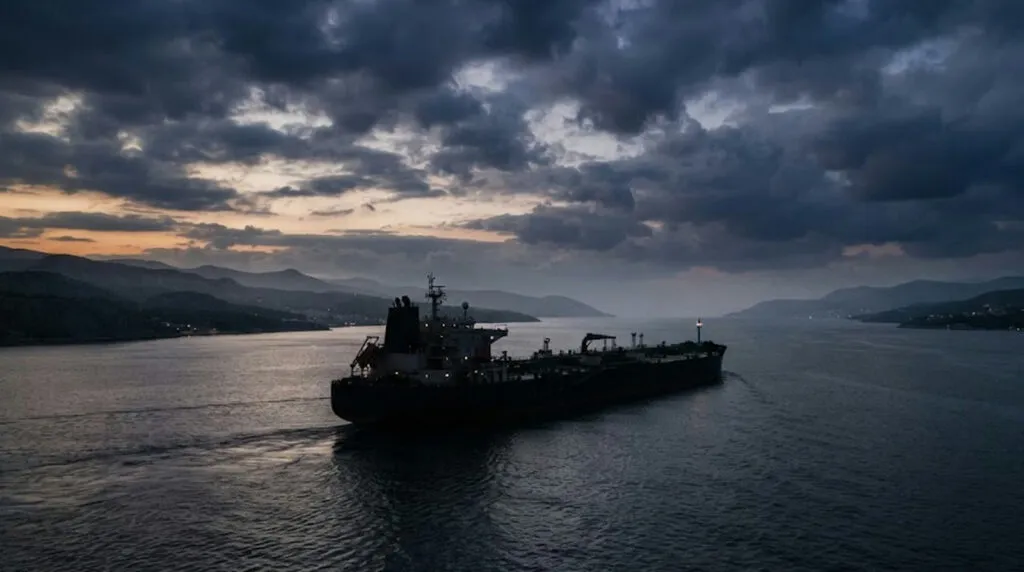
Tehran says it hit around ten ships, Washington says it destroyed five Iranian tankers and that its own vessel is...
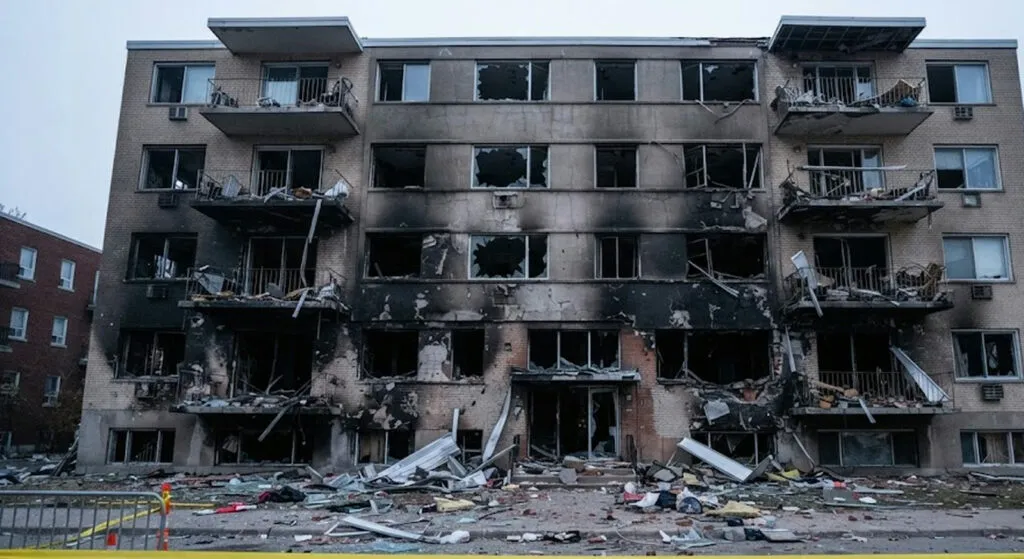
Residential buildings, a kindergarten and an Orthodox church damaged in Russia's largest Black Sea port. Four dead and 29 injured...
When there are no air-to-air missiles left, what remains is a 20mm cannon - and that means the pilot has...
In public - constructive talks. In private, according to an MP in the Verkhovna Rada, the envoys arrived with tougher...
Witkoff and Kushner spent three hours in the Kremlin and came out with an agreement in principle. November was not...

At two in the morning phones in Tulcea received a message telling people to go down to the cellar. When...
This site uses cookies - is that okay? Learn more
Be the first to know when Metla launches something new
Leave your email and we will write when there is a new guide or something new on Metla.
