The Wind That Hit Us Had the Strength of a Hurricane: 130 km/h in Skopje, and the City Fell at the First Blow
22.07.2026


22.07.2026
22.07.2026
22.07.2026
22.07.2026
22.07.2026
22.07.2026

22.07.2026

22.07.2026

21.07.2026

22.07.2026

21.07.2026

20.07.2026

22.07.2026

22.07.2026

22.07.2026

22.07.2026

22.07.2026

21.07.2026

09.03.2026

27.02.2026

19.02.2026
22.07.2026
21.07.2026

20.07.2026

23.04.2026

23.04.2026

12.04.2026

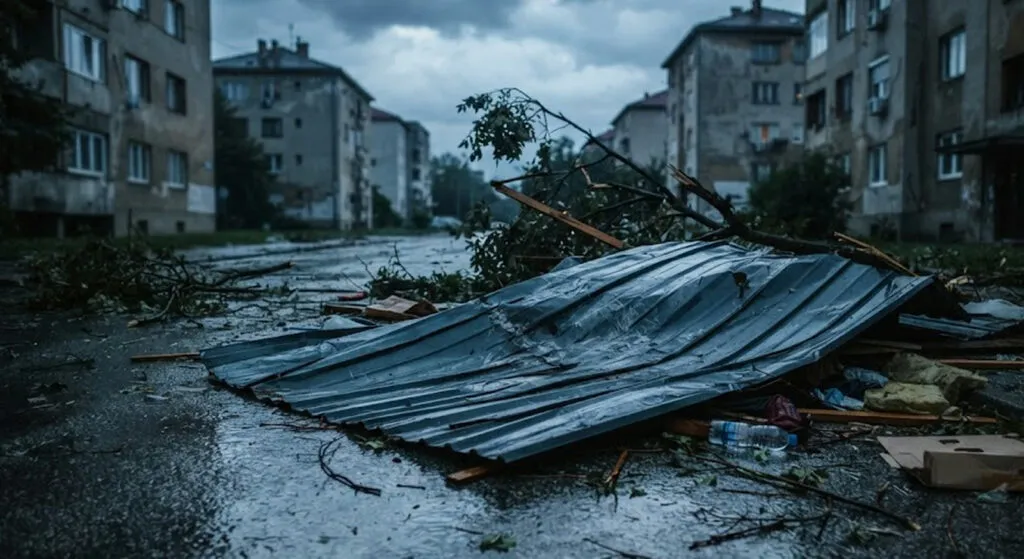
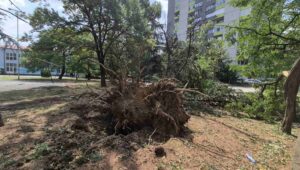
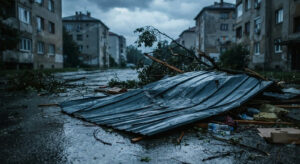
The state weather service said out loud what anyone who watched roofs fly yesterday already knew in their gut: the wind that hit us had the force of a hurricane - 134 kilometres an hour in Štip, 130 in Skopje. Over 9,000 calls to 112 in a few hours, dozens injured, hundreds of trees down. The service says winds like this happen "very rarely" in this territory - but the rarity of the phenomenon is no excuse for infrastructure that falls at the first blow.
The blow didn't stay abstract. The wind tore the roof off the hospital in Štip, forcing orthopaedic patients to be moved because of leaks - and in Probištip the burden shifted straight onto citizens, with a deadline and a whole folder of paperwork to report damage. Near Ist Gate, a sixty-metre flagpole snapped like a matchstick, and the "Boris Trajkovski" sports centre shut its pool in the middle of summer after the wind wrecked its roof. Three different structures, the same weakness: public infrastructure not built for winds that are becoming ever more frequent.
The most ironic story comes from Karpoš. Part of a building's roof structure collapsed during the storm - just three days after the court ruled that the contractor who built that very roof had worked properly and bore no responsibility. The residents had fought a court battle for years, hired experts, and lost; the court even ordered them to pay costs. Three days later, the roof they had warned about fell onto parked cars. Luckily no one was hurt, but the question one resident raised echoes far beyond Karpoš: who does the institution trust - the residents who warn for years, or the construction firm with lawyers?
The same "it's safe" logic that didn't hold up runs through Gostivar too. Now it's finally clear what poisoned the water: three illegal pumps drawing water from the Vardar straight into the distribution system. Three managers from "Komunalec" have been detained, but while the police make arrests, the health minister is already building a wall around his own institution, shifting responsibility onto the utility. And just three days before the contamination was discovered, the Centre for Public Health reported that the water was safe to drink. That's why Gostivar is not an incident but a symptom: it's not enough to find who installed the pumps, but who was supposed to spot the risk and didn't.
The story of homework left undone is nothing new for the waters. UNESCO is deciding on Ohrid with a last yellow card before the red - illegal construction, an unfinished collector and platforms in the lake itself that have stood for decades. And Prespa got through this summer with a "safe for swimming" status borrowed from one year to the next, while the waste still ends up in septic pits. Three lakes, the same disease: unfinished infrastructure.
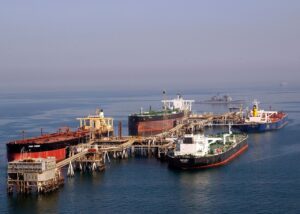
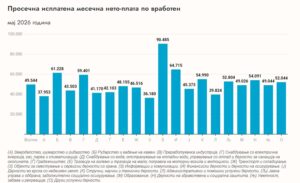
On the political front, the government adopted the supplementary budget rebalance with 46 billion denars for capital projects, with money towards welfare, agriculture and victims of violence, and a deficit of 4.1 percent of GDP. It's hard to be against the line items - but a rebalance is a document of intentions, not results, and the real test isn't how much was promised in July but how much is delivered in December. Meanwhile, the average wage of 49,544 denars remains a figure few actually live, and oil above 94 dollars on US-Iran tensions is one more cost that household budgets feel first.
And while the damage is counted at home, on the European road Filipče called the stall towards the EU a "coup", recalling that four countries advanced on the same day while Macedonia stood still. When neighbours overtake us, the question of who's to blame is no longer rhetorical - the only chapter left open is the one on accountability. The same theme as the roof, the water and the lakes.
From the crime beat, three arrests in one day for smuggling migrants in the south: vehicles with fake plates, foreign nationals crammed inside, drivers fleeing the police. What the police caught is the part that surfaced - the fake plates and ready-made documents aren't amateur improvisation but the routine of a network. The question of who stands above the drivers who fall first stays unanswered.
To close, one bright number in the middle of a heavy day: next year Macedonia hosts the youth world handball championship, after Hungary waited 32 years for its title and Slovenia took bronze. And at home, Vardar is already revving its engines for a new European season. The thread of the day - an institution that promised but has yet to answer - holds for the heavier part of the day; sport, thankfully, defends itself.
The latest 10 news from this category
A day when almost every story leads to the same point - an institution that exists but doesn't work. The...
A day when the institutions had the reports but not the answers: coffee-coloured water in Gostivar, Ohrid on the edge...
A day when the institutions only wake up after the damage is already done: the raid arrests down the ladder,...
A day where the citizen paid - with their health, a flooded house, a wage that doesn't stretch - while...
Five months from new asphalt to a landslide at Teferich, three weeks from reconstruction to a flood on Debarska. The...
The day the system woke up late: the electoral reform collapsed exactly where it protects the biggest parties, police seize...
A day when institutions were busy with everything except the job they exist to do: sessions over the agenda instead...
A day when the institutions knew everything, yet no one took responsibility: a reported abuser left to reach for a...
A day when everyone promised results and few actually delivered any. The government reshuffles itself, the Constitutional Court asks to...
A day when institutions act late, halfway, or only after the damage is done: an election code stuck three days...
This site uses cookies - is that okay? Learn more