
Studeničani: 35-year-old dies after being electrocuted while washing his car with a pressure washer
18.09.2026


18.09.2026
18.09.2026

18.09.2026
18.09.2026

18.09.2026
18.09.2026
18.09.2026

17.09.2026

16.09.2026
18.09.2026

18.09.2026

17.09.2026

18.09.2026
18.09.2026

18.09.2026

18.09.2026

17.09.2026

16.09.2026

18.09.2026

18.09.2026
18.09.2026

18.09.2026

17.09.2026

17.09.2026

09.03.2026

27.02.2026

19.02.2026

18.09.2026
17.09.2026

16.09.2026

23.04.2026

23.04.2026

12.04.2026

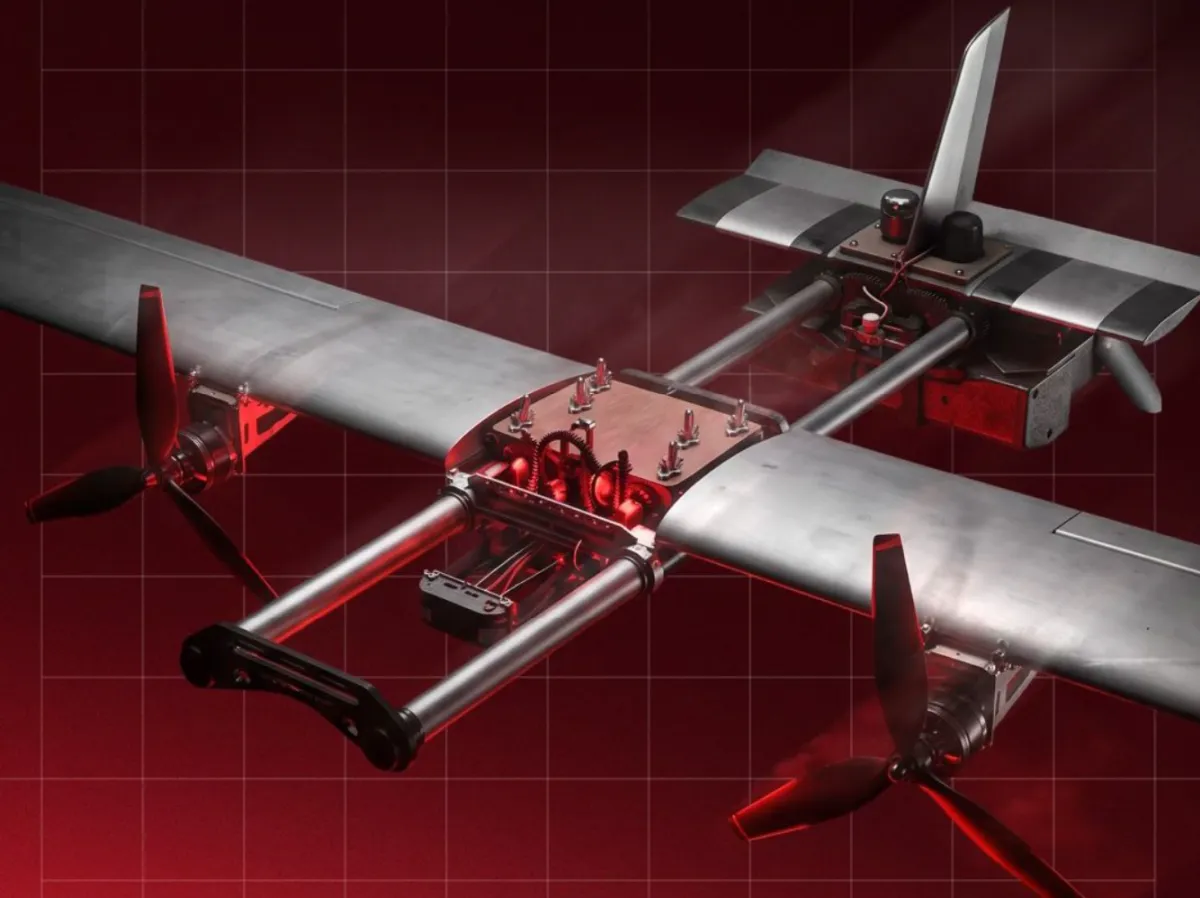
The Ukrainian company General Cherry has unveiled its latest drone - the Khmarinka. Price around 1,000 dollars. Range up to 50 kilometres. Flight time up to 60 minutes. Top speed 140 km/h. Payload 5 to 8 kilos of explosive. Wingspan 196 centimetres. To anyone outside the industry these numbers say little - but to military analysts they say one thing: war is no longer expensive.
The Khmarinka is inspired by the Russian „Molnia" drone, which Ukrainian forces have got to know on the battlefield. That's one of the interesting aspects of this war - both sides keep copying each other. The Russians have Iran and China for the engineering. The Ukrainians have Western technology plus their own improvisation. And every season a new model arrives, cheaper than the last but more effective in the field.
The comparison with classic military hardware is brutal. One American Hellfire missile costs 150,000 dollars, and you need a helicopter or a Reaper drone to deliver it. The Khmarinka costs 1,000 dollars and arrives by itself. For the price of one Hellfire you can buy 150 Khmarinkas. Even if only 10% of them hit their target, it's still more cost-effective than the traditional option. Not in every mission, but in many.
The promise Cherry is making - the first 150 drones will be delivered free of charge to Ukraine's defence forces. That's a standard playbook in Ukraine's new drone industry. The first serial prototype for the front - free. It's both field-testing and a marketing campaign. If the drone works, the next hundreds and thousands are sold to the Ukrainian army and foreign allies. If it doesn't - it goes to scrap and a new model is built.
What's changing in these years isn't just the price. Who builds the drones is changing too. Giant defence firms like Lockheed Martin or Raytheon can't find a way to build a combat system for 1,000 dollars - their structure makes it impossible. Smaller startups, garage labs and engineering teams of 20 people are now writing the rules of the new industry. And Ukraine's example shows it works.
For the Balkans, again, a simple question. How many years do we need to see a similar drone? We have engineers. We have universities. We have defence needs. What we lack is political will and industrial infrastructure. Bulgaria is taking some steps. Croatia has its own startups. Serbia is thinking about it. Macedonia - almost nothing. And every year we keep thinking about it, the technology advances, the prices drop, and the market fills up with others ahead of us. The question is when we will decide - or whether we will decide far too late?
The latest 10 news from this category
The bill passed with 262 votes, and the key to it has been handed to a man who has already...
Ukraine adapts in weeks, the Alliance in decades. Europe is paying for Patriot systems from 1991 and is only now...
Missiles and drones on the Ukrainian capital, damaged water mains and residential buildings. The same night, Ukrainian drones set the...
Trump hopes the war is ending and is preparing to gather the Gulf leaders. Oil prices have jumped, and the...
Ukraine says when, where and which unit did it. Russia's defence ministry has not a single sentence about the circumstances....
Norway's prime minister talks about a plane a drone "almost hit". Moldova, the only party holding the figures, reported that...
Ukraine was shooting down nine out of ten of the old drones. Then Russia changed the drone - and in...
It was shot down a few minutes after midnight, and all of Vilnius got a warning on their phones. Two...
The entire story comes from one side, and the headlines turn it into a turning point. The difference between the...
Between 2,300 and 3,000 North Korean soldiers have died in Kursk so far. Kim Jong Un has found an export...
This site uses cookies - is that okay? Learn more
Be the first to know when Metla launches something new
Leave your email and we will write when there is a new guide or something new on Metla.