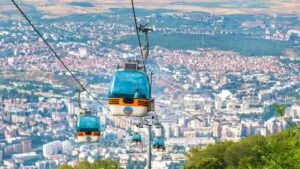
Three of Four Sensors Were Dead: Skopje's Vodno Cable Car Ran Fifteen Years Without a Real Service
17.09.2026


17.09.2026

17.09.2026
17.09.2026

17.09.2026

17.09.2026
17.09.2026

17.09.2026
16.09.2026

15.09.2026

17.09.2026

17.09.2026

16.09.2026
17.09.2026

17.09.2026

17.09.2026

17.09.2026

16.09.2026

15.09.2026

17.09.2026

17.09.2026

17.09.2026

17.09.2026

17.09.2026

17.09.2026

09.03.2026

27.02.2026

19.02.2026

23.04.2026

23.04.2026

12.04.2026

Levica announced that the Interior Ministry under minister Pance Toshkovski has done nothing for two years in the pre-investigation phase on the crime over supervision of the roads being built by „Bechtel" and „Enka." That's a period in which, according to the party, the prosecution sent several „urgent" notifications to the Ministry - and got no concrete response.
The case is not new. The controversy over „Electra Solutions" - the project's supervisory company - has been running for more than two years. People are still asking how that firm got almost 8 million euros for supervision, with supervisory engineers at 20,000 euros a month and individual negotiators receiving up to 300,000 euros. Figures that by Macedonian standards barely exist for that level of work.
Now Levica adds a new dimension. The ownership of „Electra Solutions" has changed - the new owner is Bojan Saveski, a member of VMRO-DPMNE and a former associate of Koce Trajanovski. In other words, the firm whose participants VMRO-DPMNE demanded be dismissed when in opposition, has now, under their rule, passed into the hands of their own man.
That's the reality Levica describes in one sentence: „VMRO-DPMNE has taken over the business of Bechtel and Enka's historic crime." A heavy phrase, but with a concrete base - the corporate ownership registry is public, checkable in minutes, not months.
The question that isn't political but institutional - why has the Interior Ministry done nothing for two years? It means someone decided to keep the case frozen. It means Toshkovski, as minister, isn't ordering the procedure to be activated. It means VMRO-DPMNE's pre-election promises of „accountability for the previous regime" don't work when accountability threatens the current structure.
An explanation from another angle is possible - that the case is technically complex and that gathering evidence takes time. Possible, but in such cases the Interior Ministry usually communicates on the stage of work. Here there is no such notification. Silence is not neutral - it's a political signal. And it's a test for the prosecution and the courts, not just for the Interior Ministry: can the state prosecute a case in which the current government is involved, or does it only prosecute cases against the previous one? That's the difference between an institutional state and a party state.
The latest 10 news from this category

Of 340 million denars, only 40 million came from private money - the rest came from the State Lottery. Prosecutors...
The State Audit Office already warned that withholding the points makes favouritism possible. The rulebook requiring them to be published...
Two senior officials announced progress, the two largest parties denied it the same day. The amendments sit blocked behind 13,500...
The police acted on their own knowledge, without the PM filing anything at all. The same mechanism exists for every...
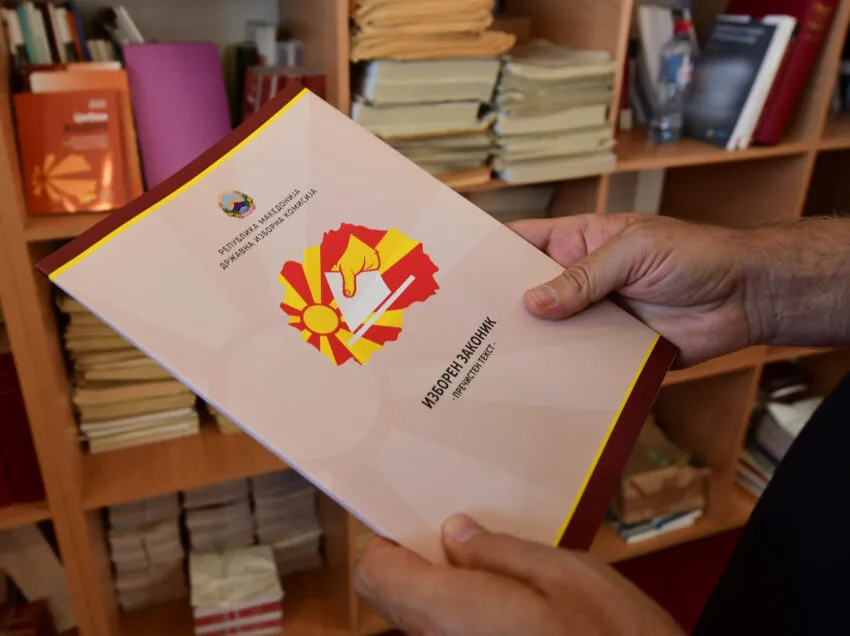
The Electoral Code is the one unfulfilled reform obligation, and the working group does not even know when it will...
It was supposed to cost "zero denars". Now the opposition wants an investigation, and the timeline - David Guetta announced...
Five negations in one sentence, pension growth "16 times higher" with not a single figure beside it, and a third...
One side waits for a letter, another waits for a different commission, a third waits for consent. In those same...
The commission's chairman says it only checked whether the documents were complete. The public call says something else entirely -...
Three candidates, two of them lawyers, one of them employed by the very municipality he is running for. The line...
This site uses cookies - is that okay? Learn more
Be the first to know when Metla launches something new
Leave your email and we will write when there is a new guide or something new on Metla.