
Six reports in 24 hours: violence in the Macedonian family runs on a schedule, and the institutions arrive last
29.08.2026


29.08.2026

29.08.2026
29.08.2026
29.08.2026
29.08.2026

29.08.2026
29.08.2026
28.08.2026
27.08.2026

29.08.2026

29.08.2026
28.08.2026

29.08.2026

28.08.2026

27.08.2026

29.08.2026

29.08.2026

29.08.2026

29.08.2026

29.08.2026

28.08.2026

09.03.2026

27.02.2026

19.02.2026

28.08.2026
27.08.2026

26.08.2026

23.04.2026

23.04.2026

12.04.2026
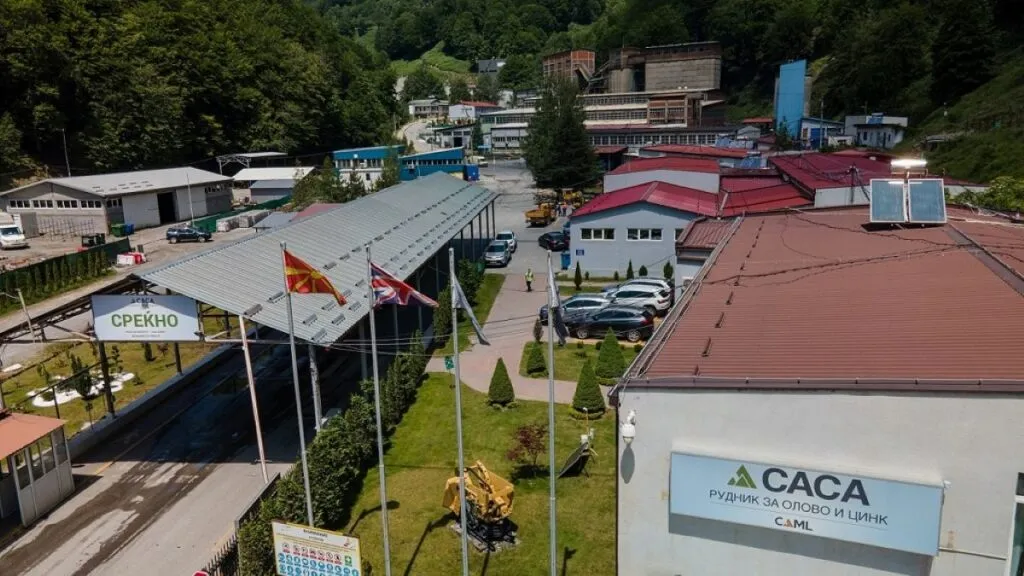
On 28 August, Miners' Day, every speaker produced the same sentence - mining is not a profession of the past but of the future. The numbers behind that sentence say something rather different about the present.
Some years ago this branch had more than 10,000 employees. Today the figure is close to halved, and the downward trend continues. According to the State Statistical Office, in May 2026 the number of workers in the "mining and quarrying" sector was 7.3 percent lower than in May 2025.
The average net wage, meanwhile, rose by 5.8 percent and passed 61,000 denars. So the wage is going up and the workers are not there. That is not a contradiction - it is exactly what happens when an activity automates while simultaneously shrinking.
Who holds up the economy
The sector's weight is real and should not be underestimated. In 2025 mining accounted for 10.9 percent of industrial output and 2.8 percent of total Macedonian exports. It produced 130,174 tonnes of copper, lead and zinc concentrate.
Deputy minister of energy, mining and mineral resources Miroslav Labudovic said at the ceremonies at the Bitola and Oslomej power plants that more than 10,000 families in Macedonia earn their bread directly from the mining sector. That is a different figure from the employment statistics for the sector itself - one counts jobs, the other counts the families dependent on them, including those in supporting activities.
The investment that stalled
The falling number of workers is explained by stalled investment, most often because of criticism over the danger of environmental destruction, heavy-metal pollution and risks to water resources. The loudest illustration was the contested concession for the Ilovica-Shtuka copper and gold mine, where more than 500 direct and 2,700 indirect jobs were planned.
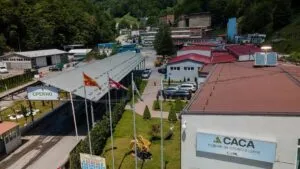
On the other side stands the example of Makedonska Kamenica. The SASA mine this year introduced three new underground trucks, completed the first phase of its underground ventilation project and introduced a centralised system for monitoring and managing processes. Since Central Asia Metals entered in November 2017, investment has exceeded 120 million dollars.
That is a serious sum and it is worth saying. But the modernity of a mine is not measured only by the price of the machinery - it is also measured by the data on safety, on water and soil quality, and by whether that data is available for checking once the machines start running.
The 78 percent that should come back
Under the statutory allocation, 78 percent of the concession fees paid go to the municipality on whose territory the concession activity takes place. Those funds are meant to end up in local roads, water supply, municipal infrastructure, schools and environmental protection projects.
Energy, mining and mineral resources minister Sanja Bozinovska said that "not a single tonne of ore produced, not a single percent of exports and not a single investment is worth more than a human life", and that a mine must not be an isolated island.
That is an accurate sentence. The question no commemoration answers is how much of that 78 percent has, over the past five years, genuinely ended up in a water main or a school in the mining municipalities - and whether that account is publicly available anywhere at all. Because it is that figure, not the speech on 28 August, that will decide whether the next generation stays to work in those places.
The latest 10 news from this category
Unemployment fell to 11.3 percent and that can go on a billboard. But in the same quarter, more people are...
A data centre consumes electricity and water in quantities that are planned in advance. How many megawatts, how many cubic...
A system that fixes a model's own alignment outperformed experienced researchers by six hours. The price comparison with a human...
Ten million people, and the companies keep coming one after another. A Stockholm investor explains it with something no ministry...

Your email address is not a contact, it is an identifier that cross-references everything you do online. The new feature...
The Pehchevo council unanimously rejected the initiative for a data centre in Pancharevo. Here the subject opened as an offer,...

Percentage-based indexation is back, so everyone gets the same percentage of their own pension. The pension fund's outgoings already exceed...
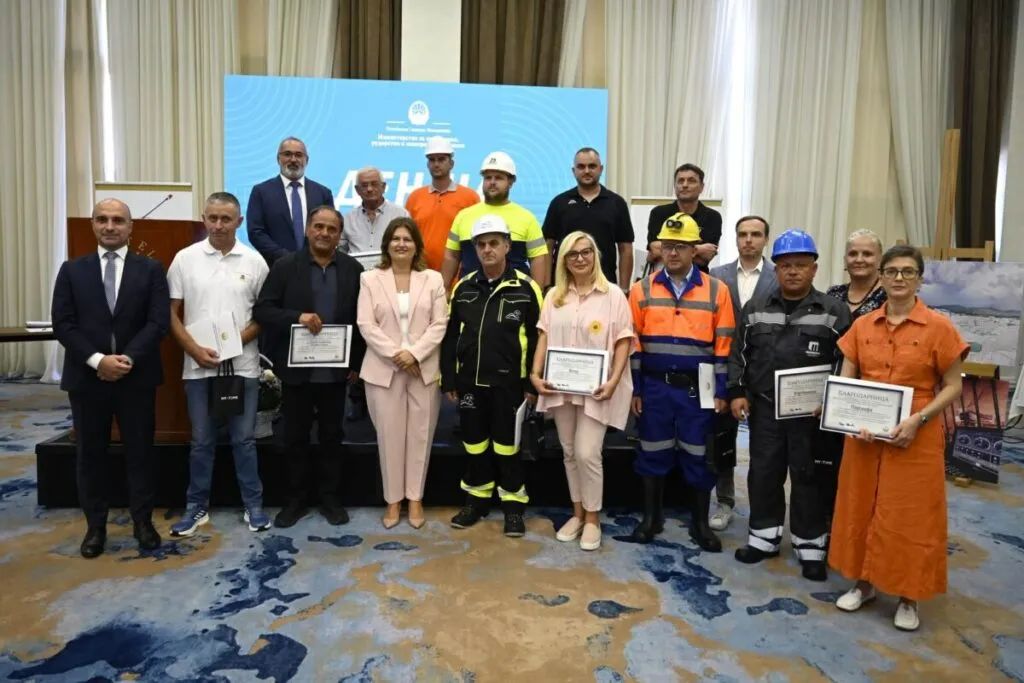
The minister said no investment is worth more than a human life. That sentence gets tested in one place only:...
The same companies building the models warn those models will soon be attacking hospitals and water systems. And they are...
An Italian leather bag for a few hundred dollars instead of a few thousand. The difference is not the quality,...
This site uses cookies - is that okay? Learn more
Be the first to know when Metla launches something new
Leave your email and we will write when there is a new guide or something new on Metla.