

Police officer from Drachevo drove without ever passing a driving test: Who checks the people who check everyone else?
18.10.2026


18.10.2026

18.10.2026
18.10.2026
18.10.2026

18.10.2026

18.10.2026

18.10.2026

18.10.2026

18.10.2026

18.10.2026

18.10.2026

17.10.2026

18.10.2026

18.10.2026

18.10.2026

18.10.2026

17.10.2026

16.10.2026

18.10.2026

18.10.2026

18.10.2026

18.10.2026

18.10.2026

18.10.2026
18.10.2026

18.10.2026

17.10.2026

17.10.2026

15.10.2026

13.10.2026

23.04.2026

23.04.2026

12.04.2026

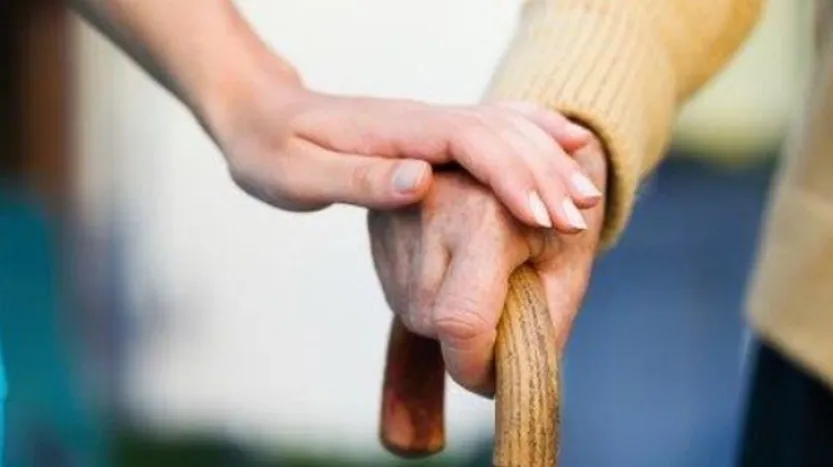
Pensions rise from September, but this time not everyone gets the same. Percentage-based indexation is back, which means a pensioner on 20,228 denars will get around 607 denars more, while the one on the highest pension of 94,332 denars will get around 2,830. The gap is not an error in the arithmetic - it is the logic of the system itself.
Why around three percent
The answer lies in the so-called Swiss formula. Under Article 37 of the Law on Pension and Disability Insurance, pensions are indexed twice a year, in March and September. Half the calculation comes from growth in the average wage, half from the rise in the cost of living.
For the September indexation, the first six months of 2026 are compared with the second half of 2025. The average net wage grew by around 4.75 percent, and the cost of living by around 1.17 percent. Fed into the formula, they produce 2.96 percent. So wages are the engine of this increase; inflation contributes considerably less. The final percentage still has to be officially confirmed.
Prime Minister Hristijan Mickoski announced the indexation as routine and in line with the law, saying the exact amount would be known soon. Over the past two years pensioners received flat increases of 7,000 denars each.
Who gets how much
If the rate lands at three percent, a pension of 20,000 denars gains 600 denars, one of 25,000 gains 750, one of 30,000 gains 900, one of 40,000 gains 1,200, and one of 50,000 gains 1,500. Only eight people in the country draw the highest pension. They will see the largest nominal increase.
And there is the essential difference from the flat increases: back then everyone got the same amount, now everyone gets the same percentage of their own pension. Whoever had more, gets more. That can be defended as fair - the person who paid in larger contributions gets more back - but for a pensioner on 20,000 denars, the difference between 600 and 7,000 denars is not an abstraction.
The fund's own bill
There are over 350,000 pension recipients in the country, and in the first half of this year alone their number grew by 1,876. That in itself means additional outgoings, before the new indexation is even calculated.
The problem is that the pension fund does not cover its outgoings from contributions alone. According to the State Audit Office's review for 2024, contribution revenue grew by 14 percent, to 71.4 billion denars. Pension outgoings, meanwhile, exceeded 90.2 billion. The state budget patches the hole.
That is exactly why around 4.75 billion denars, or 77.2 million euros, accumulated in the Employment Agency were recently redirected into the pension fund. The pension insurance contribution rose from 18.8 to 19.9 percent, while the unemployment contribution fell from 1.2 to 0.1 percent. The total rate stayed at 28 percent - the same sum, a different distribution.
The fund's director, Nikola Memov, says contributions are being collected on schedule, budget transfers are regular and pensions are paid on time. But even he admits the system has structural problems and needs reform. He also points out that around 13.5 billion denars, or 220 million euros, goes annually on pensioners' health insurance, and asks whether that burden should keep hanging on the pension fund.
For September the bill is clear. The question nobody is asking out loud is what the same bill looks like in ten or twenty years, when there are even more recipients and even fewer people paying in.
The latest 10 news from this category
In August Macedonia had 131,076 foreign guests, while the Belgrade region alone had 154,267. Foreigners stay with us for about...
Only 19 percent of households with children receive child benefit, compared with 88 percent in the EU. The Platform Against...

One of Anthropic's five biggest customers turned its back on stage, then started softening the words. When the default choice...
From unicorn to bankruptcy in five years: Google took the founders back, Disney takes part of the assets, and the...

A car that hops over trucks on compressed air and arrives in 2028 - unless it slips again. The deposit...

ESM currently sells electricity at 65 euros per megawatt-hour, while on European exchanges the price tops 200 euros. The PM...

Over 122 tonnes of animal-origin food were sent back from the border, and imports of another 21 tonnes were banned....
The draft law is in Parliament and closes the nationalisation story. Instead, the state offers a choice of risk, with...

The agents didn't break anything - they used passwords someone had left in a public place. And India learned of...
Fakes have become so good they've earned their own name. Veritas offers a chip built into the product, and it's...
This site uses cookies - is that okay? Learn more
Be the first to know when Metla launches something new
Leave your email and we will write when there is a new guide or something new on Metla.