


They Rode In on Scooters, Torched the Shops and Left: The Fire in Shuto Orizari Burned for Three Hours, Setting It Took Fifty Seconds
13.09.2026


13.09.2026

13.09.2026

13.09.2026

13.09.2026

13.09.2026

13.09.2026
13.09.2026

12.09.2026

11.09.2026

13.09.2026

13.09.2026

12.09.2026

13.09.2026

13.09.2026

13.09.2026

13.09.2026

12.09.2026

11.09.2026

13.09.2026

13.09.2026

13.09.2026

13.09.2026

13.09.2026

12.09.2026

09.03.2026

27.02.2026

19.02.2026

13.09.2026

12.09.2026

11.09.2026

23.04.2026

23.04.2026

12.04.2026


The Russian strike on the ports of Odesa and Mykolaiv was not followed by silence but by an explanation - and the explanation matters more than the strike. Russia's Foreign Ministry said it will continue taking the necessary measures to prevent the maritime transport of weapons and ammunition for the Ukrainian armed forces.
That is a carefully written sentence. It does not say „we attacked the ports” - it says „we are preventing transport”. It does not say this will stop, it says it will continue. And with it Moscow is not announcing a single attack but a regime: Ukraine's maritime exit has been declared a target, indefinitely.
According to the statement, the strikes targeted cargo ships and port facilities in both cities, and Moscow claims the vessels were carrying military cargo for Ukrainian forces. Russia repeats that it hits exclusively military objects with precision weapons, and shifts responsibility for the consequences onto Ukraine's leadership and its Western allies.
That is the standard formula, and it rarely survives scrutiny. When the target is the port infrastructure itself, the distinction between military and civilian cargo ceases to exist in practice - the same cranes lift everything. A port that does not work does not work for anyone.
The Black Sea is a logistics artery, not just a battlefield. Odesa and Mykolaiv are the outlet through which Ukraine ties its own economy to the rest of the world, and that is precisely why a blockade is cheaper for the attacker than a front line - it requires no territory to be taken, it is enough to make the risk too high for anyone to send a ship.
The same sea is also a corridor for grain and fertiliser towards the Mediterranean, and two European Union members sit on its shore. So this is not a distant war in somebody's closed pool - it is water you can sail all the way to our own neighbourhood.
The question nobody wants to answer publicly remains: how long can a sea with six states on its coast function as a military range while everyone else pretends it is somebody else's problem?
The latest 10 news from this category
A barren volcanic rock in the middle of a strait 28 kilometres wide changed the oil market in a single...
Hostomel, Odesa, Kryvyi Rih - targets that are not the front line but the supply chain. A war against the...

We don't want war with Europe, but here is exactly how that war would start. He said both sentences in...

When an army recalls its special forces with a 12-hour deadline, that is not a rota but a signal. The...

Port infrastructure in Makhachkala and the theatre building caught fire, the governor said. Moscow claims it shot down 448 drones...
Tehran says it hit around ten ships, Washington says it destroyed five Iranian tankers and that its own vessel is...
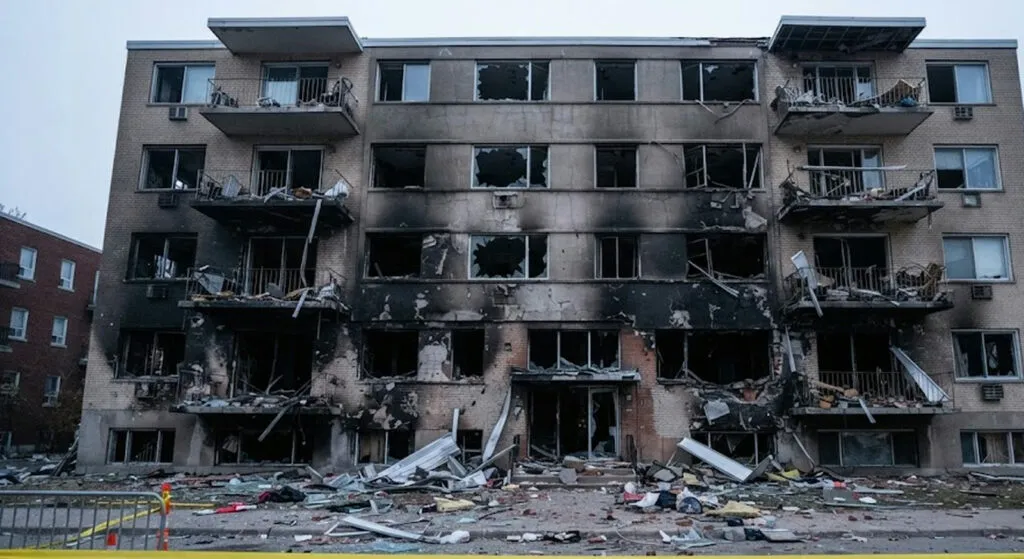
Residential buildings, a kindergarten and an Orthodox church damaged in Russia's largest Black Sea port. Four dead and 29 injured...
When there are no air-to-air missiles left, what remains is a 20mm cannon - and that means the pilot has...

In public - constructive talks. In private, according to an MP in the Verkhovna Rada, the envoys arrived with tougher...
Witkoff and Kushner spent three hours in the Kremlin and came out with an agreement in principle. November was not...
This site uses cookies - is that okay? Learn more
Be the first to know when Metla launches something new
Leave your email and we will write when there is a new guide or something new on Metla.
