
Six reports in 24 hours: violence in the Macedonian family runs on a schedule, and the institutions arrive last
29.08.2026


29.08.2026

29.08.2026
29.08.2026
29.08.2026
29.08.2026

29.08.2026
29.08.2026
28.08.2026

27.08.2026

29.08.2026

29.08.2026

28.08.2026

29.08.2026

28.08.2026

27.08.2026

29.08.2026

29.08.2026

29.08.2026

29.08.2026

29.08.2026

28.08.2026

09.03.2026

27.02.2026

19.02.2026

28.08.2026

27.08.2026

26.08.2026

23.04.2026

23.04.2026

12.04.2026
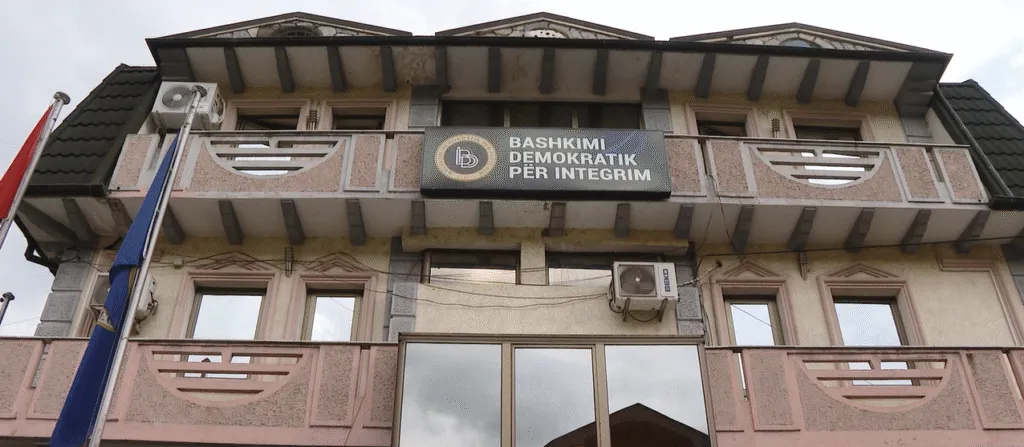
Of the 310 candidates admitted to the 7 May secondary police school, only 11 are from non-majority communities - or, as some media report it, 11 percent. That discrepancy alone shows the base figure is not the same everywhere. DUI wants the competition repeated, while the Alliance for Albanians is asking for something simpler and harder to refuse - that the numbers be published.
The Alliance's request is concrete: how many candidates from non-majority communities applied at all, how the assessment was carried out, and what exactly produced this result. That is not a request for a quota. It is a request for data.
The ministry's answer
Deputy interior minister Astrit Iseni maintains that interest was nowhere near what was expected, and that some of those who applied did not turn up for the testing at all. He added that it is politically dishonest to claim somebody was "excluded" without saying how many applied, how many continued through the process and how many met the criteria.
And that is true. A claim of exclusion without numbers is rhetoric. But the same logic runs in the other direction: the claim that interest was low is also rhetoric for as long as the ministry does not put those numbers on the table.
Both sides are invoking data neither has published. The difference is that one side has it.
What the ministry could settle in a day
This is a dispute that needs neither a commission, nor a new competition, nor a resignation - at least not first. It needs three numbers: how many applied, how many sat the testing, how many passed. Broken down by community. The ministry has that data right now, in the same records that produced the 310 admissions.
If the numbers confirm Iseni's claim that interest was low, the dispute ends there and the question moves elsewhere - why interest is low for a school that guarantees employment in the police. If the numbers show that many applied and dropped out during the process, then the question becomes where they dropped out and why.
In both cases the answer is the same step. An institution that holds the data and sends a statement instead makes the dispute longer than it needs to be.
Why this is not just one competition
DUI is also demanding Iseni's resignation, arguing that an official's formal presence cannot serve as an alibi. That is a party score being settled and it will be fought out on its own ground.
But underneath it sits an institutional question that outlives the parties: how a state service selects its personnel and whether that process can be checked from outside. The police school guarantees employment in the police - which means the outcome of this competition shapes the structure of the ministry for decades, not just for this school year.
The State Inspectorate, the Ombudsman, the parliamentary committee on defence and security - all have grounds to request those numbers. The question is whether anyone will request them before the story changes to another one.
The latest 10 news from this category

Three institutions, three different speeds. The competition commission already said yes, the media regulator now says wait, and the financial...
When the party of a sitting minister publicly pays tribute to a convicted war criminal, asking whether that is the...
Three weeks of hospital treatment, a return to Skopje Prison on 26 August, and already an emergency transfer back. The...
The party claims the Pehchevo initiative failed because an opposition figure was behind it. The council there voted unanimously.
Tetovo Clinical Hospital sits under the health ministry. The director says there is nothing political about it - and in...
The fire was out, there was not a trace of it for a full day - then it flared again....
The isotope is brought from Istanbul, and talks are underway with Sofia. Filipche demands an immediate fix, VMRO-DPMNE answers with...
Legally the denial holds - Article 22 applies to every employer. But the question that created the story is not...
Grubi took his seat in the dock. The lottery's director has been on the run for two years, and the...
Prosecutors have closed the pre-investigation into the procurement. For the fire-safety failures there are already convictions - but nobody has...
This site uses cookies - is that okay? Learn more
Be the first to know when Metla launches something new
Leave your email and we will write when there is a new guide or something new on Metla.