Three of Four Sensors Were Dead: Skopje's Vodno Cable Car Ran Fifteen Years Without a Real Service
17.09.2026


17.09.2026
17.09.2026
17.09.2026
17.09.2026
17.09.2026
17.09.2026

17.09.2026
16.09.2026
15.09.2026
17.09.2026

17.09.2026
16.09.2026
17.09.2026
17.09.2026
17.09.2026
17.09.2026
16.09.2026
15.09.2026

17.09.2026

17.09.2026

17.09.2026
17.09.2026

17.09.2026

17.09.2026

09.03.2026

27.02.2026

19.02.2026

23.04.2026

23.04.2026

12.04.2026

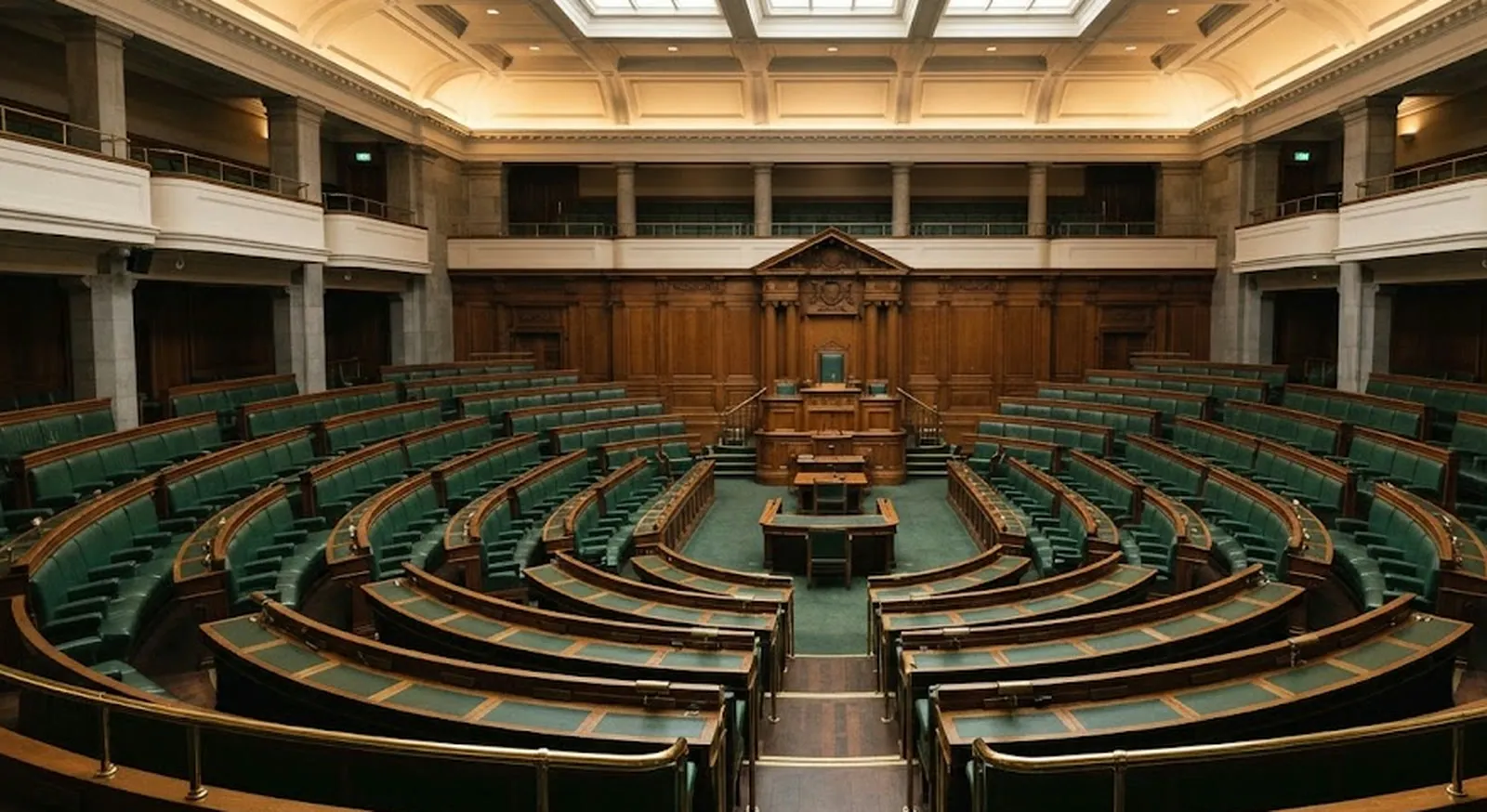
After a three-day debate, Serbia's parliament backed the government of prime minister Đuro Macut. The opposition tried to bring it down - and failed. So far, nothing surprising. What is surprising is what comes next: the ruling Serbian Progressive Party and Aleksandar Vučić are now working out how to align early parliamentary elections with the presidential ones.
So the government survived a confidence vote, and immediately afterwards the talk is about early elections. That is not a contradiction - that is a schedule. The vote was a formality that had to be closed before the real subject could be opened.
A chair that changes, a player who stays
Analysts assess that Vučić, once he leaves the presidency, could again take over as prime minister. The exact election date has not been set.
Who occupied the presidential chair and who the prime minister's, in that combination, matters little. The office changes, the centre of power does not. Does this look familiar from other Balkan states?
Where the vote came from
The opposition raised the confidence question in mid-April, after charges were filed against culture minister Nikola Selaković. It concerns alleged abuses linked to the proposed transfer of the damaged General Staff building to Jared Kushner's company. Kushner later withdrew from the project.
In the debate, opposition representatives described Macut's government as „a puppet administration of Aleksandar Vučić”, recalling a series of contested moments since Vučić installed the respected doctor at its head some eighteen months ago. The opposition has been demanding early elections for over a year, with no answer from the ruling coalition.
The canopy nobody forgets
Among the reasons for the no-confidence motion, the opposition also cited the collapse of the railway station canopy in Novi Sad in November 2024, in which sixteen people died. That tragedy triggered the largest wave of protests in Serbia in recent years and has since been the point every debate about accountability returns to.
Macut responded that his government should be judged by what it has achieved rather than by headlines, listing results in infrastructure, employment, security and economic stability. Infrastructure - the word that appears both in the government's defence and in the reason the opposition wants it gone.
The government stayed. Elections are coming, but nobody says when. And the sixteen people from Novi Sad are still waiting for someone to answer - which is, in the end, the only question that will outlive this parliament too.
The latest 10 news from this category
The court established responsibility for 96 killed, 303 tortured and 385 unlawfully detained. The prosecution asked for 45 years. Serbia...
Thaci and Krasniqi got 25 years each, Veseli 18, Selimi 13. The court established 385 unlawfully detained, 303 tortured and...
"If it is acceptable to the participants" - that is the entire offer. What gets negotiated is the format, not...
Thousands walked from the Rectorate to the electoral commission, and the signatures had to be queued for all weekend because...
Thousands of people under a digital clock and a banner asking for them to be found innocent. On Wednesday The...
The ruling list sailed through without a single problem, the student list was left waiting in line. Nobody banned anything...
The same firm that supplied ammunition to Ukraine for years is burning for the second time in a month. Seven...
A third attempt in three years, but this time the signatures came from the government benches too. Six MPs from...
Four days before the Hague verdict, the square in Pristina told the court it should back down. Among the guests...

Nobody banned anything - the line item simply stopped paying for itself. That is the purest version of modern censorship,...
This site uses cookies - is that okay? Learn more
Be the first to know when Metla launches something new
Leave your email and we will write when there is a new guide or something new on Metla.