


They Rode In on Scooters, Torched the Shops and Left: The Fire in Shuto Orizari Burned for Three Hours, Setting It Took Fifty Seconds
13.09.2026


13.09.2026
13.09.2026
13.09.2026
13.09.2026

13.09.2026
13.09.2026
13.09.2026

12.09.2026

11.09.2026

13.09.2026
13.09.2026

12.09.2026

13.09.2026

13.09.2026

13.09.2026
13.09.2026

12.09.2026

11.09.2026
13.09.2026

13.09.2026
13.09.2026

13.09.2026

13.09.2026

12.09.2026

09.03.2026

27.02.2026

19.02.2026
13.09.2026

12.09.2026

11.09.2026

23.04.2026

23.04.2026

12.04.2026

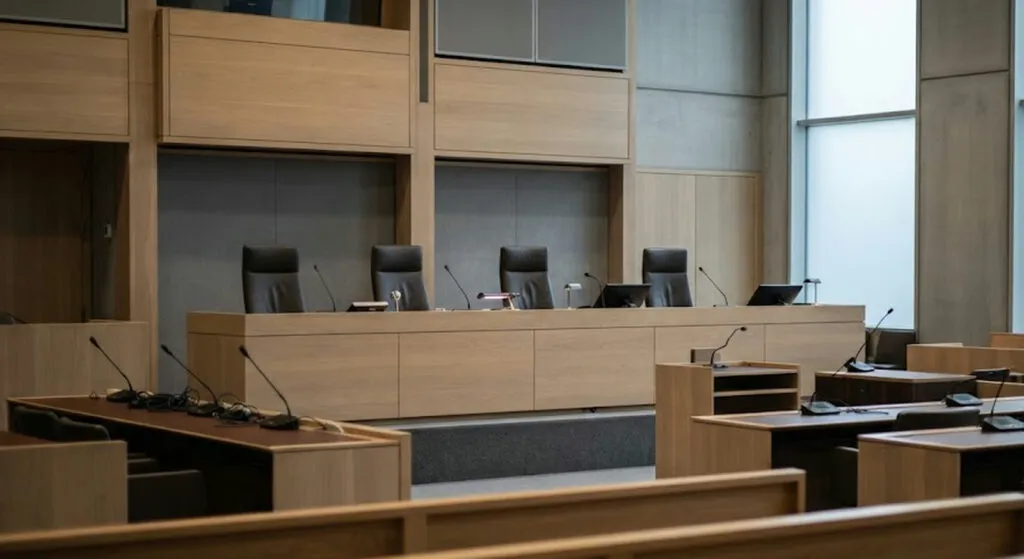
On 16 September, at 10am Central European Time, judges in The Hague will read the first-instance verdict for Hashim Thaci, Kadri Veseli, Rexhep Selimi and Jakup Krasniqi. Four days earlier, the central square in Pristina was full of people who came to tell those judges what they think. The organisers called it the "March for Freedom". The court has its own name for those same years - war crimes.
The indictment covers the period from March 1998 to September 1999, at locations in Kosovo and in Kukës and Cahan in northern Albania. According to the prosecution, the KLA had a clear command structure, and the accused bear individual and command responsibility for the killing of more than 100 people and the abuse of hundreds of others in around 50 detention camps. That is not a political characterisation - that is what the document the proceedings are based on says.
Who was on the square
This was not a fringe gathering. PDK leader Bedri Hamza and MP Ramush Haradinaj took part in the march, and from Albania prime minister Edi Rama sent the message "freedom for the liberators". Among those present was Ali Ahmeti, leader of DUI - a party that was in government in Skopje until recently and is still one of the largest political machines in the country.
That is the detail that makes this story a domestic one, not only a Kosovo one. When the leader of a Macedonian party stands on a square whose message is that The Hague should back down, the question is not ethnic - the question is entirely ordinary, and it applies to every politician: may a court be pressured while its verdict is being written? The answer does not change according to who the accused is.
Numbers that do not match
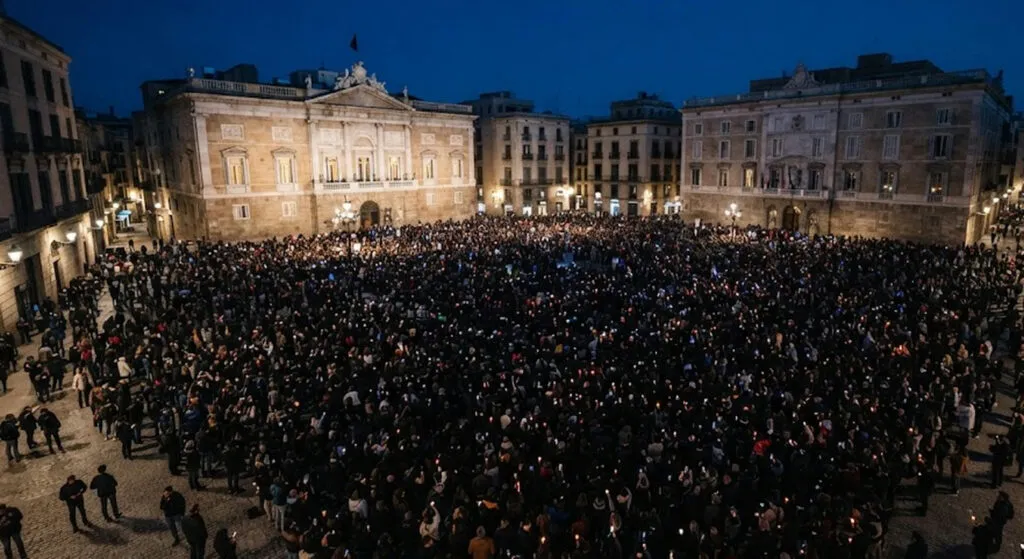
A second battle is already being fought over the gathering itself - over its size. Figures of 150,000 to 200,000 participants circulate on social media. International agencies that were on the ground report "thousands" of people filling the square. The gap between those two claims is no trifle: one version describes a rally, the other describes a referendum. When a figure is inflated twenty times over, it usually means the figure itself is the message.
The Balkans knows this scene by heart - from every side. A rally before a verdict, banners with faces, songs, and politicians photographed in the front row. Then comes the court, and only then does the real conversation begin.
What is actually decided on 16 September
The hearing will be public and can be followed live in Albanian, English and Serbian via the court's website. In a separate case the prosecution is seeking six years for obstruction of justice - which means that even after the main verdict, the story does not end.
For Kosovo this is a verdict on its own past. For the court in The Hague, established by Kosovo law and funded by Europe, this is the test it will be measured by - whether an institution created to try the victors can actually do it. For the region the message is simpler and older than all of us: justice either applies to everyone, or it is not justice but an arrangement of force.
The latest 10 news from this category
A third attempt in three years, but this time the signatures came from the government benches too. Six MPs from...

Nobody banned anything - the line item simply stopped paying for itself. That is the purest version of modern censorship,...

The stated reason is expensive production and weak commercial return. The timing is two months before an election. In Belgrade...

Zukan Helez asked the international community to withdraw its signature from the existence of Republika Srpska - then added that...
The government asked itself for elections, and packaged the reason as global instability. Serbia votes on 25 October - with...
Almost every German party condemned the Serbian government over the state send-off for Ratko Mladic. The one that did not...
The previous government recognised Palestine. The new one is opening an Israeli embassy. Between the two there is not a...
Serbia sent six ministers but not the leadership of the state - and then claimed these were not state honours....
Belgrade kept the last direct air link between Russia and Europe, and is now opening a route to an enclave...
The opposition is attacked not for what it proposes but for what it would hypothetically do. A mechanism the whole...
This site uses cookies - is that okay? Learn more
Be the first to know when Metla launches something new
Leave your email and we will write when there is a new guide or something new on Metla.
