A Pole Drove 164 km/h Where the Limit Is 80: The Camera Caught Him, the Border Stopped Him
23.08.2026


23.08.2026
23.08.2026
23.08.2026

23.08.2026
22.08.2026

22.08.2026

23.08.2026

23.08.2026

22.08.2026

23.08.2026

23.08.2026

23.08.2026

23.08.2026

22.08.2026

21.08.2026

23.08.2026

23.08.2026

23.08.2026

23.08.2026

23.08.2026

22.08.2026

09.03.2026

27.02.2026

19.02.2026
23.08.2026
23.08.2026

22.08.2026

23.04.2026

23.04.2026

12.04.2026
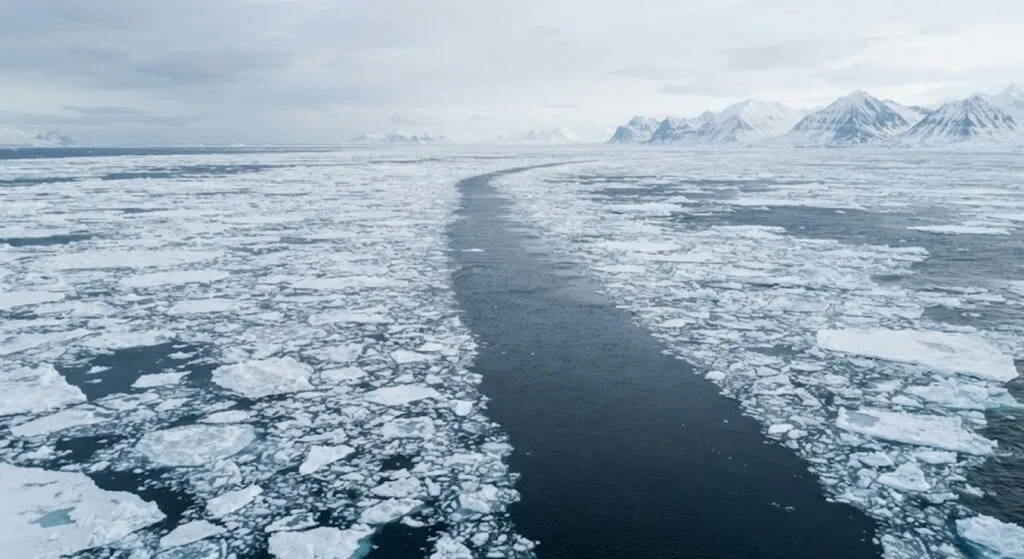
A South Korean container ship is leaving the port of Busan for Europe - but not by the usual route through Suez. The voyage runs along the Northern Sea Route, past the Russian Arctic coastline, and it is a trial run with which Seoul wants to check whether that route can function at all as a genuine trade link between Asia and Europe.
South Korean ships have sailed the Arctic route before, but the last such attempt was ten years ago. The difference now is that a container ship is being used for the first time - and that is not a technical detail. A container ship is an instrument of regular trade. It is not there to test whether the ice can be crossed once, but whether a line can be established along which goods will move continuously.
The permission is the real story
Sailing the Northern Sea Route requires Russian permission. And Seoul asked for it. Preparations for consultations with Moscow began back in January, and the necessary procedures for obtaining Russian approval were then completed.
This is where the story stops being maritime and becomes political. South Korea is a US ally. At the same time, Seoul held consultations with Washington and with other interested countries about possible questions relating to anti-Russian sanctions - which, in other words, means: we checked in advance how far we are allowed to go.
Europe is not happy
European diplomats are worried about exactly that - that Seoul, while preparing the voyage, negotiated with Moscow and obtained Russian clearance. One European diplomat said that "Western countries are seeking to isolate Russia and do not want South Korea cooperating with Moscow".
The statement is honest in at least one respect: isolation is described as an effort, not a state of affairs. And when an ally asks permission from the country you want to isolate - and tells you it is doing so - the question is not whether anyone broke the rules. The question is how much those rules hold when the other side has the logistical advantage.
Why anyone would sail past ice at all
The answer is distance. The Northern Sea Route shortens the link between East Asia and Northern Europe compared with the route through Suez, and every day less at sea means less fuel, fewer crew days and cargo arriving faster. Retreating ice makes that calculation more viable every year - which is a separate story, and not a cheerful one.
For Russia, meanwhile, every ship on that route is a double gain: money from permits and services, and proof that isolation has holes through which a Washington ally passes.
One trial run does not create a trade route. But the way it is being prepared - consultations with Moscow, notification of Washington, displeasure in Brussels - shows that the big players are no longer waiting for someone to tell them the sanctions architecture has changed. They are testing it themselves, ship by ship. And that is a lesson worth remembering in a region that often finds out about changes only after they are finished.
The latest 10 news from this category
A coup, a default, the Kursk, Georgia, the poisoning of Navalny - all in August. This summer: smoke over refineries...
First a threat to attack the interests of anyone joining the American pressure campaign. Then - talks with Oman and...

Not a fault, not a storm - an attack from a distance. For four days the plant stood dead, and...

The court called the publisher's costs exceptionally high - and then ordered Harry to pay them. Forty million for one...

An eighteen-year-old former pupil with a previous conviction entered a school of 450 children. Exactly one year after Orebro, where...
The Israeli military admits serious failures but concludes there is no criminal liability. The blame exists as a concept, but...
Finland published the exact figures on the violation of its airspace and summoned the Russian ambassador within a day. How...

Defending the Daily Mail cost 40.22 million euros. The court called that exceptionally high - and then refused to set...
Either you are with us or against us, the US Treasury Secretary said. Iran has been under sanctions for almost...
Kurdish becomes an official language for the first time since 1946. At the same moment, government forces took over the...
This site uses cookies - is that okay? Learn more
Be the first to know when Metla launches something new
Leave your email and we will write when there is a new guide or something new on Metla.