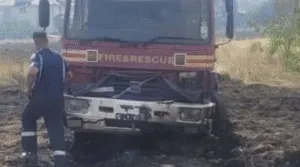
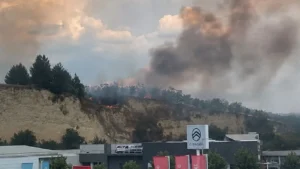
A Fire Truck Burned Down Near Struga: Two Firefighters in Hospital, and the Season Has Barely Started
08.08.2026


08.08.2026

08.08.2026
08.08.2026

08.08.2026

08.08.2026

08.08.2026
08.08.2026

07.08.2026
06.08.2026

08.08.2026
08.08.2026

07.08.2026

08.08.2026

08.08.2026

08.08.2026
08.08.2026

07.08.2026

06.08.2026

08.08.2026

08.08.2026

08.08.2026

08.08.2026

08.08.2026
07.08.2026

09.03.2026

27.02.2026

19.02.2026
08.08.2026
07.08.2026
06.08.2026

23.04.2026

23.04.2026

12.04.2026

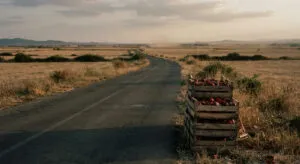
For a second day running, the junction near Robovo was blocked. Pepper growers from Strumica producing the „kurtovska kapija” variety are demanding 50 denars per kilogram for first class - and they are not leaving the road until they get a concrete answer.
The demand is worked out, not thrown together: first class at 50 denars, mixed first and second at 40, second class at 20. The growers' position is that this year's price for the ajvar pepper must not fall below 45 denars per kilogram. They are also asking for purchase prices set in advance and valid across the whole season, payment for delivered quantities within three months, and payment of subsidies which, they say, went unpaid from last season.
That is not a price list. That is an attempt to set, in advance, the line below which growing the crop stops making economic sense.
The growers say that under current purchase terms they can barely cover their costs - seed material, working the land, crop protection, irrigation and labour. One of them said at the protest that the wind destroyed more than 30 of his greenhouses where he grows peppers.
Traffic towards Robovo, Murtino and Bansko was interrupted and diverted for two hours at a time. The protest was organised by the association from Murtino.
What you see on the road is a blockade. What sits underneath it is something else. The grower enters the season with known costs and an unknown price for his own labour. Fuel, fertiliser, seed and wages are paid up front at prices the market dictates. The price of the peppers is discovered at the end, at the buying point, when there is nowhere left to turn back to.
The agriculture minister was announced for a meeting with growers, buyers and processors. This is the model that repeats every season: a road gets blocked, a meeting gets scheduled, some kind of deal gets struck, and the following year the same people are at the same junction.
Every autumn Macedonia talks about ajvar as national identity. The question rarely asked is what that identity costs the person who plants the peppers - and why, after all these years, there is still no mechanism that tells him what he will earn before he sows.
The latest 10 news from this category

Annual inflation of 2.3 percent, and not one category shows a fall. The homegrown peppers currently dragging the statistics down...
Luxembourg 2,771 euros, Macedonia 624. The 6.9 percent rise is real - but on a low base, and the cost-of-living...
The model reached the „critical cybersecurity threshold” - it could find a weakness and attack on its own. The assessment...
Sequoia came in with a billion, the banks added another 200 million. The founder promises thousands of reactors a year...
Two researchers got into over 300 government sites without a password. The flaws were easy to exploit, and some vendors...
A seven-week high, a fourth day of gains. The reason isn't gold - the American labour market is slipping, and...
The reservoirs are 70 percent full, the system holds 500 gigawatt hours. The prime minister says he's making a ten-year...
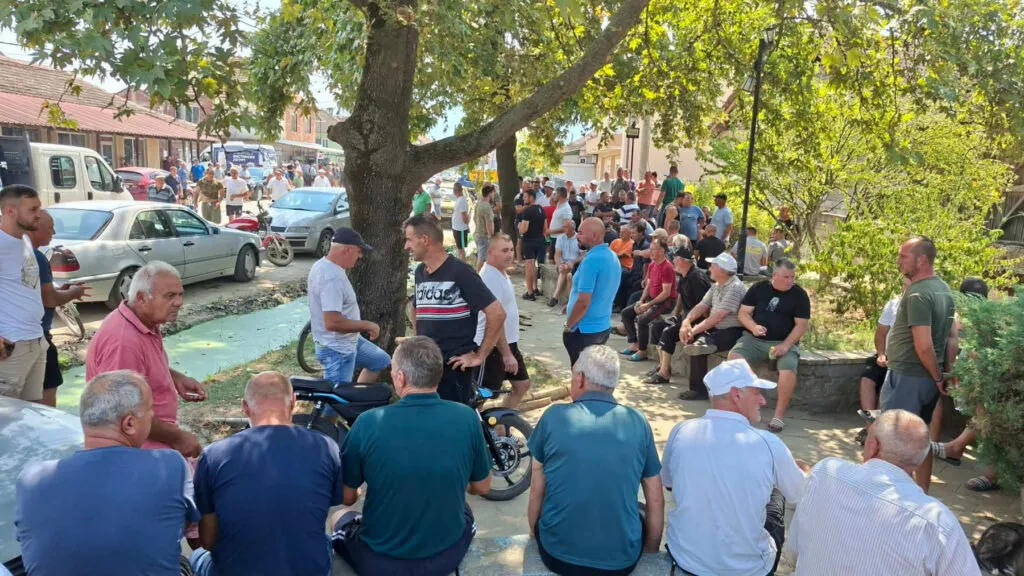
Purchase prices are 20 percent lower than last year, and these same people spent this season saving the crop from...
Not a single accepted or rejected correction in three months, and millions of people are still reading it every month....
Nine million square metres of production space for chips to power robots and orbital data centres. The day before the...
This site uses cookies - is that okay? Learn more
Be the first to know when Metla launches something new
Leave your email and we will write when there is a new guide or something new on Metla.