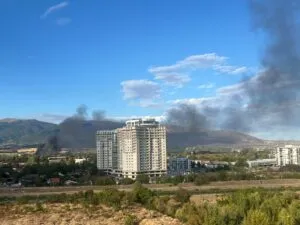
Black Smoke Over Skopje: A Paint and Varnish Warehouse Burned Inside the Old Steelworks
23.09.2026


23.09.2026
23.09.2026
23.09.2026

23.09.2026
23.09.2026
23.09.2026
23.09.2026
22.09.2026

21.09.2026

23.09.2026
23.09.2026

22.09.2026

23.09.2026

23.09.2026

23.09.2026

23.09.2026
22.09.2026

21.09.2026
23.09.2026

23.09.2026

23.09.2026

23.09.2026

23.09.2026

23.09.2026

09.03.2026

27.02.2026

19.02.2026
23.09.2026
22.09.2026

21.09.2026

23.04.2026

23.04.2026

12.04.2026

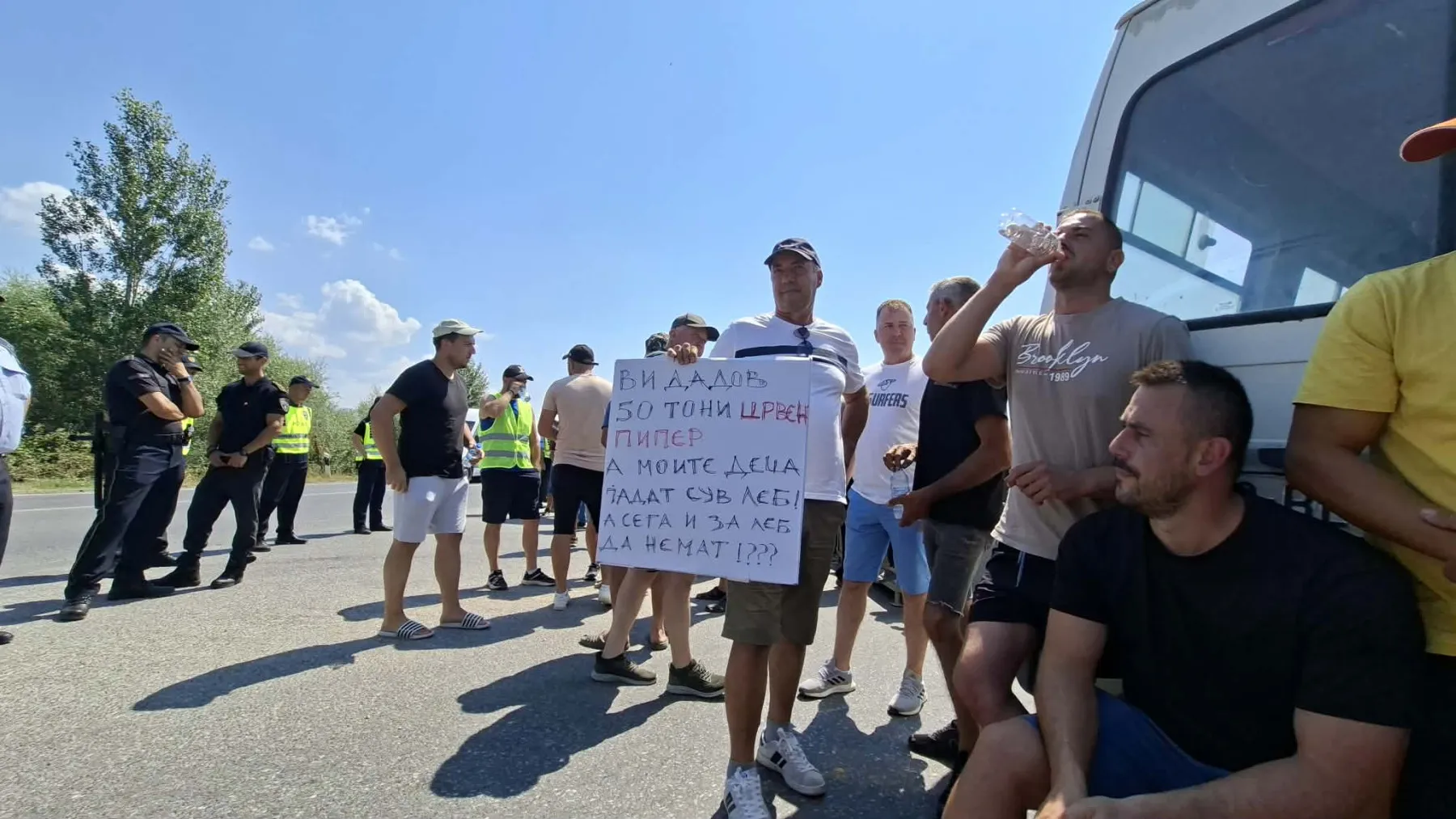
Tractors in the middle of Strumica. Third day. A banner saying a man delivered fifty tonnes of red peppers while his children at home eat dry bread. That is the entire economy of ajvar compressed into one sentence, and it is more accurate than any government report.
Farmers from the Strumica region, led by the „Mladi Murtino” association, blocked the city centre and the junction at Robovo with tractors and agricultural machinery. Their demands are specific and easy to verify.
Goce Jovev from the association listed them: „We want higher and fixed prices, and we want them to apply for the whole season. We want first-class peppers bought at 50 denars, mixed first and second class at 40, and second class at 20 denars. We want the processing plants to pay for delivered quantities within three months, and we want the state to pay out the subsidies.”
So this is not a request for charity - it is a request for a price that holds through the season and a deadline for payment. Those are the two things every other business in the country has and the farmer does not.
The number that tells the whole story
Last year, mixed first and second class was bought at 35 to 40 denars per kilogram. This year the price is 25 denars. So between two seasons the income per kilogram fell by around a third, while the cost of inputs went up. Farmer Borče Stojanov also pointed out that wind destroyed more than 30 greenhouses.
Agriculture Minister Borče Serafimovski came to Strumica and met the producers and the buyers separately. He expressed willingness to meet the demands but explained that he must first talk to the processing companies that set the current price of 25 denars. No fixed price was agreed.
The association's message is unambiguous: „Yesterday the minister promised he would secure higher purchase prices. If we do not get an acceptable price that covers production costs, we resume the protests on Tuesday.”
The core of this is bigger than one season. A producer cannot calculate what his year of work is worth until the harvest comes and somebody else announces the price. That is structural insecurity holding thousands of families in the region - in growing, in transport and in processing.
Blocking a road is a symptom, not a solution. The solution is the thing that has not appeared this year either: transparent pricing rules agreed before the harvest, not after it. Until that exists, every August will look the same - a tractor on the asphalt and a minister promising a meeting.
The latest 10 news from this category

48,499 denars, or about 789 euros. Croatia is at 1,555, Slovenia at 1,695. Only Kosovo is left below us.
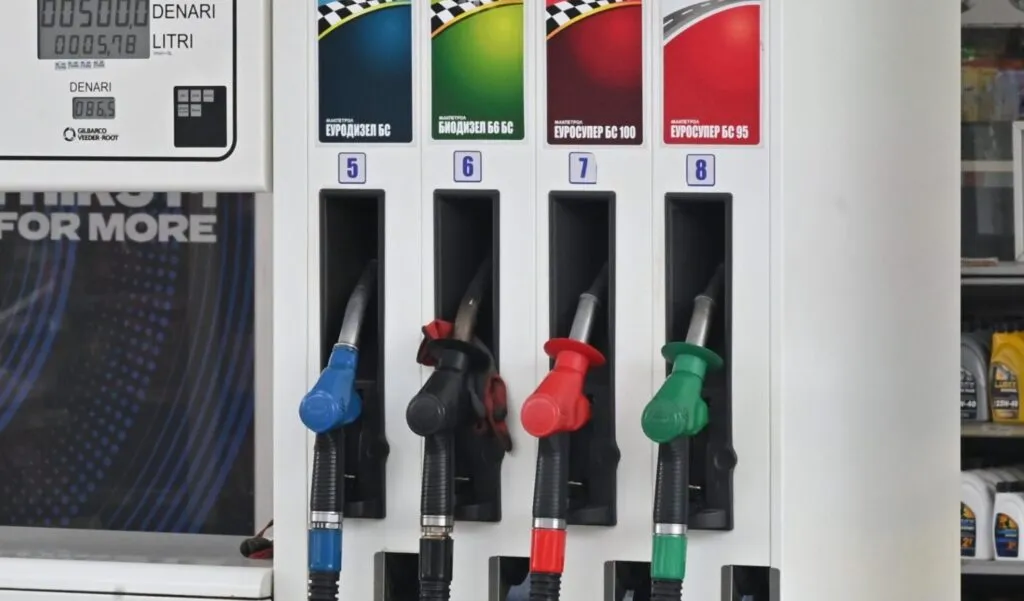
Eurodiesel hit 104.50 denars while petrol got cheaper. A company burning 100,000 litres a month pays 550,000 denars more from...
Extra-light heating oil jumped 78.91 percent right before winter. The only remaining instrument is the reduced VAT - and it...
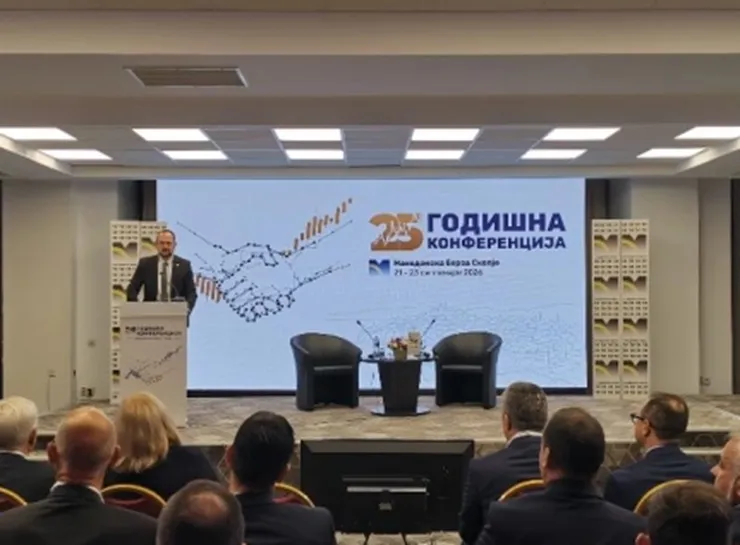
Classic trading fell 27 percent, block transactions jumped 159. The problem is not a shortage of money - it is...

Новите GPT-6 модели чинат половина од претходните, а точноста е споредлива со врвот на серијата. Кога објавата се води со...

Лабораториите ја достигнаа границата на она што се собира бесплатно од интернет, па сега купуваат податоци како што фабрика купува...
Од 13 години нагоре, со сметка врзана за родител и до тројца гости во возилото. Компанијата што ја гради довербата...
From midnight a litre of eurodiesel costs 104.50 denars, while petrol drops 1.50 denars. The explanation is not in Brent,...
The opposition ties Serbia's METER&CONTROL to Rudnap Group and to Sanja Božinovska's past. The statement, however, came with no document...
QR codes, certificates of origin and a public register are promised by the end of October. There is still no...
This site uses cookies - is that okay? Learn more
Be the first to know when Metla launches something new
Leave your email and we will write when there is a new guide or something new on Metla.