

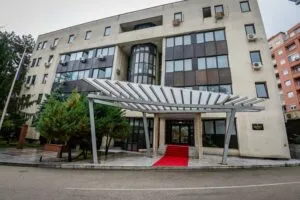
Six Police Officers Suspended over the Beating near Saraj: The Interior Ministry Admits Irregularities, the Union Tells a Completely Different Story
12.10.2026


12.10.2026
12.10.2026
12.10.2026
12.10.2026
12.10.2026
12.10.2026

12.10.2026

12.10.2026
11.10.2026

12.10.2026
12.10.2026

11.10.2026

12.10.2026

12.10.2026

12.10.2026

12.10.2026

11.10.2026
10.10.2026
12.10.2026

12.10.2026

12.10.2026
12.10.2026
12.10.2026

12.10.2026
12.10.2026
11.10.2026
11.10.2026
12.10.2026

10.10.2026

08.10.2026

23.04.2026

23.04.2026

12.04.2026

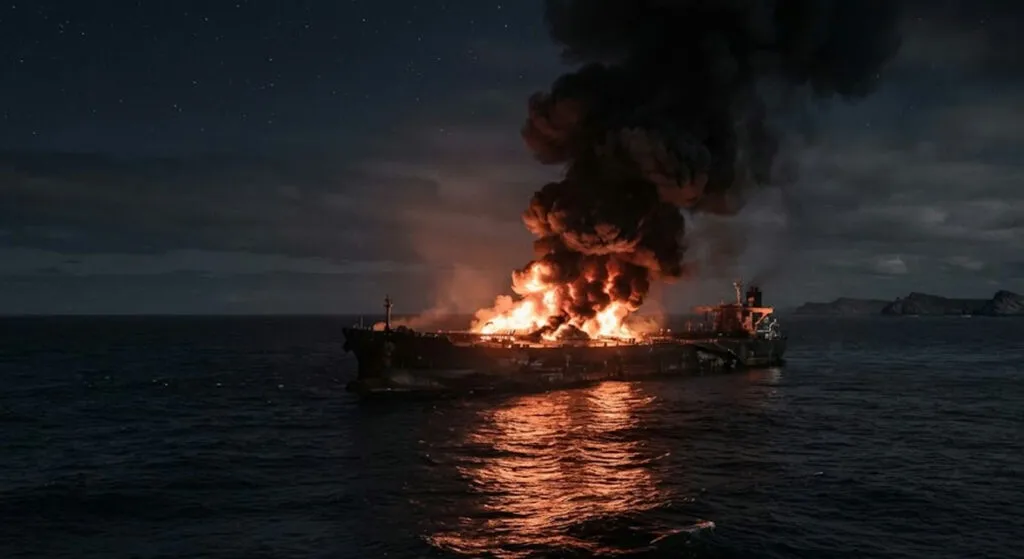
A supertanker loaded with crude oil exploded and caught fire after hitting a naval mine while trying to leave the Strait of Hormuz. That's the version from Iranian state television, according to which the ship was sailing an "unauthorised and dangerous route". The fire was so intense that residents on the coast, far from the scene, reported it too.
The Islamic Revolutionary Guard Corps (IRGC) adds a detail meant to shift the blame onto the crew: just before the impact, the tanker had switched off its navigation systems and GPS. The message that followed leaves no room for interpretation. "Any tanker that breaks the rules and ignores the safety regulations of the Strait of Hormuz will face a huge fire," the IRGC said.
It also announced that measures against ships using "unauthorised routes" will no longer be limited to the strait - such vessels will be pursued and "punished" across the whole region. Which ship, under which flag and with what cargo - for now we only know what Tehran wants to tell us.
Iran claims it has had full control over Hormuz since the start of "US-Israeli aggression", and commercial traffic through the strait has dropped dramatically. Meanwhile, the British maritime security agency UKMTO reported that another tanker in the strait, heading for the exit, was hit on its port side by an "unidentified projectile". The crew is safe; the ship is damaged. A little earlier, UKMTO reported a fire on yet another tanker struck by an unknown projectile.
Tehran says it won't open the waterway until the US meets its demands. Iranian President Masoud Pezeshkian, meeting Vladimir Putin in Turkmenbashi, described his version of diplomacy: "We negotiate. But every time we enter into dialogue with the United States, they attack us again. Despite that, we will not leave the negotiating table."
The sea lane that for decades was the world's oil highway now has a toll gate - except the penalty for not paying is a fire on deck. When one state decides on its own which routes in international waters are "authorised", is that security, or a protection racket run with mines?
The latest 10 news from this category
A ceasefire announced on social media, without a word from the Kremlin, while the pressure goes only towards Kyiv. The...
Almost 300 canceled flights and dozens injured in the Saudi capital. The war in Yemen stopped being local long ago,...
Washington eased sanctions on Russian diesel without Kyiv being informed, and Ukrainian drones answered the very night after the deal....
Kyiv's mayor is advising residents who have somewhere to go to leave before winter, the metro stopped, and a taxi...
The planes of Russia's top leadership circled over Moscow, and one ended up in St. Petersburg because of Ukrainian drones....
Two weeks after Russia threatened its "entire arsenal" over Kaliningrad, the alliance is rehearsing nuclear missions while reassuring Moscow at...
In parts of Kyiv the power comes back for an hour at a time, and without it there is no...
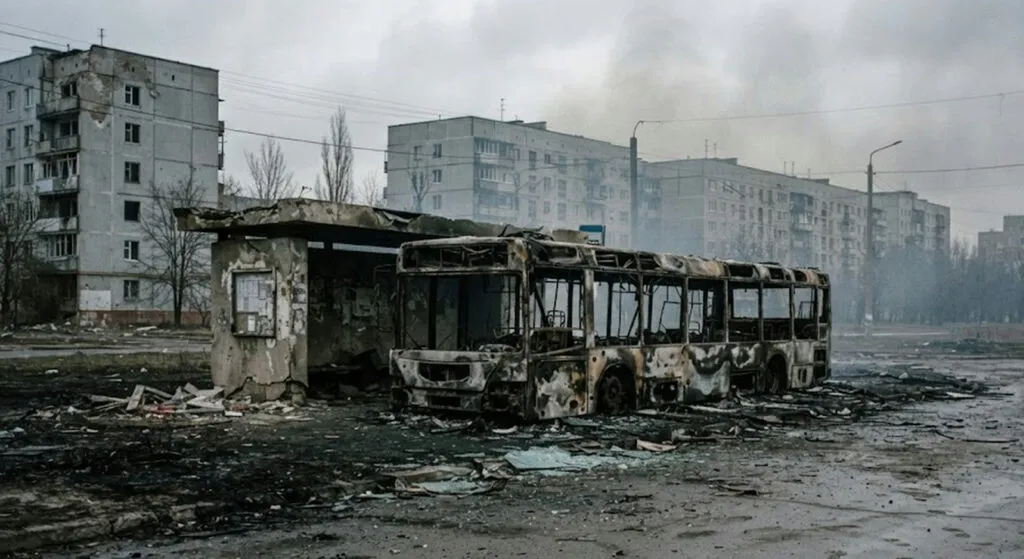
A guided bomb on the bus station, two buses in flames, 33 dead and 18 wounded. The governor of the...
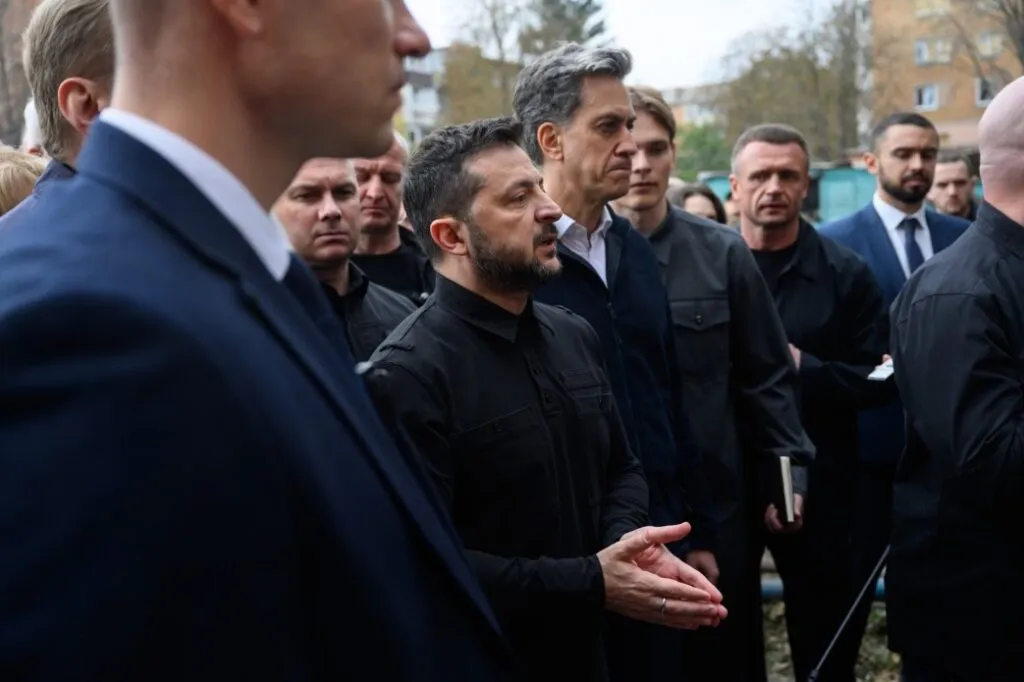
While Rubio talks of a "dangerous stalemate", Ukraine counts 78 dead in two days. Zelensky wants sanctions and Starlink, and...
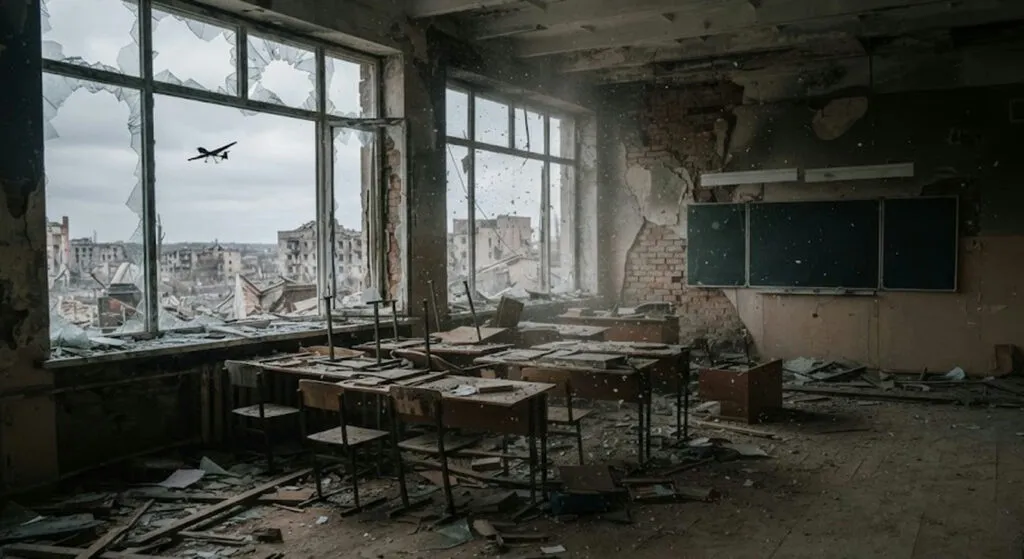
Russia's Defence Ministry lists schools, a court and a stadium, Ukraine's General Staff counts attacks, and ISW analysts see no...
This site uses cookies - is that okay? Learn more
Be the first to know when Metla launches something new
Leave your email and we will write when there is a new guide or something new on Metla.


