

Studeničani: 35-year-old dies after being electrocuted while washing his car with a pressure washer
18.09.2026


18.09.2026

18.09.2026

18.09.2026

18.09.2026

18.09.2026
18.09.2026

18.09.2026

17.09.2026

16.09.2026

18.09.2026

18.09.2026

17.09.2026

18.09.2026

18.09.2026

18.09.2026

18.09.2026

17.09.2026

16.09.2026

18.09.2026

18.09.2026

18.09.2026

18.09.2026

17.09.2026

17.09.2026

09.03.2026

27.02.2026

19.02.2026

18.09.2026

17.09.2026

16.09.2026

23.04.2026

23.04.2026

12.04.2026

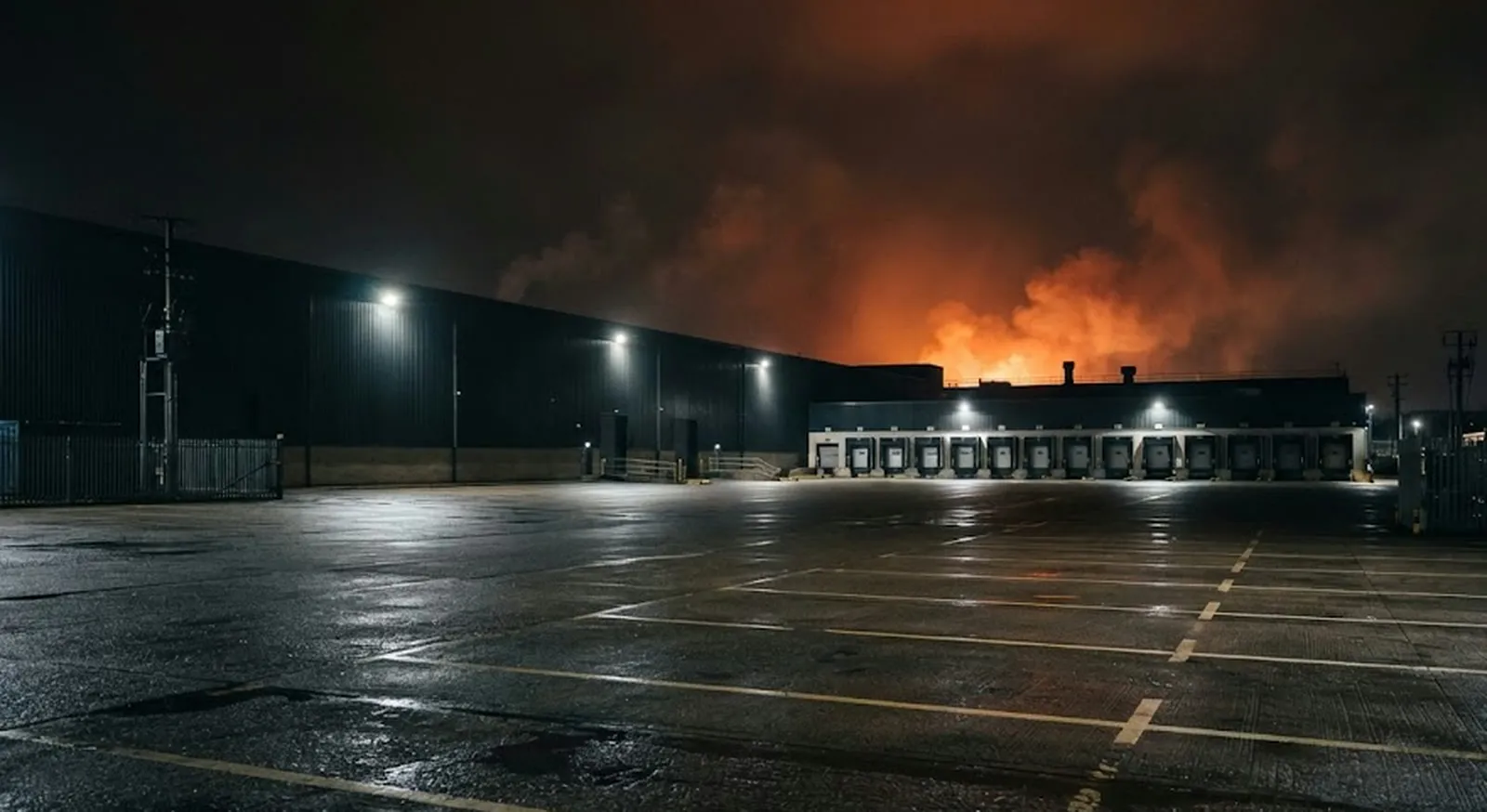
Eight hundred kilometres. That is how far the Wildberries warehouse in the Samara region is from the most forward Ukrainian military positions. Last night a drone came down there.
The Russian defence ministry announced it had shot down 635 Ukrainian drones during the night. Even if the figure is inflated in its own favour, it is in itself an admission of scale. Nobody announces 635 downed drones if this is an isolated incident.
The target is logistics, not the front
Wildberries is Russia's largest online retailer, often called the Russian answer to Amazon. Since 18 July, Ukrainian forces have struck around ten of its sites. That is not a randomly chosen target. It is a systematic attack on the supply chain of a state that spent years selling the image that the war is being fought somewhere far away while life at home carries on normally.
The logic is direct. If you cannot move the front, you move the economy behind it. In recent months Ukraine has increasingly struck targets deep inside Russia, particularly economic and energy infrastructure, to weaken Moscow's ability to wage a war that has now lasted more than four years.
The list from one night
According to regional officials, at least eight people were killed in the attacks. In the Saratov region, two people died in a strike on a residential building in Engels. The Ukrainian military said it had hit a refinery in Saratov and a military air base in Engels, where fires broke out, as well as an oil depot in the Kaluga region. Three people were killed and two injured in the attack on Udmurtia. In the border region of Belgorod, three people were killed and five injured. In Bashkortostan, a drone was shot down over the industrial zone of Ufa, where a fire broke out.
The other side of the same night: the Russian defence ministry announced it had hit two ships carrying military cargo in the Ukrainian port of Mykolaiv, plus a vessel transporting military equipment across the Black Sea. In Zaporizhzhia, Russian guided bombs killed one person and wounded 21, said regional governor Ivan Fedorov.
The war that does not end from exhaustion
The fourth year. Over that period we have cycled through several waves of expectation that everything would be resolved by negotiations, by sanctions, by one big summit. None of it held. What is changing is the technology: from artillery to drones, from the front line to warehouses and refineries eight hundred kilometres deep.
The Balkans know this phase from their own history, when a war stops being a clash of armies and becomes the wearing down of everything that keeps a state running. It is the phase that lasts longest and is hardest to leave.
The latest 10 news from this category

The bill passed with 262 votes, and the key to it has been handed to a man who has already...
Ukraine adapts in weeks, the Alliance in decades. Europe is paying for Patriot systems from 1991 and is only now...
Missiles and drones on the Ukrainian capital, damaged water mains and residential buildings. The same night, Ukrainian drones set the...

Trump hopes the war is ending and is preparing to gather the Gulf leaders. Oil prices have jumped, and the...
Ukraine says when, where and which unit did it. Russia's defence ministry has not a single sentence about the circumstances....
Norway's prime minister talks about a plane a drone "almost hit". Moldova, the only party holding the figures, reported that...
Ukraine was shooting down nine out of ten of the old drones. Then Russia changed the drone - and in...
It was shot down a few minutes after midnight, and all of Vilnius got a warning on their phones. Two...
The entire story comes from one side, and the headlines turn it into a turning point. The difference between the...
Between 2,300 and 3,000 North Korean soldiers have died in Kursk so far. Kim Jong Un has found an export...
This site uses cookies - is that okay? Learn more
Be the first to know when Metla launches something new
Leave your email and we will write when there is a new guide or something new on Metla.
