

Studeničani: 35-year-old dies after being electrocuted while washing his car with a pressure washer
18.09.2026


18.09.2026
18.09.2026

18.09.2026

18.09.2026

18.09.2026
18.09.2026
18.09.2026

17.09.2026

16.09.2026

18.09.2026

18.09.2026

17.09.2026

18.09.2026

18.09.2026

18.09.2026

18.09.2026

17.09.2026

16.09.2026

18.09.2026

18.09.2026
18.09.2026

18.09.2026

17.09.2026

17.09.2026

09.03.2026

27.02.2026

19.02.2026

18.09.2026
17.09.2026
16.09.2026

23.04.2026

23.04.2026

12.04.2026

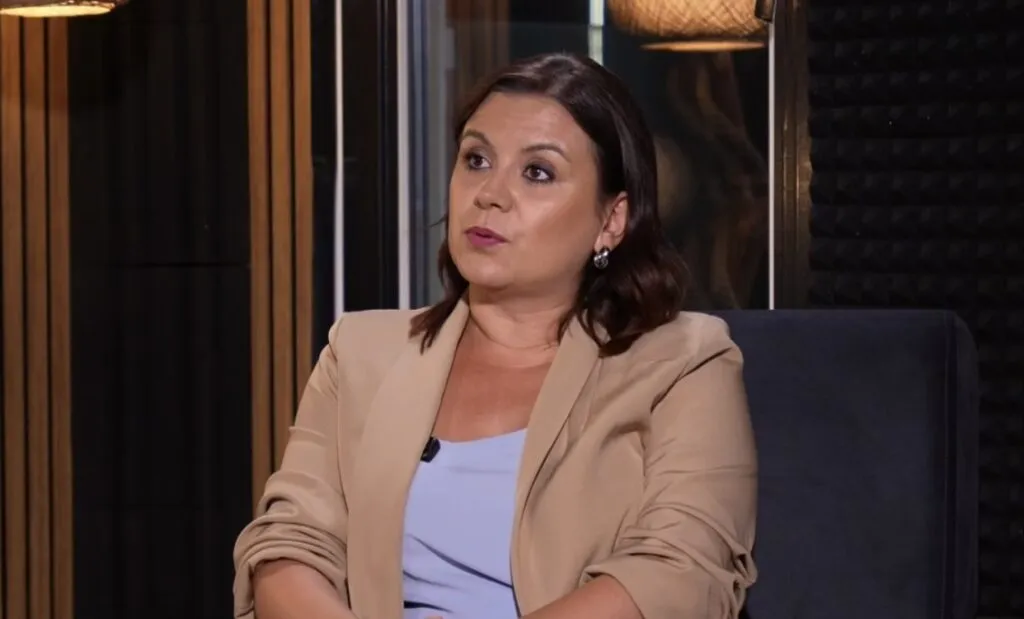
In 2025, two out of every three court judgments covered by the monitoring were never published. In 2024 that share was around 40 percent. In one year, opacity jumped to 66 percent.
The figure comes from monitoring by the All for Fair Trials coalition, and was presented by Ivana Petkovska on the programme "Night Studio" on 4TV.
A judgment that is not published does not exist for anyone but the parties
This is not a technical question for lawyers. A published judgment is the only way for a citizen to see how the court ruled in a similar case, for a journalist to check whether decisions are consistent, for a lawyer to cite precedent. When two thirds of them go unpublished, case law becomes a private matter between the court and the parties.
And a rise from 40 to 66 percent in a single year is neither coincidence nor fluctuation. It is a trend heading one way.
Hearings twice a year
One of the biggest problems is the length of civil proceedings. In some cases, hearings are scheduled only two or three times in a year. Which means a case with three hearings takes two and a half years - not because of complexity, but because of a calendar.
An especially large number of cases sits precisely in the area of labour disputes. The long wait means citizens do not get judicial protection in time, which raises the question of the right to a trial within a reasonable period.
In criminal proceedings the monitoring records another change: guilty pleas were registered in 34 percent of monitored cases in 2024, and in 2025 the figure fell by around ten percentage points.
The staff who are not there, and the staff who will not come
The courts face a large volume of cases, and there are not enough judges to handle them on time. There is also a shortage of lay judges and professional associates.
Petkovska also warns of weak interest among young lawyers in a career in the judiciary and the prosecution service. The reason, she says, is low salaries and the conditions on offer.
"There is no motivation," she concludes.
That is the sentence that settles the account. A system that cannot attract a twenty-five-year-old with a law degree has no way of clearing the cases it has piled up over twenty years.
The budget is not a favour from the government
Petkovska named the financing of the judiciary as one of the key problems, citing the Venice Commission's observations and European Commission reports, which regularly point to insufficient funding.
"We have to understand, as a state, that the judiciary's budget is not the will of the prime minister, the Finance Ministry and parliament. It is a legal category," she stressed.
The statement is sharper than it sounds. If the budget of one of the three branches of power depends on the mood of the other two, independence is a matter of goodwill, not of institutional design.
Pressure, criticism, and the difference between them
Petkovska also commented on statements from the executive following court decisions, judging that statements which can be read as pressure on the judiciary are heard more and more often.
"We should all direct criticism if a particular branch is not doing its job properly. But that criticism should be constructive, without attacks, and it should leave room for professional work," she said.
Another problem, in her view, is the perception that the judiciary does not see itself as equal to the other two branches.
What gets stopped and never explained
Speaking about the fight against corruption and organised crime, Petkovska said the absence of proceedings against certain political structures can raise questions about whether the laws are applied equally to everyone. For cases opened at the prosecutor's office for organised crime and corruption and then halted, she believes the public should receive a clear and detailed explanation of why the proceedings were discontinued.
"Citizens doubt the dynamics, literally because there is no trust in the institutions," she said.
She also criticised the Judicial Council - three times the election of a new member in parliament failed, and the public, she believes, should receive clearer explanations of why procedures were halted or materials withdrawn.
The election of a new head of the organised crime and corruption prosecutor's office is scheduled for 28 October 2026, when public prosecutors are to vote directly and by secret ballot. Five prosecutors have applied for the post. Petkovska described the public presentation of the candidates as a positive step.
One positive step, against 66 percent of judgments unpublished. For now, the account does not balance.
The latest 10 news from this category
Marta Kos listed the countries getting a timetable. We are not on it. What remains is the condition we know...

Of 340 million denars, only 40 million came from private money - the rest came from the State Lottery. Prosecutors...
The State Audit Office already warned that withholding the points makes favouritism possible. The rulebook requiring them to be published...
Two senior officials announced progress, the two largest parties denied it the same day. The amendments sit blocked behind 13,500...
The police acted on their own knowledge, without the PM filing anything at all. The same mechanism exists for every...
The Electoral Code is the one unfulfilled reform obligation, and the working group does not even know when it will...
It was supposed to cost "zero denars". Now the opposition wants an investigation, and the timeline - David Guetta announced...
Five negations in one sentence, pension growth "16 times higher" with not a single figure beside it, and a third...
One side waits for a letter, another waits for a different commission, a third waits for consent. In those same...
The commission's chairman says it only checked whether the documents were complete. The public call says something else entirely -...
This site uses cookies - is that okay? Learn more
Be the first to know when Metla launches something new
Leave your email and we will write when there is a new guide or something new on Metla.
