


Studeničani: 35-year-old dies after being electrocuted while washing his car with a pressure washer
18.09.2026


18.09.2026

18.09.2026

18.09.2026
18.09.2026

18.09.2026
18.09.2026

18.09.2026

17.09.2026
16.09.2026

18.09.2026

18.09.2026

17.09.2026

18.09.2026

18.09.2026

18.09.2026

18.09.2026

17.09.2026

16.09.2026

18.09.2026

18.09.2026
18.09.2026

18.09.2026

17.09.2026

17.09.2026

09.03.2026

27.02.2026

19.02.2026

18.09.2026

17.09.2026

16.09.2026

23.04.2026

23.04.2026

12.04.2026

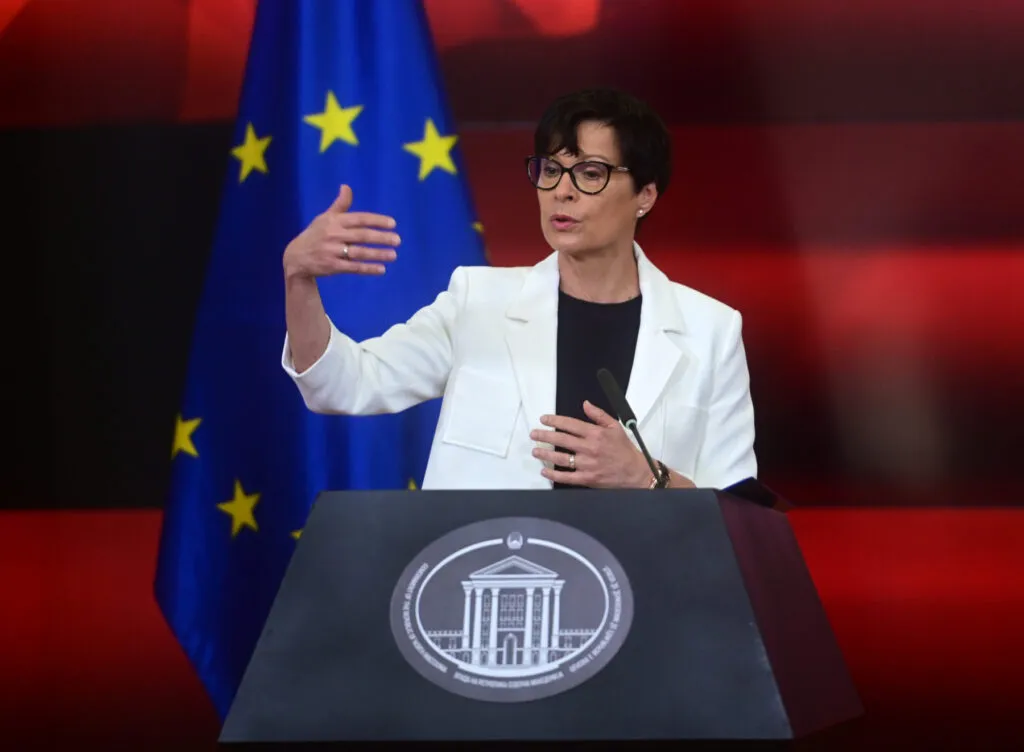
Ursula von der Leyen announced that the European Commission is preparing roadmaps for the countries furthest along in negotiations. Marta Kos listed them: Montenegro, Albania, Moldova, Ukraine. Macedonia is not on the list.
The enlargement commissioner said so in an interview with Bulgarian National Television, on the margins of the European Parliament's plenary session in Strasbourg. For Macedonia she had a different sentence - that progress by the two most advanced Western Balkan countries could encourage our country to move forward too.
Encouragement. Not a roadmap.
The condition, repeated once more
Asked by a journalist how the EU can get Skopje to carry out the constitutional amendments, Kos answered with a formulation we know by heart.
"Certainly, the government in North Macedonia has to keep its promise. They have to change their Constitution, this was agreed between North Macedonia and the 27 EU member states. Once this is done, I will count on the support of your country so that we can move forward with North Macedonia as well," she said.
Notice who the second half of that sentence is addressed to. Not Skopje - Sofia. Kos is telling Bulgaria that after our constitutional amendments, its support is expected.
Expected. Not guaranteed.
Why the gap between an expectation and a guarantee is the whole story
The constitutional amendments are a concrete political obligation within the accession process. But after them, every ordinary European criterion remains: rule of law, independent institutions, the fight against corruption, public administration reform, alignment with European legislation. Meeting the condition can untie the political knot. It cannot substitute for the reforms.
The resistance among the Macedonian public does not come only from the content of the amendment, but from the absence of trust. Part of the public believes the state is once again accepting a condition with no clear guarantee that measurable progress follows it.
Dimitar Nikolovski of Eurothink sees the same mechanism: "That is a definitively set-in-concrete position that has been repeated many times," he says of the constitutional amendments question.
Canada, for comparison
In the same speech, von der Leyen invited Canada to become the European Union's first associate member. Canadian Prime Minister Mark Carney welcomed the proposal before the European Parliament.
"Canada welcomes this ambition and I can tell you that polls show an overwhelming majority of Canadians support much closer ties with Europe," he said.
Canada is not a candidate country and is not seeking full membership - the positions are not the same and should not be conflated. But one conclusion suggests itself: the EU is becoming more flexible toward those who are not waiting in the queue, at the very moment it repeats the same old condition to those who are.
Nikolovski names the trend: enlargement is moving toward differentiation, where countries that progress get an ever clearer perspective and timetable, while Macedonia stays blocked.
This autumn, according to Kos, will be "the autumn of enlargement". The question is whether it is an autumn for us, or just another date.
The latest 10 news from this category
Monitoring by the All for Fair Trials coalition: hearings twice a year, proceedings running up to 33 months, and young...

Of 340 million denars, only 40 million came from private money - the rest came from the State Lottery. Prosecutors...
The State Audit Office already warned that withholding the points makes favouritism possible. The rulebook requiring them to be published...
Two senior officials announced progress, the two largest parties denied it the same day. The amendments sit blocked behind 13,500...
The police acted on their own knowledge, without the PM filing anything at all. The same mechanism exists for every...
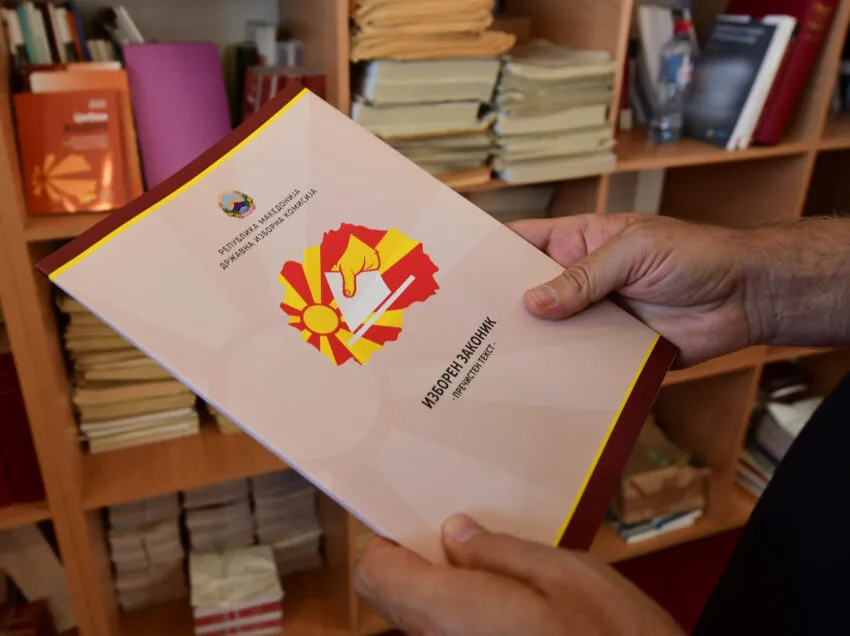
The Electoral Code is the one unfulfilled reform obligation, and the working group does not even know when it will...
It was supposed to cost "zero denars". Now the opposition wants an investigation, and the timeline - David Guetta announced...
Five negations in one sentence, pension growth "16 times higher" with not a single figure beside it, and a third...

One side waits for a letter, another waits for a different commission, a third waits for consent. In those same...
The commission's chairman says it only checked whether the documents were complete. The public call says something else entirely -...
This site uses cookies - is that okay? Learn more
Be the first to know when Metla launches something new
Leave your email and we will write when there is a new guide or something new on Metla.
