Ljupcho Has Been Missing Ten Days, and the Family Warned Beforehand: They Got the Referral, the Hospital Said It Was Being Renovated
16.08.2026


16.08.2026

16.08.2026

16.08.2026
16.08.2026

16.08.2026

16.08.2026

16.08.2026

15.08.2026

14.08.2026

16.08.2026

16.08.2026

15.08.2026

16.08.2026

16.08.2026

16.08.2026

16.08.2026

15.08.2026

14.08.2026

16.08.2026

16.08.2026

16.08.2026

16.08.2026

16.08.2026

15.08.2026

09.03.2026

27.02.2026

19.02.2026

15.08.2026

14.08.2026

13.08.2026

23.04.2026

23.04.2026

12.04.2026
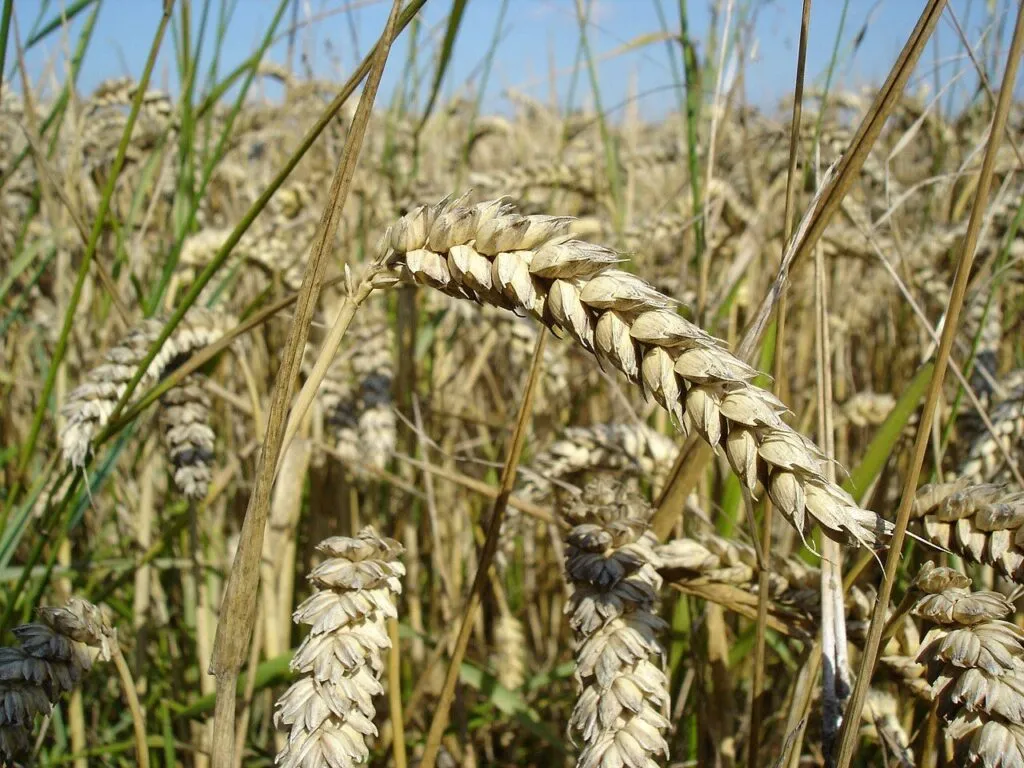
Nine and a half to ten denars per kilo of wheat. That is the price Pelagonia's farmers finished this harvest on.
Five or six years ago the same grain was bought at 19 denars. So this is not a drop of a few percent - it is roughly half the price the producers themselves remember.
And now the numbers that make the story serious. Before the buy-up, farmers were already warning that sustainable production needs a price between 15 and 18 denars. With subsidies paid on time, total income could reach 22 to 23 denars - the level at which, by their calculations, production remains economically justified.
They got ten. And that is where the real part begins.
Where the difference went
Mile Kebakoski of the Southwest Farmers Association traced the grain's route with striking precision: some was exported to neighbouring countries, some stayed stored with the farmers, and some with the traders - who are now waiting for the tender to sell the harvest into the state commodity reserves.
"The traders were not controlled by anyone and they pushed the price down so much so there would be a bigger margin at the tender for them to split, if there is anything symptomatic here, and there certainly is, because the same 'actors' show up whenever there is a commodity reserve tender for wheat," Kebakoski said.
Read that construction as a model, not as an accusation. A trader buys grain from a farmer at 10 denars. The same trader then sells it to the state through a commodity reserve tender - at a higher price. The farmer carried the risk of the weather, the yield, the fuel, the seed, the fertiliser and the crop protection. The middleman carries the margin.
Farmer Zlatko Dzhumkovski put it without any economic terminology: "Why hold a meeting now, when the grain has been handed over and the middlemen made 2 denars a kilo, maybe more, off the farmers' hardship. They took our wheat for nothing, and now they will put the price of bread up too."
And he added the comparison that stings most: five or six years ago they took the grain at 19 denars and bread did not get more expensive. Now the grain was bought at nine and a half, and bread will get more expensive.
This is not a plea for mercy. There is a law
Here is the part that changes the entire register of the story, and the part institutions least want to hear.
Under the Law on Agriculture and Rural Development, strategic crops are guaranteed a protective price, calculated on the basis of the production price increased by 25 percent. And further: in conditions of market disruption, when the purchase price is lower than the calculated protective price, the state is obliged to pay the difference.
Gjorgji Karakashev of the National Agricultural Network said it in words that leave no room for interpretation: if this legal measure is not respected, the state is grossly violating the Law, and there should be institutional and personal criminal liability for it.
Except the production price does not exist
And now the trick, which is elegant enough to be worth explaining slowly.
The protective price is calculated from the production price. If the production price does not exist as a document, the protective price cannot be calculated. And if the protective price cannot be calculated - it cannot be established that the purchase price is below it. The obligation to top up, formally, never activates.
According to Karakashev, for grains from the 2025 harvest the Ministry of Agriculture has to this day not produced a production price for barley or for wheat - despite the legal obligation.
So the law has not been repealed. It simply has no number to attach itself to.
That it can be done when there is the will is shown by the record: for the 2023 harvest the National Agricultural Network lobbied a document out of the Agricultural Institute in Skopje with a production price of 19 denars for wheat and 15 for barley - and that year a record price was achieved for both crops. For the 2024 harvest, by government decision, five million euros were approved through the Intervention Fund, that is three denars per kilo of wheat delivered and six thousand denars per hectare for barley.
What they are asking for now
At the meeting in Prilep the farming associations asked for five things: an additional 5 denars per kilo from the Intervention Fund, urgent payment of the 2024 subsidies for delivered wheat, by area and by yield achieved, a correction of the 2026 Subsidy Programme, and a halt to imports of wheat and flour from Serbia.
One of those demands shows how the administration manufactures a problem by itself. Under the old programme farmers sowed 150 kilos of seed material per hectare; the new one requires 200. But the sowing was done before the change - and now, as Kebakoski says, no receipt or invoice can be found for that extra quantity, because the year-end accounts were closed by New Year.
The minister: the price is set by the exchange
Agriculture Minister Borche Serafimovski, in Prilep two weeks ago, said the yields were yet to be analysed and that price is an exchange matter that does not depend on the state alone but also on the region. He announced a prior analysis and prior price-setting together with the buyers and with the region.
With the budget revision it was announced that around one billion 200 million denars will be paid out in subsidies, covering grain crops among others.
The farmers say something shorter: it is late for meetings. Metin Kurtov from Konche said it with an irony that needs no comment - "Isn't it a bit 'early' for a meeting about wheat? The wheat went for a miserable 10 denars, now meet every day if you like".
If the production price is higher than the one the farmer sells the grain at, production loses its economic logic, Kebakoski warns - and that means fewer hectares under wheat and greater dependence on imports. And that is the whole calculation: the state can pay 5 denars per kilo now, or pay for imported wheat later. The difference is that in the second version there is nobody left to invoice for the risk.
The latest 10 news from this category
Machinery up 10 percent, buildings up 19, exports up 6.4 - and employment only 0.3 percent. The composition of a...

Technicians, metal workers, machine operators and drivers - those are the five most sought-after groups in Europe. Macedonia, in the...
Amazon, Google, Meta и Microsoft градат гасни централи од по неколку гигавати. Аналитичарите сметаат дека цената на гасот ќе прескокне...

Pony.ai дава технологија, Uber дава корисници, а локален партнер го добива одржувањето, чистењето и полнењето. Четири европски града кои сè...

Забраната за автономни камиони над 4.500 килограми падна во април, а Aurora и Kodiak веднаш добија дозволи. Тужбата не тврди...
The problem with the 90-day Schengen rule has not changed. What changed is who is protesting. The deadline the hauliers...

4,324 dollars an ounce after a two-month peak of 4,449. Investors are cashing in their gains, and the headline about...

NLB is warning about fake messages carrying the bank's name. The rule is absolute and that is exactly what makes...

The company tried to delay answering until the Supreme Court ruled on something else. It failed - and only then...

200 business enquiries after a single demo on Hacker News. The leap from a small purpose-built model to a genuinely...
This site uses cookies - is that okay? Learn more
Be the first to know when Metla launches something new
Leave your email and we will write when there is a new guide or something new on Metla.