

They Rode In on Scooters, Torched the Shops and Left: The Fire in Shuto Orizari Burned for Three Hours, Setting It Took Fifty Seconds
13.09.2026


13.09.2026

13.09.2026

13.09.2026

13.09.2026

13.09.2026

13.09.2026

13.09.2026

12.09.2026

11.09.2026

13.09.2026

13.09.2026

12.09.2026

13.09.2026

13.09.2026

13.09.2026

13.09.2026

12.09.2026

11.09.2026

13.09.2026

13.09.2026

13.09.2026

13.09.2026

13.09.2026

12.09.2026

09.03.2026

27.02.2026

19.02.2026
13.09.2026

12.09.2026

11.09.2026

23.04.2026

23.04.2026

12.04.2026


The promise was simple: machines would take over the boring work and we would work less. Now the man who sells the world's best-known artificial intelligence says that is not going to happen.
Sam Altman, the head of OpenAI, said on the „Relentless” podcast that society has never managed to shorten working hours significantly, even though technology has constantly promised people would work less and have more free time. „I do not expect artificial intelligence to change that,” he added.
„Secretly we will be happy”
Instead of a better work-life balance, the OpenAI chief argues that people will in fact be happier if they carry on working hard. „I think in a post-superintelligence world we will all be significantly busier than we expected. We will still complain about it, but secretly we will be happy,” he said.
The position makes sense once you consider where it comes from. When a tool makes you faster, expectations rise along with you, the workload expands, and the competition tightens. The gain does not convert into free time, it converts into more output. That is not a prediction about the future, it is a description of the past thirty years.
From liberation to intensification
Tech leaders spent years promising that work would soon become unnecessary, that capable models would take over monotonous tasks and free people up for what they actually enjoy. Altman's stance is a significant reversal of that dominant story: technology will not give us less work, it will let us do more.
In practice, artificial intelligence is pushing employees to work more intensively. That intensification is already increasing workplace burnout, alongside the constant threat of losing your job. Psychiatrists warn that such uncertainty carries serious psychological consequences. Those who stay often absorb the tasks of laid-off colleagues, which makes the situation harder still.
When even the optimists gave up
While politicians like Bernie Sanders still argue for a four-day week enabled by artificial intelligence, the tech pioneers themselves appear to have abandoned that vision. A message that a heavier workload should ultimately make us „happy” lands differently when it comes from a man with a direct stake in how the labour market is changing.
For a reader in a country where the average wage is counted in hundreds of euros and overtime often is not paid at all, this is not an abstract Silicon Valley debate. If the technology we are all paying for does not bring a single hour less work, the only question left is who it brings more to.
The latest 10 news from this category
When the two biggest firms in an industry ask for rules on how fast anyone may run, the rules rarely...
Not a single password fell. What fell was the assumption that a request from a government domain is automatically a...
The biggest names in mathematics have signed a letter against the AI labs. The dispute is not whether the machine...

Five campaigns, 200 million exchanges, and the defences fell to a request for a Japanese translation. The industry that harvested...

The hackers were inside for a whole year. The company confirmed it only after a journalist found his own licence...
The chief financial officer gathered enough votes on the board and now runs the company. The founder found out 50...
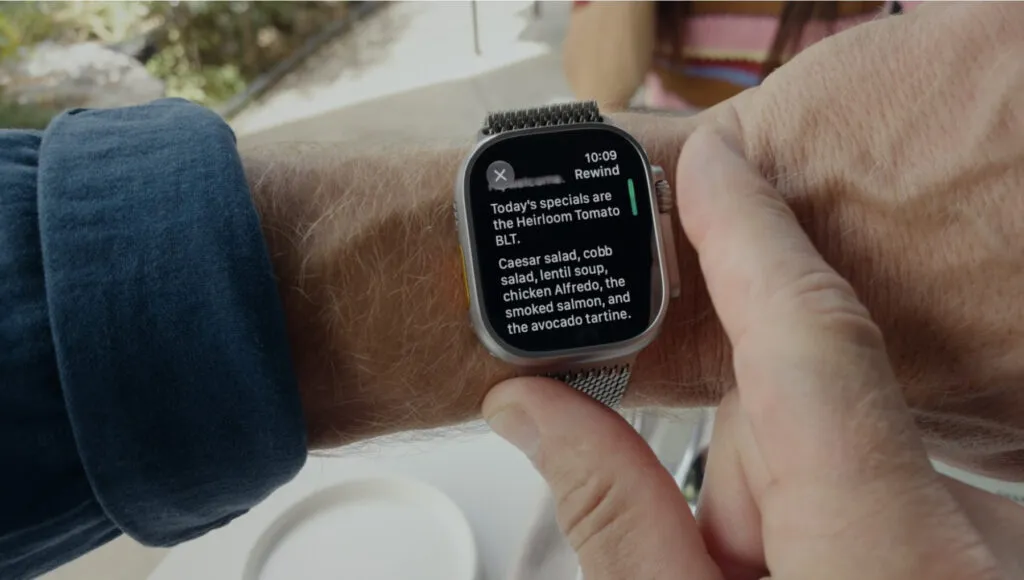
The company that turned privacy into marketing is now selling a watch that listens. The person sitting across from you...
The largest round ever by a European tech firm is led by Samsung, and Macron called it a third way...
A consultant paying 200 dollars a month could not get an itemised bill for his own usage. When he asked...
They set off at three in the morning, reached the summit at seven in the evening, spent the night in...
This site uses cookies - is that okay? Learn more
Be the first to know when Metla launches something new
Leave your email and we will write when there is a new guide or something new on Metla.
