Slaveski Tells Filipče to Delete His "Shameful Post": Alta Banka's Customers Got a Duel on X Instead of a Deadline
02.11.2026


02.11.2026

02.11.2026
02.11.2026

02.11.2026
02.11.2026

02.11.2026

02.11.2026

02.11.2026

01.11.2026

02.11.2026

02.11.2026

01.11.2026

02.11.2026

02.11.2026

02.11.2026

02.11.2026

01.11.2026

31.10.2026

02.11.2026

02.11.2026

02.11.2026

02.11.2026

01.11.2026
01.11.2026

02.11.2026

01.11.2026

01.11.2026

23.04.2026

23.04.2026

12.04.2026


A dinner in Athens, in front of Greek politicians. The then US ambassador to Greece, Kimberly Guilfoyle, took credit for the collapse of the ruling coalition in Romania and added: "We can do that to any country we want. We can do that here too."
The scene is described by Anne Applebaum, a Polish-American historian and Pulitzer Prize winner, in an analysis for an American magazine. One thing you need to know above all: her husband is Polish Foreign Minister Radek Sikorski. She isn't watching from the stands. But part of what she writes has already been covered at length by Polish media.
Guilfoyle soon resigned over a scandal, after asking a Republican donor for 100,000 dollars to a private account. According to Applebaum, European allies were far more alarmed by her political threats. Washington used to support democracy as a system in principle and to recognise the legitimacy of elected parties of the centre-left and centre-right. Today the administration and the business elite around it openly push parties close to MAGA, including pro-Russian ones, and in at least three European countries leaders were urged to throw out their coalition partners and share power with the radical right.
Poland: Trump in person
When Polish Defence Minister Władysław Kosiniak-Kamysz, leader of a smaller coalition party, came to Washington in the spring, Donald Trump took him aside. He told him he would stand much better in the White House if he left the government and struck a pact with the nationalists and the far right. The minister refused. Applebaum writes that nothing like this had happened in Poland since the days when Soviet authorities decided who would lead the Polish communists.
Romania: a story that smells of gas
The ambassador to Greece, to recall, also meddled in Romania. Guilfoyle pushed for the construction of a gas pipeline and the purchase of American liquefied gas for a company whose lobbyist constantly travelled with her. Then Prime Minister Ilie Bolojan supported the pipeline but refused to sign the gas contracts, because the price was too high and Romania was preparing to export its own gas.
Guilfoyle was then filmed at a dinner in Bucharest with Social Democrat leader Sorin Grindeanu. Soon after, the Social Democrats left the government and, together with the radical right, voted no confidence in Bolojan. Grindeanu and pro-Russian right-wing leader George Simion deny any American influence. In Romania, Applebaum writes, few believe it was a coincidence.
Germany: entry for CDU and AfD only
The next dam is in Berlin. The goal, according to Applebaum, is for the CDU to end its cooperation with the Social Democrats and share power with the AfD. Trump celebrates far-right results on Truth Social, and Elon Musk gives the AfD huge free promotion on X.
When a delegation of German MPs came for meetings at the Pentagon and the State Department, they were told only members of the CDU and AfD could enter the buildings. For the Social Democrats, who sit in the German government, there was no entry. The CDU leadership refused such a meeting. It's hard to send an ally a more open message than that.
Arm yourselves, then hand the weapons to the radicals
This is where the author finds the paradox. Senior Pentagon officials such as Elbridge Colby demand that Europeans take on the main responsibility for their own defence. Germany, Poland and Romania took that seriously and put huge sums into armament. At the same time, Washington is pushing onto the stage leaders who oppose defence spending and openly cheer for Russia. AfD co-chair Tino Chrupalla demands the complete withdrawal of the US military from Germany.
The recipe, Applebaum concludes, has already been tried in Europe in the 20th century and ended in catastrophe.
For the Balkans this isn't a distant topic. Here foreign ambassadors have long been part of domestic politics. If Washington talks this way to Poland and Germany, members of NATO and the EU, what tone awaits those still standing at the door? And if tomorrow some ambassador at a dinner in Skopje says "we can do that here too", who would get up from the table?
The latest 10 news from this category
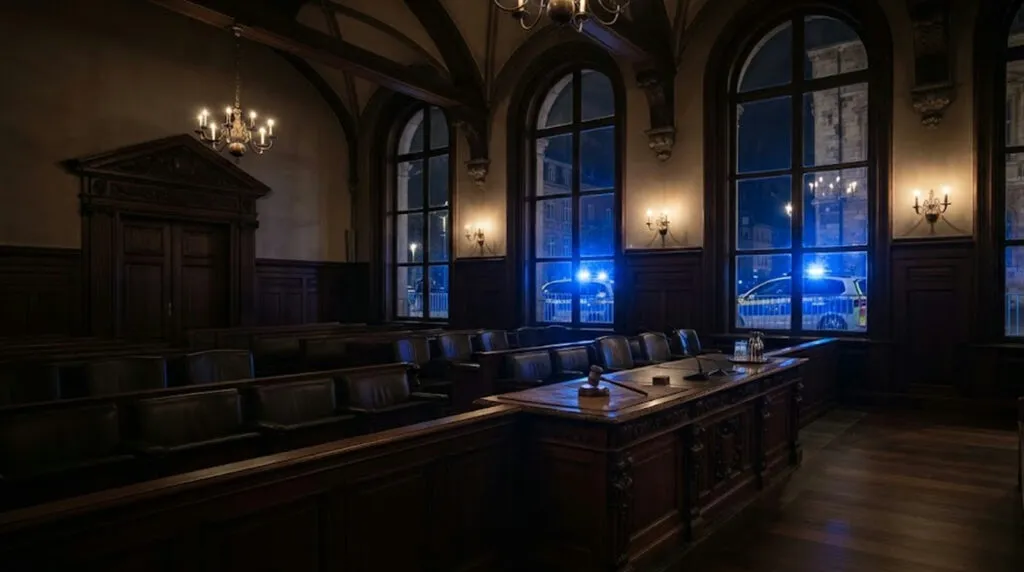
Both sides say they're defending the constitution, and the court won't recognise as a judge the woman suspending its president....

The Norwegian queen's son has a conviction for around thirty offences, a job offer he wants to show the court...

The suspended court president asks for a crowbar, a man from the crowd cuts the chain, and police guard the...

For eleven years two parties have been grinding down Poland's Constitutional Tribunal, and now a police cordon guards the court...

Sentenced to four years for around thirty offenses, his appeal isn't until February 9, and the prosecutor wants four more...

Европа се соочува со нов бран масовни протести. Денеска илјадници граѓани излегоа на улиците во Франција и Германија, додека незадоволството...

The admiral brought him the options at the White House, while Vance's letter reached Tehran via Qatar. One hand extended,...
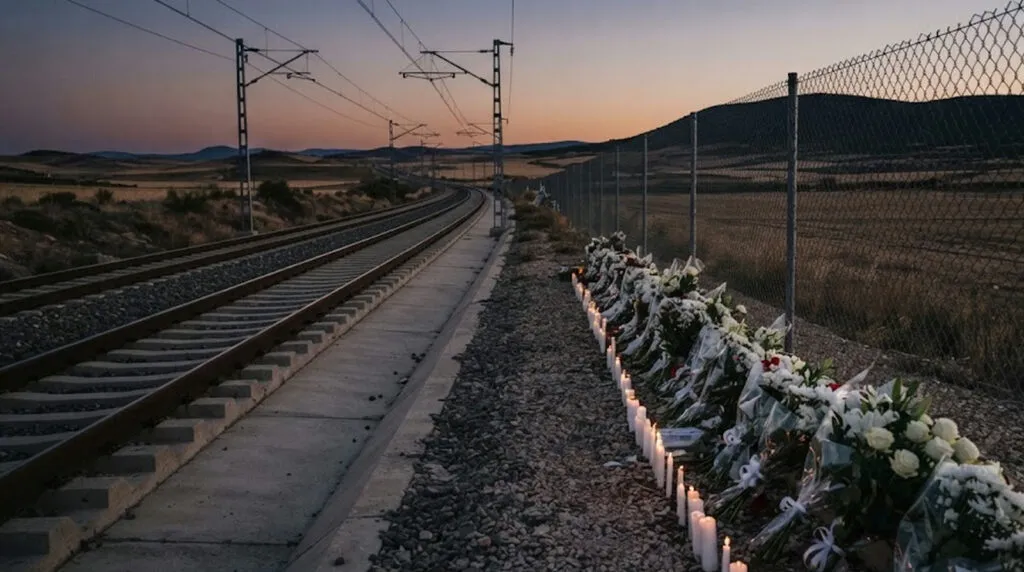
A high-speed train slammed into a train standing broken down on the track after the control centre gave the trains...
Unions had warned for months about signal failures and overwork, and the minister is looking for the culprit in the...
Neither Netanyahu nor Gadi Eisenkot has 61 seats. Likud remains the biggest party, but with no path to power -...
This site uses cookies - is that okay? Learn more
Be the first to know when Metla launches something new
Leave your email and we'll write to you when there's a new guide or something new on Metla.