
15 Wildfires in One Day, 23 in 24 Hours: And Once Again It Is the Landfills That Are Burning
12.08.2026



12.08.2026

12.08.2026

12.08.2026

12.08.2026

11.08.2026
10.08.2026

12.08.2026

12.08.2026

11.08.2026

12.08.2026

12.08.2026

12.08.2026

12.08.2026

11.08.2026

10.08.2026

12.08.2026

12.08.2026

12.08.2026

12.08.2026

12.08.2026

12.08.2026

09.03.2026

27.02.2026

19.02.2026

12.08.2026
11.08.2026

10.08.2026

23.04.2026

23.04.2026

12.04.2026

The Constitutional Court alerted the Public Prosecutor's Office and the Judicial Council over a judge at the Skopje Basic Civil Court who, according to the court, failed to act on its ruling in the case of journalist Natasa Stojanovska. The Judicial Council and the Association of Judges replied with a joint statement - and the reply is more interesting than the complaint itself.
Both bodies say they respect the constitutional position of the Constitutional Court and the binding character of its rulings. But, they add, the independence of the regular courts, the legally prescribed judicial procedures and the available legal remedies must also be respected.
Their argument is specific. In case P4-240/22 the Skopje Basic Civil Court issued a ruling on 4 May this year, after which an appeal was lodged. Since the ruling is not final, its legality is for the competent appellate court to decide - not some other body.
"Any institutional action connected to a specific non-final court ruling requires particular care and restraint," they warn, judging that acting otherwise could create the impression of pressure on the court or of a predetermined outcome.
The other side of the same argument
Lawyer Pavlina Zefic reacted sharply to that statement. Her objection is that the Judicial Council is defending a judge who failed to act on a final ruling of the Constitutional Court, and that independence cannot serve as an answer to a question about accountability.
"We keep hearing the word independence, and rarely accountability" - that is the sentence that sums up her position. Independence without accountability, she says, does not lead to trust in the judiciary - and the price is paid by citizens whose final rulings go unenforced.
Both sides are right, and that is the problem
The Judicial Council is right that an appeal procedure exists and should be exhausted. Zefic is right that independence must not be a shield against every form of accountability. Both claims can be true at once, which is precisely why this argument cannot be settled through press statements.
What is missing from the whole exchange is a third name - the journalist whose case is the subject of all of it. While the Constitutional Court, the Judicial Council and the Association of Judges swap statements about who is allowed to criticise whom, her case sits somewhere in an appeal procedure. That is the point where the judiciary stops being a legal debate and becomes a personal matter for the person waiting.
The latest 10 news from this category
The law provides for liability even when a flag is displayed wrongly "by mistake or ignorance". Three pieces of data...
After 25 years the DUI leader announced that his party won't let him leave. And called for a vote that...
The Constitutional Court says its decision wasn't enforced. The judges say the proceedings are ongoing and the pressure is impermissible....
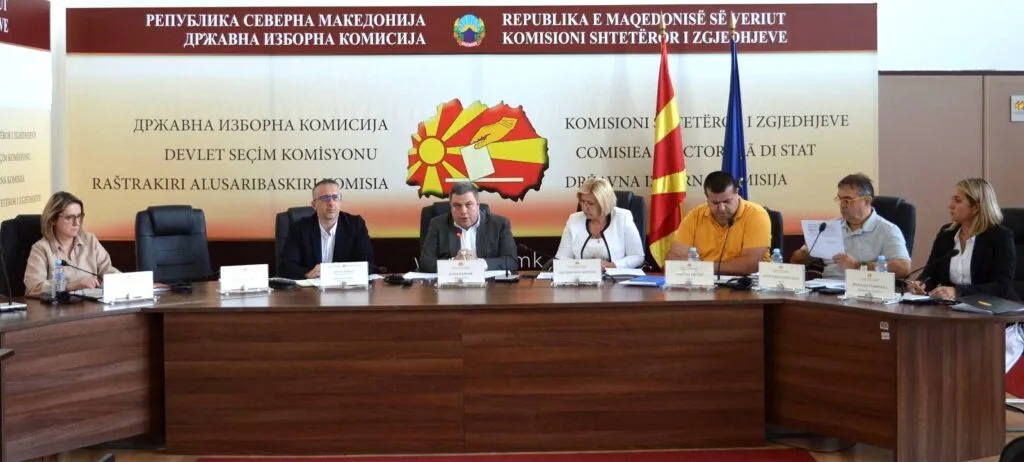
The election commission adopted the timetable after the sudden death of Jovica Ilievski, who won last year by a narrow...

The opposition says no public notice. The government says a tender. The company says it is a donation. Solidarity is...

The minister says citizens should rest easy. In the same interview he said the previous government made promises the public...

Mickoski promised clean water perhaps as soon as today. The two parties accuse each other of silence - while the...

Of everything announced at the briefing, the procurement claim is the most checkable. „There will be elections when they run...

The statements talk about friendly relations. The composition of the delegation talks about a gas interconnector, a rail corridor and...
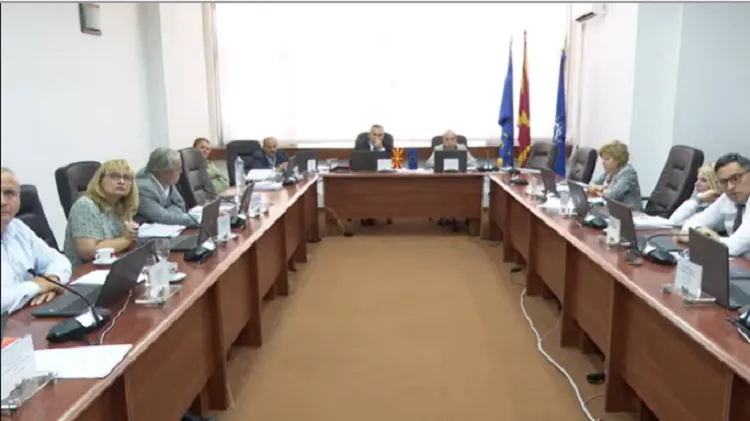
Tanja Mileva has 197 points, the highest rating among judges. The Council voted nine to two for the other candidate....
This site uses cookies - is that okay? Learn more
Be the first to know when Metla launches something new
Leave your email and we will write when there is a new guide or something new on Metla.