

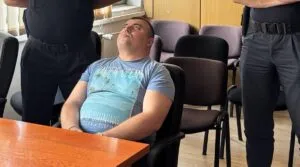
The Two Survivors of Staro Nagoricane Testified: "He Beat Me for a Full Hour" - and the Experts Wrote That the Risk of Repetition Is High
01.09.2026


01.09.2026
01.09.2026

01.09.2026

01.09.2026

01.09.2026

01.09.2026

01.09.2026

31.08.2026

30.08.2026

01.09.2026

01.09.2026

31.08.2026
01.09.2026

01.09.2026

01.09.2026

01.09.2026

31.08.2026

30.08.2026

01.09.2026

01.09.2026

01.09.2026

01.09.2026
31.08.2026

30.08.2026

09.03.2026

27.02.2026

19.02.2026
31.08.2026
30.08.2026
29.08.2026

23.04.2026

23.04.2026

12.04.2026

You look for the key you are holding in your hand. You walk into a room and stop because you do not know why you came in. You read the page twice and nothing stayed. The first thought is always the same - my memory is failing.
Most likely it is not. Psychiatrist Marian Rojas Estape explains it in one sentence: "If a person lives in a state of constant alert, they spend their mental battery on survival, not on learning and remembering."
What "mental battery" means
There is no battery in the brain; it is a metaphor for limited cognitive resources - above all attention. The prefrontal cortex handles attention, problem-solving and impulse control, and those capacities do not stay unchanged all day. When a large share of attention is permanently occupied by worries, the brain reads that as a threat and prioritises safety. Everything else gets less.
Here is the point usually missed: you did not forget - you never paid enough attention for anything to be recorded in the first place.
Which part of memory suffers
Valeria Medina, a neuropsychologist at NeuronUp, says the most vulnerable is episodic memory - the kind that lets you recall a personal experience together with its place and time. The hippocampus is key: it binds people, places, sequence and emotion into one coherent memory, and for that it also needs the prefrontal cortex to select and connect.
When stress appears, priorities shift. "The release of cortisol and other substances makes the brain prioritise threat detection and rapid reaction," Medina says. Attention narrows onto the danger, and the details get fewer resources.
Hence the contradiction we have all lived: you remember the emotional part vividly, but cannot reconstruct it accurately. "Emotional elements are remembered intensely, but difficulty arises in recalling the place, the time or the sequence of the facts," she explains. Some memories feel incomplete or fragmented - not erased, but partially recorded or temporarily hard to access.
Why this is worth knowing
Because the diagnosis we give ourselves is usually wrong, and usually more frightening than the truth. Someone who has lived under pressure for six months and starts forgetting easily concludes something is wrong with their brain. In the vast majority of cases, the brain is working exactly as it was built to work - spending its resources where it senses danger.
Stress does not break memory. It changes how you attend, build and access memories. The question that follows is a different one from where we started: not what is wrong with my memory, but what has been keeping my alert switched on for so long.
The latest 10 news from this category

The difference between fruit and a starter is one millimetre at the cutting board. Four recipes before its season ends,...

All of humanity's unhappiness comes from one thing - the inability to sit quietly in a room. He had no...

The potato steams instead of frying, and the crispness you are after disappears. She speaks excellent Spanish - but technique...

Half of people do not know that so-called hypoallergenic cats exist. The problem is that they do not exist either...

Four ingredients and one rule that tolerates not a single step of delay. If the tomato is good, you need...

The one thing in the entire health industry that nobody sells you - which is exactly why you rarely hear...

From the same courgette you get spaghetti, lasagne, cannelloni and ravioli. Overcooked, it is none of those things - it...

The pace is set by whoever walks slowest, and the break counts as part of the route. The question is...
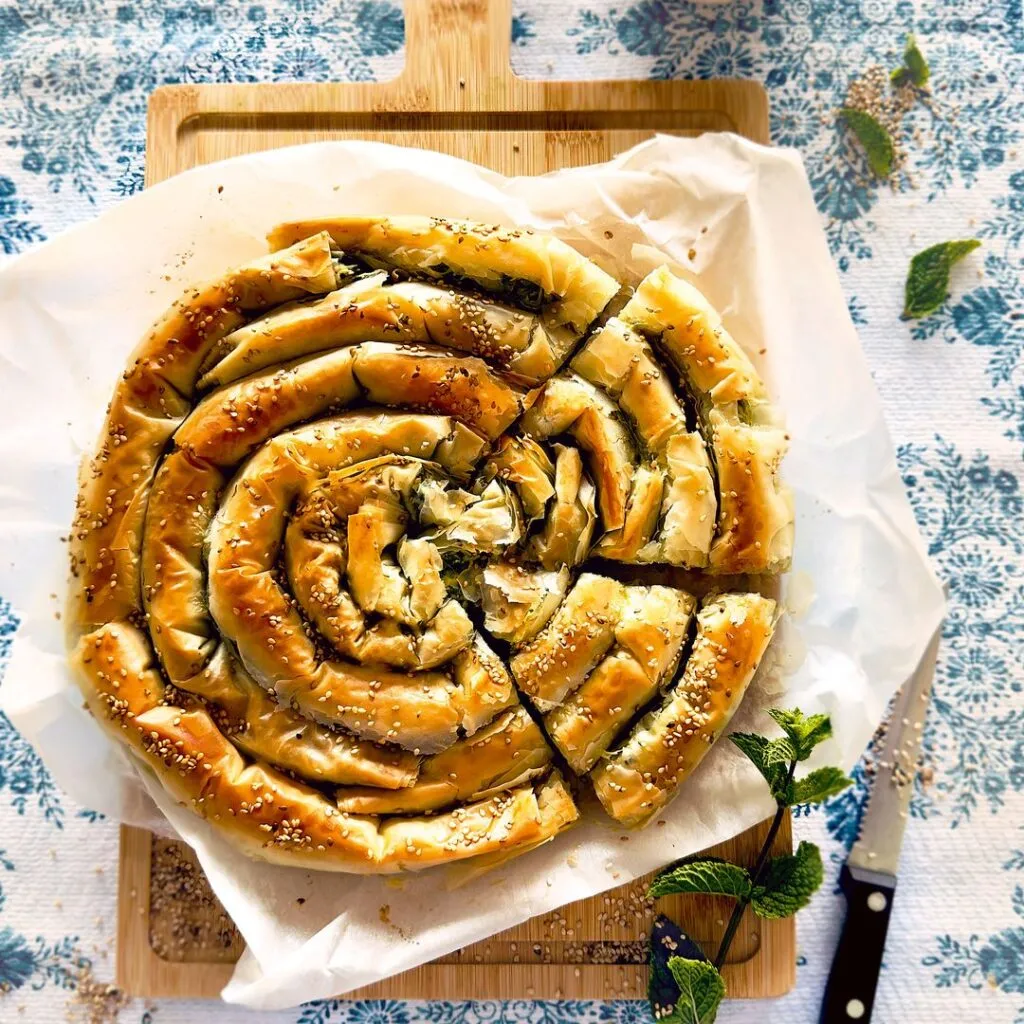
Greek cooking here gets reduced to two headlines. That is like presenting Macedonia with ajvar alone - and the point...

Training does not cover the debt from a sleepless night; it adds a risk of injury instead. The whole list...
This site uses cookies - is that okay? Learn more
Be the first to know when Metla launches something new
Leave your email and we will write when there is a new guide or something new on Metla.
