Smugglers Dragged a Police Officer With Their Vehicle at Blace: the Second Car Is What Tells You This Wasn't an Accident
14.09.2026


14.09.2026

14.09.2026

14.09.2026

14.09.2026

13.09.2026

12.09.2026

14.09.2026

14.09.2026

13.09.2026

14.09.2026

14.09.2026

14.09.2026

14.09.2026

13.09.2026

12.09.2026

14.09.2026

14.09.2026

14.09.2026

14.09.2026

14.09.2026

13.09.2026

09.03.2026

27.02.2026

19.02.2026

14.09.2026
14.09.2026

13.09.2026

23.04.2026

23.04.2026

12.04.2026

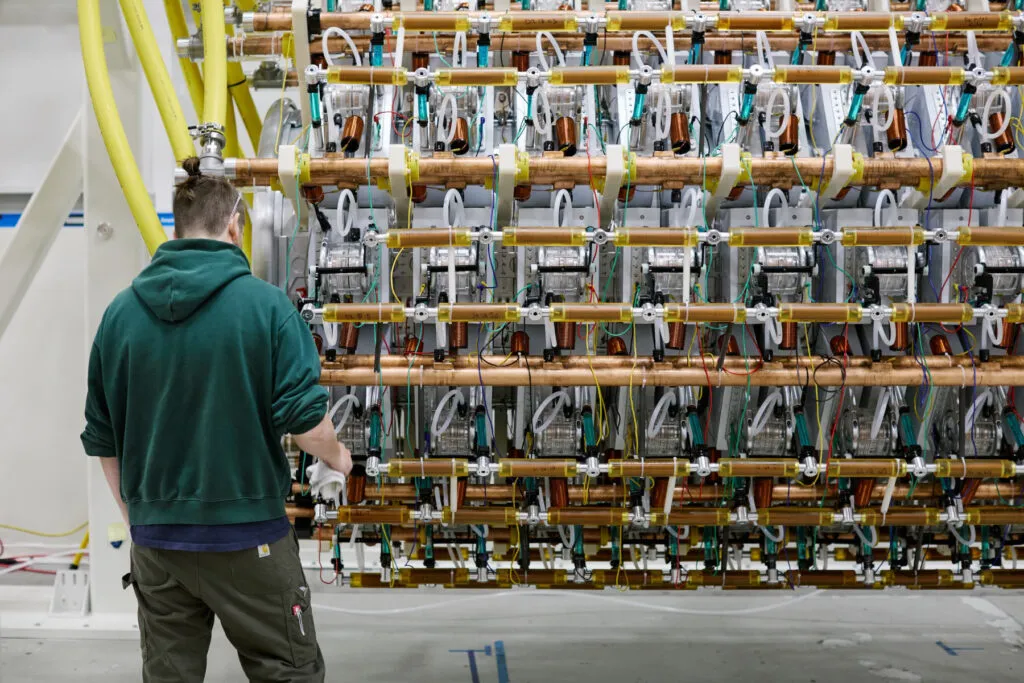
Fusion - the energy of stars, the promise of clean power without waste - was sold for decades as salvation for the planet. Now more and more firms in the field are finding a new source of money, and it does not come from environmental funds. It comes from the defence industry.
Last week the American startup Xcimer, which is building a laser-based reactor, announced a partnership and investment from RTX - the conglomerate that includes the arms manufacturer Raytheon. The deal is unambiguous: Xcimer gets money, and RTX gets access to study how its lasers might serve their own purposes. The Denver firm claims to operate the largest privately owned laser system in the world.
The second, Pacific Fusion, signed a memorandum with the US National Nuclear Security Administration for joint experiments. Its demonstration facility is being built in New Mexico, not far from the laboratories at Sandia and Los Alamos - the places where America's nuclear weapons were designed.
"It was always on our minds"
Neither of those two steps is a coincidence, and the firms are not pretending otherwise. "It turns out the facility we are building has applications in this leading defence area too", said Keith Leschien, co-founder and chief technology officer of Pacific Fusion. His colleague Carrie von Muench, co-founder and chief operating officer, was blunter still - the defence applications were "always on our minds". Leschien himself, who developed the company's core technology, previously worked at Sandia, at Lawrence Livermore and at the very nuclear administration he now signs memoranda with.
This is not a detour. It is a return to the beginning. Fusion as a science emerged from work on thermonuclear bombs during the Cold War; physicists then looked for a more constructive application for the same knowledge. The 2022 breakthrough happened at the National Ignition Facility - an institution that has served national security for more than 25 years.
A three-million missile for a two-hundred-dollar drone
Why now? Because drones have inverted the arithmetic of war. Air defence systems were designed against piloted aircraft - large, expensive and few. Against a swarm of cheap aircraft they make no sense. About a decade ago, a US ally shot down a 200-dollar consumer drone with a three-million-dollar Patriot missile. Target hit - but at what price.
Laser weapons change that sum. Instead of one expensive missile per shot, a laser fires quickly and relatively cheaply, off a generator or a ship's power plant. And firms already building the world's most powerful lasers for fusion are the ideal partner for that development.
Who is actually paying the bill
The reason for all of this is more mundane than the physics. Venture capital earmarked for climate technologies has stalled, and fusion is an expensive business - far more expensive than an app. Investors are happy when their firms find another pocket. The defence industry is that pocket, and it does not ask you to repay it with clean electricity in 2040.
That is understandable. But it is worth noting exactly what is happening: a technology sold for decades as the solution to the climate crisis is finding its first reliable customer in weapons. If fusion one day really does light the bulbs, it will probably be because somebody first found a way to point it at something. Does that make it less valuable - or just more honest about how science actually gets funded?
The latest 10 news from this category
The board voted, the founder kicked the administrators out of Slack and held out for three days. What does a...

Three months ago the company raised 60 million. Now it is worth almost ten times that, and its product is...

After Ohridska Banka, Sparkasse has gone after a second one. The approvals come from Podgorica, Belgrade and Frankfurt. The market...

They had offers and visas to stay in the US. They went back to Munich because the numbers worked better...

A signed term sheet in venture capital is treated as a word of honour. When the buyer offers sixty-seven years...
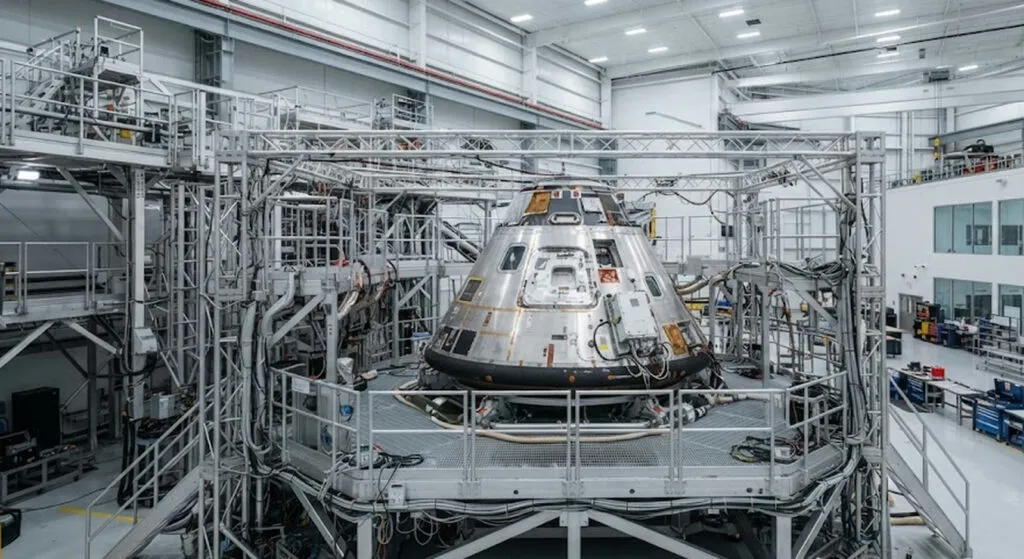
The queue for putting cargo into orbit is growing faster than the capacity, and one supplier holds almost all of...
Opendoor's founder raised 25 million dollars for an app that tells construction workers whether they installed something correctly. What the...
Twice they threw its game off the Indian market. Now the company is investing half a billion there, and outside...
Budgets are growing, contracts are shortening. When a client re-examines you twice a year, a valuation built on multi-year revenue...
The large models had the entire internet to learn from. Robots have nothing of the sort, and that very gap...
This site uses cookies - is that okay? Learn more
Be the first to know when Metla launches something new
Leave your email and we will write when there is a new guide or something new on Metla.