

Two Schoolyard Assaults Reported in a Single Day: the Police Promised Measures, the Education System Said Nothing
19.09.2026


19.09.2026

19.09.2026

19.09.2026

19.09.2026

19.09.2026

19.09.2026

19.09.2026

18.09.2026

17.09.2026

19.09.2026

19.09.2026

18.09.2026

19.09.2026

19.09.2026
19.09.2026

19.09.2026

18.09.2026

17.09.2026

19.09.2026

19.09.2026

19.09.2026

19.09.2026

19.09.2026
18.09.2026

09.03.2026

27.02.2026

19.02.2026

19.09.2026

18.09.2026

17.09.2026

23.04.2026

23.04.2026

12.04.2026

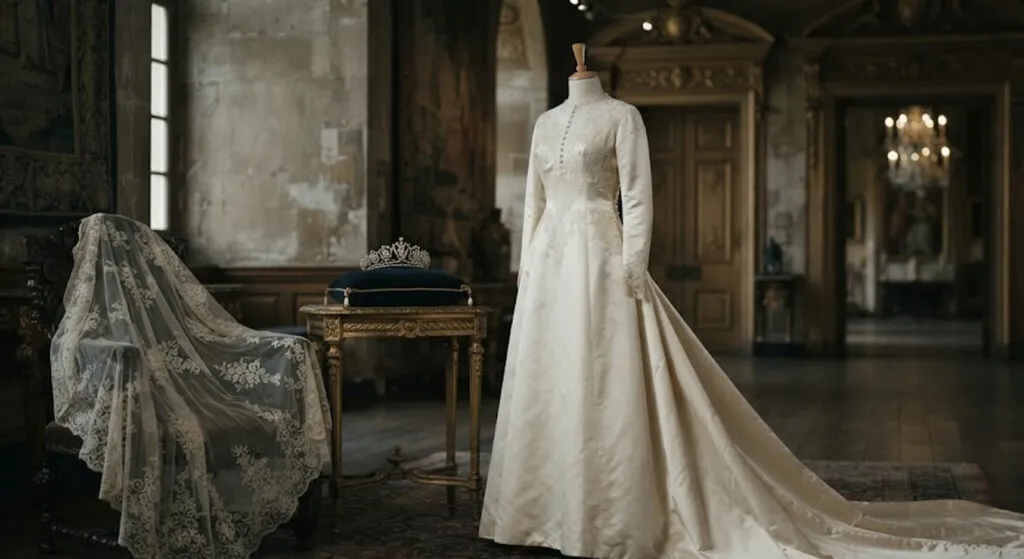
On 18 September 1964, in the Athens Cathedral of the Annunciation, a nineteen-year-old Danish princess married a Greek king who had reigned for only six months. Exactly 62 years ago. Constantine was 24 and had come to the throne after his father died of stomach cancer. Anne-Marie converted from Protestantism to Greek Orthodoxy in order to marry him. Nobody knew then that this was the beginning of the last Greek royal wedding.
They met when she was twelve, during a visit of his to Copenhagen. The friendship began when he turned nineteen. Once he became king, he waited for her to come of age so they could marry. That is a story told in court circles as a romance; seen from outside it is also a schedule in which everyone is waiting on a calendar.
The bride arrived by carriage, as did the groom, accompanied by his mother, Queen Frederica. The ceremony was led by Archbishop Chrysostomos II. The Romanov crowns above the couple's heads were held by European rulers - Harald of Norway, Carl Gustaf of Sweden, Charles of England and Juan Carlos of Spain. Four men who would all later sit on thrones of their own, in a room where nobody knew which of them would lose his.
At 11:30, a 101-gun salute announced the new queen to Greece. More than 1,000 guests from every great royal house, the aristocracy and high society.
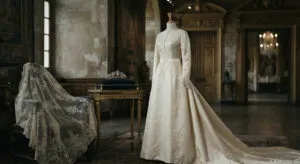
The dress was simple, and that was deliberate. It was created by the Danish designers Holger Blom and Jørgen Bender - a six-metre train, matte satin and an empire waist, inspired by French court fashion of the early nineteenth century. A boat neckline, French sleeves and gathers at the bust. The dress disappeared in December 1967, when the family went into exile in Rome, and resurfaced only in November 2023, during the renovation of the Tatoi Palace - the former residence of the Greek court. Fifty-six years in a room nobody had opened.
The veil was not new. Irish lace in the Juliet style, previously worn by both her mother and her grandmother. Her grandmother, Margaret of Connaught, wore the same veil when she married the Swedish king Gustaf VI Adolf, in St George's Chapel at Windsor.
The tiara was a gift from an Egypt that no longer exists. Made by Cartier, it was presented by Abbas II, Khedive of Egypt and Sudan, to Princess Margaret of Connaught in 1904. They had met at a ball in the viceroy's palace in Cairo. Diamonds and laurel spirals, more than sixty years later on the head of a bride in Athens. Around her neck she also wore a cross of brilliants.
The train was carried by six princesses: Irene of Greece, Anne of the United Kingdom, Christina of Sweden, Margarita of Romania, Tatiana Radziwill and Clarissa of Hesse. All in white, with bows at the waist and embroidered hems.
After the ceremony, the procession set off for the royal palace in Athens. The reign lasted less than a decade. Five children - Alexia, Pavlos, Nikolaos, Theodora and Philippos - and an exile that began three years after that wedding. That photograph from 18 September 1964 no longer looks like the start of a reign, but like the last bright image before something else.
The latest 10 news from this category

An industry that spent decades selling a flawless illusion is suddenly showing the shoot itself. That is not candour -...

The classic bob promised one perfect day. This version works against the salon business model - and that alone is...

Kate Middleton dropped the beige and the same cut suddenly looked twice as expensive. The industry sells a new silhouette...

A shade close to your natural one means the regrowth does not draw a line - and that you go...

A bride who does not hide behind a long sleeve and a closed neckline. How many Macedonian second marriages mean...

For forty-five years one brand has been selling the same white shirt. In an industry that abandons itself every six...

Colourful packaging has given way to white bottles and pharmaceutical language. One question stays the same: what does it say...
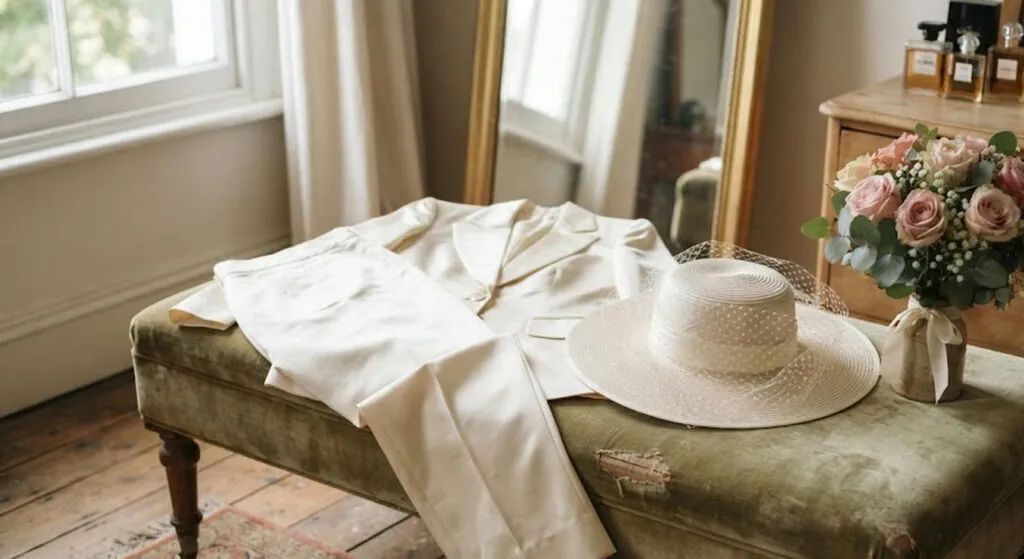
An Yves Saint Laurent suit instead of a white dress, a yellow coat instead of a veil. Fifty years on,...
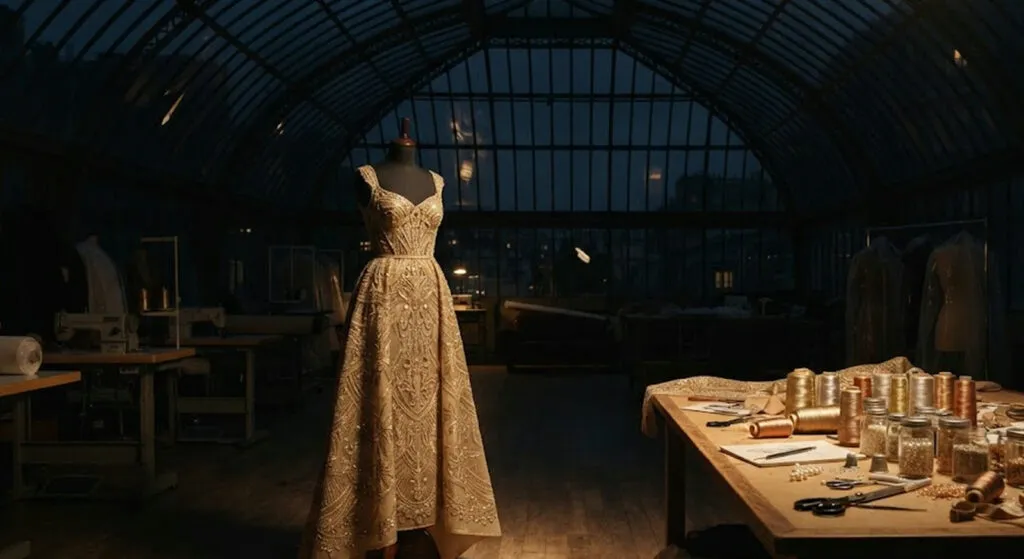
Hannibal Laguna showed his collection in the Crystal Gallery of the Cibeles Palace - golden reflections and hand embroidery. The...
Almost every version starts with a flat root, and the real work is done by the cut. A stylist said...
This site uses cookies - is that okay? Learn more
Be the first to know when Metla launches something new
Leave your email and we will write when there is a new guide or something new on Metla.
