
Sixteen Arrests in Twenty-Four Hours, All for Drugs: The Police Are Working - But Where Are All These People Coming From?
20.09.2026


20.09.2026

20.09.2026

20.09.2026
20.09.2026

20.09.2026

20.09.2026

20.09.2026

19.09.2026
18.09.2026

20.09.2026

20.09.2026

19.09.2026

20.09.2026

20.09.2026

20.09.2026

20.09.2026

19.09.2026

18.09.2026

20.09.2026

20.09.2026

20.09.2026

20.09.2026

20.09.2026

20.09.2026

09.03.2026

27.02.2026

19.02.2026

20.09.2026

19.09.2026

18.09.2026

23.04.2026

23.04.2026

12.04.2026

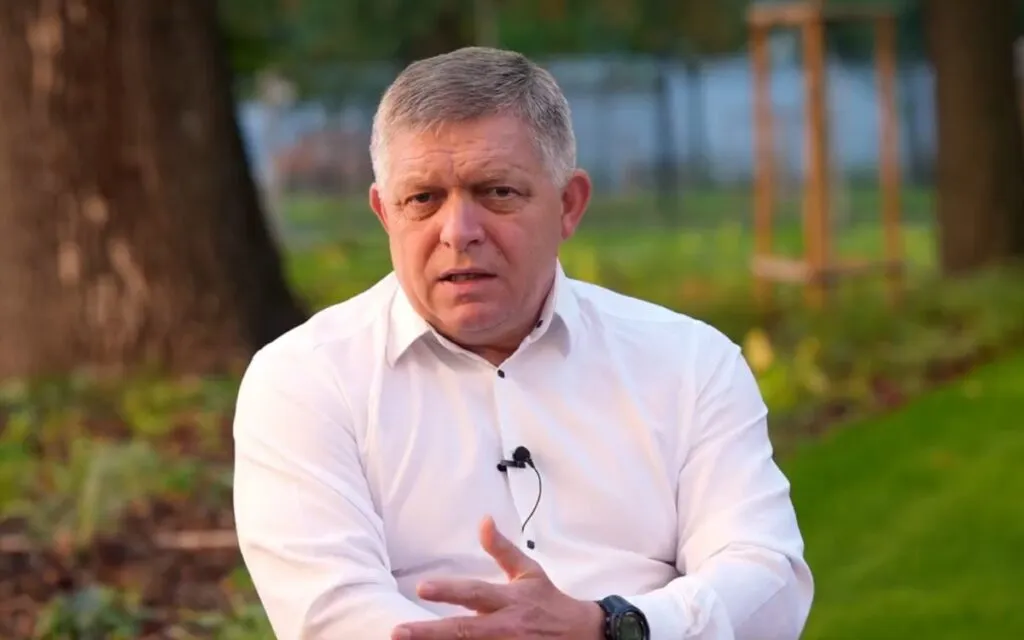
Slovak prime minister Robert Fico has released a video message claiming that parts of the Western political elite directly want a clash between NATO and Russia - after, in his view, the strategy of defeating Moscow through the war in Ukraine failed.
"We are in mortal danger as we watch the West pour fuel on the fire through its support for Ukraine," Fico said. He is among the few prime ministers in the Union who maintains good relations with Moscow and refuses military aid to Kyiv, so his statements are always read through that filter. But the claim itself deserves unpacking rather than simply being dismissed.
His thesis is simple: since the war has not broken Russia, some Western politicians now believe a direct clash with NATO is required. Fico calls them "warmongers inside NATO" and warns that drone incursions could trigger the collective defence clause. Slovakia, he adds, will not send soldiers "on invented pretexts".
On the other side stands an entirely opposite reading of the same events. French president Emmanuel Macron and Polish prime minister Donald Tusk warn that Russia is intensifying hybrid attacks on European infrastructure and on countries that support Ukraine. So: two prime ministers in the same Union, the same period, completely opposite diagnoses of who is provoking whom.
And that is the most uncomfortable part. There is no neutral authority to say which version is correct - there are only states that have already decided which side they will stand on if the collective defence clause is ever invoked. Macedonia has been a NATO member since 2020 and that clause applies to it as well, however distant the argument between Bratislava and Paris may sound.
Will this reach us? If a drone over European skies is one day treated as an attack, nobody will ask whether the small member states had a position. Which is why this statement is worth hearing - not as truth, but as an indicator of how deeply the allies have diverged on the single most important question they face.
The latest 10 news from this category
A broken aircraft in a field usually ends up in a police note. This one ended up with federal investigators,...

Beijing will easily find another supplier. The harder question is what Washington is actually testing: whether private Chinese companies will...

The law lets Washington hit the five biggest buyers of Russian oil with tariffs of up to 100 per cent....
Measures imposed over the war in Ukraine are now being offered as currency in an entirely different dispute. If the...

A smaller dose and more needles does not mean a safer vaccine, it means an ineffective one. Science has had...

Harald designed the sarcophagus himself, and it is shaped like a ship. The stone is 400 million years old and...

Von der Leyen proposed a status that does not exist in European law, the Canadians distanced themselves, and Washington announced...

The French candidate called the war in Ukraine a slaughterhouse and pointed out it has already lasted longer than the...

Four decades in politics, but the headline the world wrote was about her brother and his sixteen wives. When the...
The status of "associate member" does not exist in EU law. Macedonia has been queuing for twenty years and hearing...
This site uses cookies - is that okay? Learn more
Be the first to know when Metla launches something new
Leave your email and we will write when there is a new guide or something new on Metla.