Sixteen Arrests in Twenty-Four Hours, All for Drugs: The Police Are Working - But Where Are All These People Coming From?
20.09.2026


20.09.2026

20.09.2026

20.09.2026
20.09.2026

20.09.2026
20.09.2026
20.09.2026

19.09.2026

18.09.2026

20.09.2026

20.09.2026

19.09.2026

20.09.2026

20.09.2026

20.09.2026

20.09.2026

19.09.2026

18.09.2026

20.09.2026

20.09.2026

20.09.2026

20.09.2026

20.09.2026

20.09.2026

09.03.2026

27.02.2026

19.02.2026

20.09.2026

19.09.2026
18.09.2026

23.04.2026

23.04.2026

12.04.2026

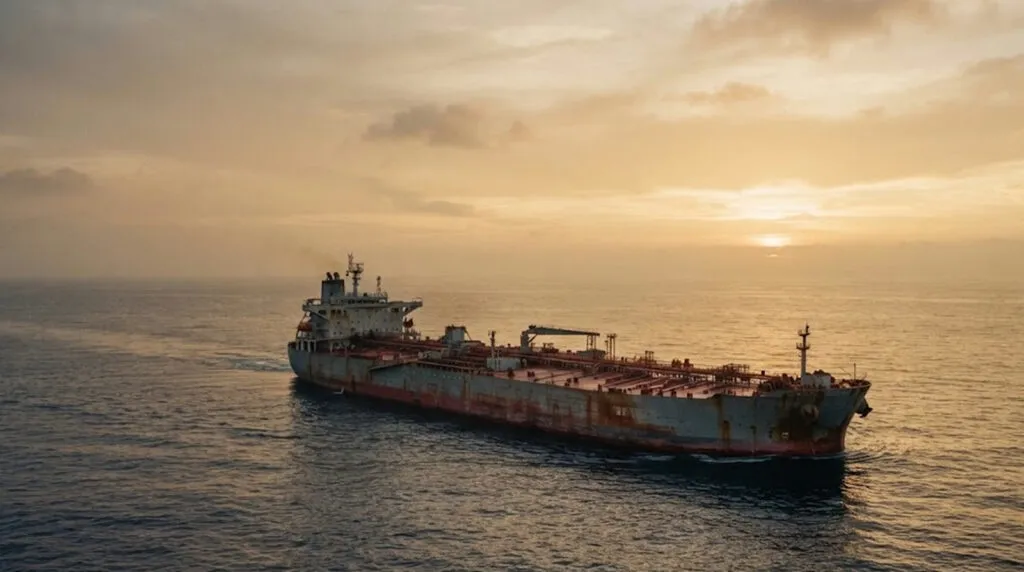
When Washington leans on Chinese buyers of Iranian oil, the real question is not where Beijing will source its fuel. China can increase imports from Russia, from Saudi Arabia and from other states - oil is a commodity, and commodities have substitutes. The question is far more uncomfortable: can America still determine who part of the Chinese economy is allowed to do business with.
The former head of Israel's Nativ service, Yakov Kedmi, sees exactly here one of China's more serious vulnerabilities. China is by far the largest buyer of Iranian oil, and a large share of that trade runs through private Chinese refineries and trading companies. Those same firms are tied to international banks, insurance, shipping and other parts of the global financial system that Washington can influence.
State companies are shielded, private ones are not
That is where the division that makes this story interesting lies. Large state corporations have far greater political and financial backing from Beijing. Private refineries, traders and shippers have to worry about access to the international market - and a significant part of the trade with Iran passes precisely through them.
American sanctions therefore do not have to force the Chinese state directly to change policy. It is enough for doing business with Iran to become so risky for individual companies that they withdraw on their own. For Beijing that would mean part of its economy can be disciplined by another power's decisions - with no negotiation, no signature, no official concession.
Why this does not stop at Iran
If sanctions, and access to the dollar, to banks and to international markets, prove enough to make private Chinese companies give up Iranian oil, Washington will have shown it still holds serious leverage over the Chinese economy. And a precedent like that need not end with Iran.
Today it is Iranian oil. Tomorrow the same method can be applied to Russian energy, to technology, to finance, or to trade with any state the US wants to isolate economically. Small economies have known this for a long time - when the big players quarrel through banking channels, the bill is not paid by whoever started the argument.
The Chinese answer: build a system that cannot be cut
Kedmi believes China must reduce that dependence, and he describes two directions. The first is developing alternative financial and trade mechanisms that do not depend on American banks, on the dollar, or on infrastructure Washington can control.
The second is much broader - tying as many states as possible to the Chinese economy. The more a country exports to China, the more it depends on Chinese investment or uses the Chinese market, the more expensive it becomes for it to join American pressure on Beijing. So China does not need to turn every state into a political ally. It is enough for the cooperation to become so important that breaking it would do serious economic damage to the other side as well.
That is exactly why Chinese investments, trade agreements and large infrastructure projects in Asia, Africa and the Middle East carry a value that far exceeds the immediate profit. Economic interdependence becomes political protection.
The Balkans have long experience of being a small link in somebody else's chain, and they know well what it looks like when a large partner offers you access and the bill later arrives in the form of a vote. The question everyone here ought to be asking themselves is simple: when Washington and Beijing one day start demanding a side, how much of our economy is already tied to the answer?
The latest 10 news from this category
Two prime ministers in the same Union, the same month, completely opposite diagnoses of who is provoking whom. There is...

A broken aircraft in a field usually ends up in a police note. This one ended up with federal investigators,...
The law lets Washington hit the five biggest buyers of Russian oil with tariffs of up to 100 per cent....

Measures imposed over the war in Ukraine are now being offered as currency in an entirely different dispute. If the...

A smaller dose and more needles does not mean a safer vaccine, it means an ineffective one. Science has had...

Harald designed the sarcophagus himself, and it is shaped like a ship. The stone is 400 million years old and...

Von der Leyen proposed a status that does not exist in European law, the Canadians distanced themselves, and Washington announced...

The French candidate called the war in Ukraine a slaughterhouse and pointed out it has already lasted longer than the...

Four decades in politics, but the headline the world wrote was about her brother and his sixteen wives. When the...
The status of "associate member" does not exist in EU law. Macedonia has been queuing for twenty years and hearing...
This site uses cookies - is that okay? Learn more
Be the first to know when Metla launches something new
Leave your email and we will write when there is a new guide or something new on Metla.