
Sixteen Arrests in Twenty-Four Hours, All for Drugs: The Police Are Working - But Where Are All These People Coming From?
20.09.2026


20.09.2026

20.09.2026

20.09.2026

20.09.2026

20.09.2026

20.09.2026

20.09.2026

19.09.2026

18.09.2026

20.09.2026

20.09.2026
19.09.2026
20.09.2026

20.09.2026
20.09.2026

20.09.2026
19.09.2026

18.09.2026
20.09.2026

20.09.2026
20.09.2026
20.09.2026

20.09.2026

20.09.2026

09.03.2026

27.02.2026

19.02.2026

20.09.2026

19.09.2026

18.09.2026

23.04.2026

23.04.2026

12.04.2026

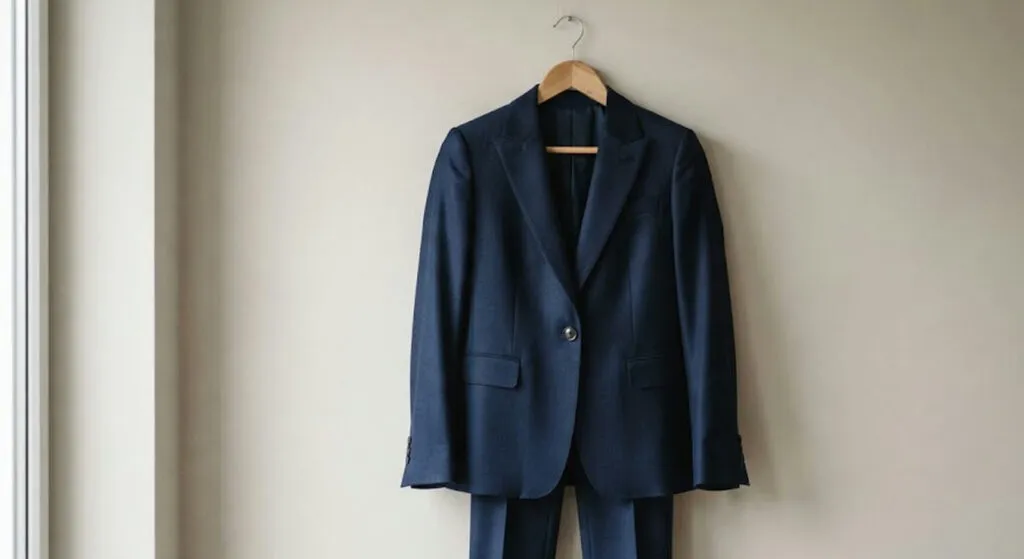
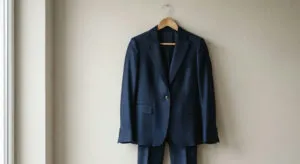
Look at the last few years of official events at the Spanish court and one cut repeats itself to the point of tedium: the trouser suit. Queen Letizia wears it, Princess Leonor wears it, and that is not a coincidence of taste but a decision with deliberation behind it.
The suit has a longer and more interesting history than its present-day dullness suggests. The first models - jacket and skirt - were proposed by the British designer John Redfern in the 1880s. They were more comfortable than dresses but kept the silhouette of the era. The twenties brought relaxed cuts and soft tweed from Coco Chanel. The real turning point came in the sixties, with André Courrèges and Yves Saint Laurent - and especially in 1966, with Le Smoking, the women's tuxedo that trampled the rules about who was allowed to wear what.
Why the suit specifically
The suit is traditionally tied to masculinity and to power - the businessman, the politician, the diplomat all wear it. There is also a prevailing belief that women in those fields have to look masculine in order to carry authority. Communications expert Cristian Salomoni does not think that is the reason behind the Spanish court's choice.
His explanation is more concrete and more interesting. The suit is translatable: its formality shifts with colour and fabric, and accessories change the impression entirely. It fits into different protocols without drawing excess attention that might "overshadow the political message through the styling". And, as Salomoni puts it, it avoids "sexist interpretations that could arise from the length of a skirt or from a neckline".
Here we are on very concrete ground. This is not about aesthetics, it is about calculating how much of an event's coverage goes to what a woman said and how much to what she wore. Anyone who has followed politics at home knows that calculation is not a Spanish speciality.
Message or armour
For Salomoni, the choice is also a rejection of the stereotype of the fragile feminine princess in favour of a modern, executive image. He says the suit "communicates modernity - that these are women of this century, who do not depend on lavish dresses", and that it signals readiness for a leading role and seriousness, because they represent the state rather than fashion. For Leonor, institutional continuity matters additionally: a shared style with her mother projects family unity.
But the expert does not stop at praise. In his view, excessive consistency starts working against itself - it creates an impression of coldness and distance and erases stylistic variety. "Princess Amalia of the Netherlands, for example, combines suits with dresses that emphasise her youth. Kate Middleton, whom I consider an icon of political communication through fashion, wears elegant and feminine dresses when protocol allows. Leonor, by contrast, comes across as excessively executive and severe," Salomoni says.
His conclusion is that this may be a conscious strategy underlining her future role as head of state - but that there are many moments in which she could risk something different.
What remains unexplained is the more interesting question. How much of this is the choice of the two women, and how much is a frame set for them by advisers? The difference between armour you put on yourself and armour someone dressed you in is enormous, and from the outside it looks identical.
The latest 10 news from this category

Dermatologists explain why the shedding arrives with a two to three month delay and why iron and vitamins do not...
Silk bambula muslin, a hand-draped waist and a veil of crystal organza. The wedding was held in Cadiz, where the...
An industry that spent decades selling a flawless illusion is suddenly showing the shoot itself. That is not candour -...

The classic bob promised one perfect day. This version works against the salon business model - and that alone is...
The crowns were held by four men who would all later sit on thrones of their own. Nobody in that...
Kate Middleton dropped the beige and the same cut suddenly looked twice as expensive. The industry sells a new silhouette...
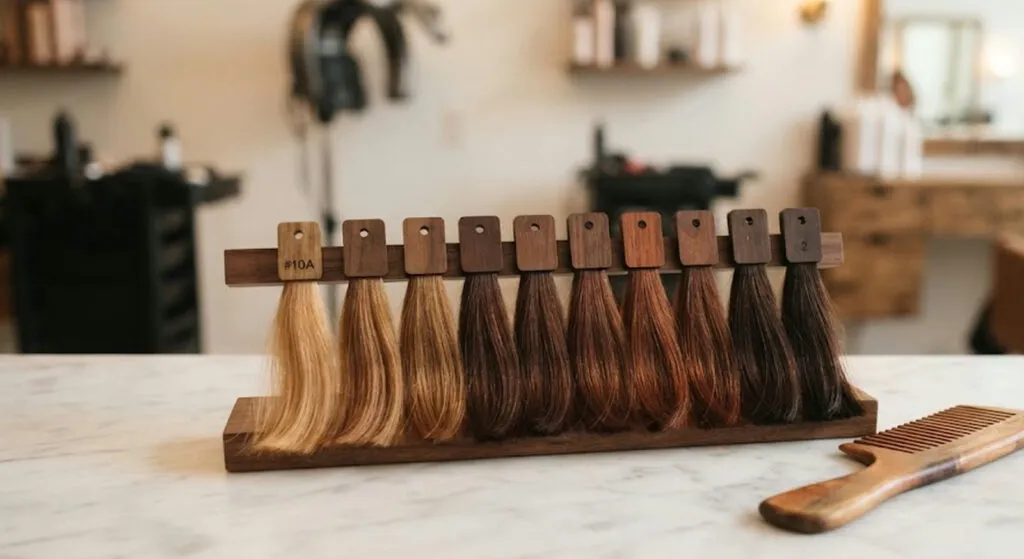
A shade close to your natural one means the regrowth does not draw a line - and that you go...
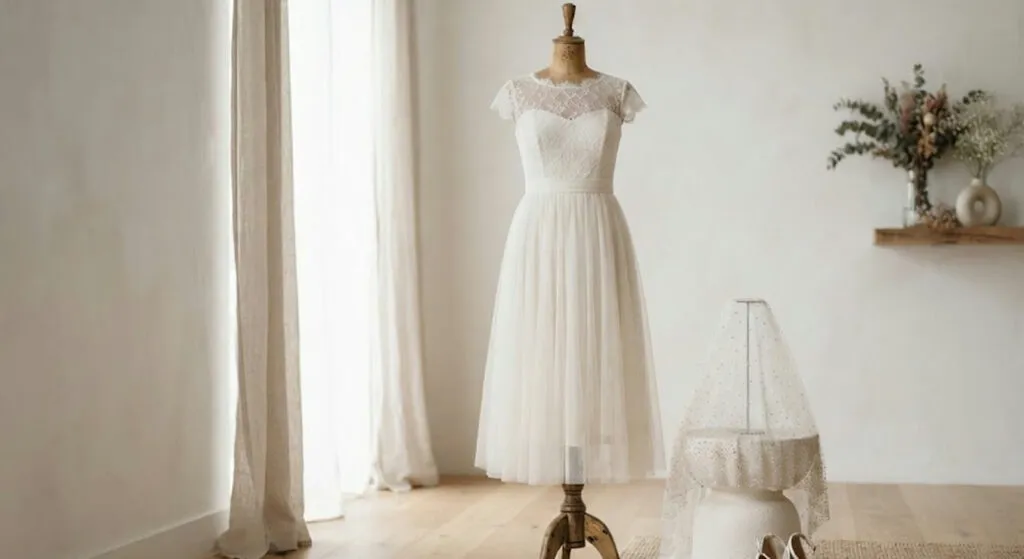
A bride who does not hide behind a long sleeve and a closed neckline. How many Macedonian second marriages mean...

For forty-five years one brand has been selling the same white shirt. In an industry that abandons itself every six...

Colourful packaging has given way to white bottles and pharmaceutical language. One question stays the same: what does it say...
This site uses cookies - is that okay? Learn more
Be the first to know when Metla launches something new
Leave your email and we will write when there is a new guide or something new on Metla.