Sixteen Arrests in Twenty-Four Hours, All for Drugs: The Police Are Working - But Where Are All These People Coming From?
20.09.2026


20.09.2026

20.09.2026

20.09.2026
20.09.2026
20.09.2026
20.09.2026
20.09.2026

20.09.2026

20.09.2026

20.09.2026

20.09.2026
19.09.2026
20.09.2026
20.09.2026
20.09.2026

20.09.2026
19.09.2026
18.09.2026
20.09.2026

20.09.2026

20.09.2026
20.09.2026

20.09.2026

20.09.2026

09.03.2026

27.02.2026

19.02.2026
20.09.2026

19.09.2026
18.09.2026

23.04.2026

23.04.2026

12.04.2026

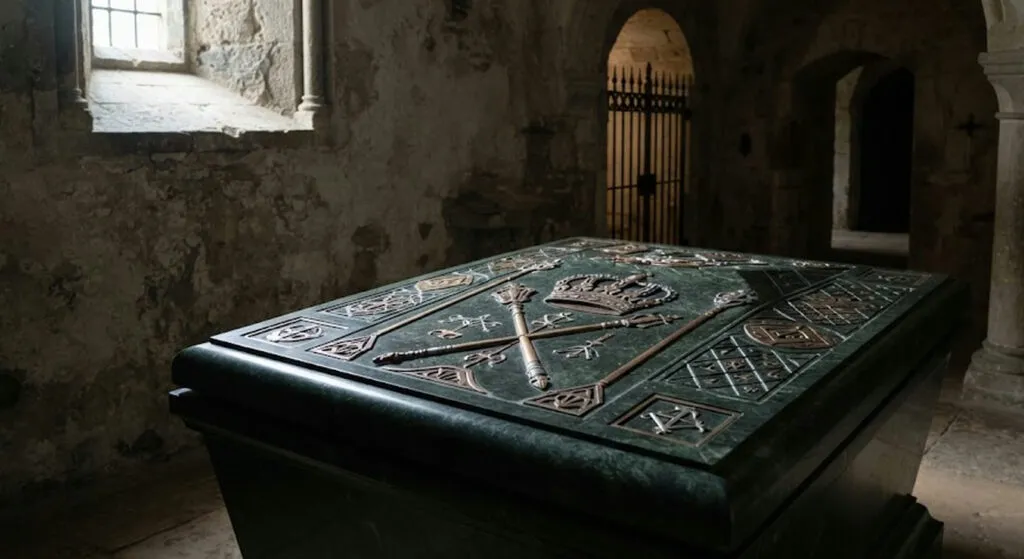
The Norwegian court did something courts rarely do: it showed a grave. Three weeks after King Harald's death, the public saw the sarcophagus in the royal mausoleum at Akershus Fortress, where his parents, King Olav and Crown Princess Martha, and his grandparents, Haakon VII and Maud, also lie.
What makes this different from the usual court announcement is that Harald designed the sarcophagus himself. The shape was a deliberate choice - a curved base, like a ship's hull. The court explains it through the king's close relationship with the sea, but anyone who has read anything about this part of Europe knows the other reading too: Viking ship burials, where the vessel carried the dead on their final journey.
The stone is a message, not an ornament
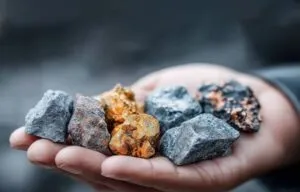
The material is olivine - rock formed deep inside the Earth and pushed upward by the same forces that shaped Norway. The stone was taken from Sunnmøre, a region Queen Sonja walked through countless times. This greenish rock can absorb and fix carbon dioxide, which the court highlights as the royal couple's environmental message.
Read that again. A monarch chose the stone for his own grave partly because it binds carbon. Whether that is sincere conviction or the final positioning of an institution that has to keep proving why it exists in the twenty-first century - everyone can judge for themselves.
Crown, sceptre and typography from the twenties
On the lid are the royal insignia - crown, orb, sceptre and royal sword. Both crowns have peridots set into them, the green gemstone found in the real crown as well. The ornaments were made by hand, cast in bronze using the traditional lost-wax technique. Every letter of the text is engraved in brass, gilded and partly embedded into the surface. The typeface is Futura, created by Paul Renner in the 1920s.
The whole sarcophagus is assembled from ten pieces of olivine and peridot, quarried and worked by the Norwegian workshop Johansen Monumenthuggeri. Everything is domestic material and domestic craftsmanship. The estimated cost of Harald's and Sonja's sarcophagi together is around two million euros.
Two million euros for two graves. In one of the wealthiest countries in Europe that is a budget line nobody will contest, and that is the point: the monarchy survives because it knows how to turn every decision it makes into a story about identity. The stone is Norwegian, the craft is Norwegian, the queen's walking paths are Norwegian. It is hard to argue against a grave that speaks about your country.
And at the same time, this is the most direct possible proof that kings end up like everyone else - in a stone box, with a name carved into metal. The only difference is who gets to choose the stone.
The latest 10 news from this category

Netflix has confirmed the sixth season is the last, and Lily Collins said goodbye in a letter. The show that...
Daily horoscope - 20.09.2026
Instead of travelling through twelve cities, she made the world come to her. The space around the stage was turned...
Daily horoscope - 18.09.2026
Four copies vanished from a delivery, the extracts leaked, and Buckingham Palace broke a silence it had held for years....

The statement is written so that nobody can pull anything out of context. Twenty years ago the tabloids carried this...
Daily horoscope - 17.09.2026
Daily horoscope - 16.09.2026
The role that made her recognisable is the one that locked her in. María Galiana now works in theatre -...
This site uses cookies - is that okay? Learn more
Be the first to know when Metla launches something new
Leave your email and we will write when there is a new guide or something new on Metla.