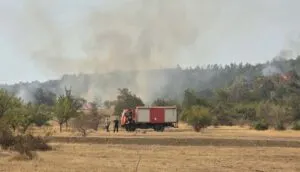
The smoke over Skopje is coming from Kosovo: for the first time our helicopter is fighting a fire outside the country
04.09.2026


04.09.2026

04.09.2026

04.09.2026
04.09.2026
04.09.2026
04.09.2026

04.09.2026

03.09.2026

02.09.2026

04.09.2026

04.09.2026

03.09.2026

04.09.2026

04.09.2026

04.09.2026

04.09.2026

03.09.2026

02.09.2026
04.09.2026

04.09.2026

04.09.2026

04.09.2026
03.09.2026
02.09.2026

09.03.2026

27.02.2026

19.02.2026

04.09.2026

03.09.2026

02.09.2026

23.04.2026

23.04.2026

12.04.2026
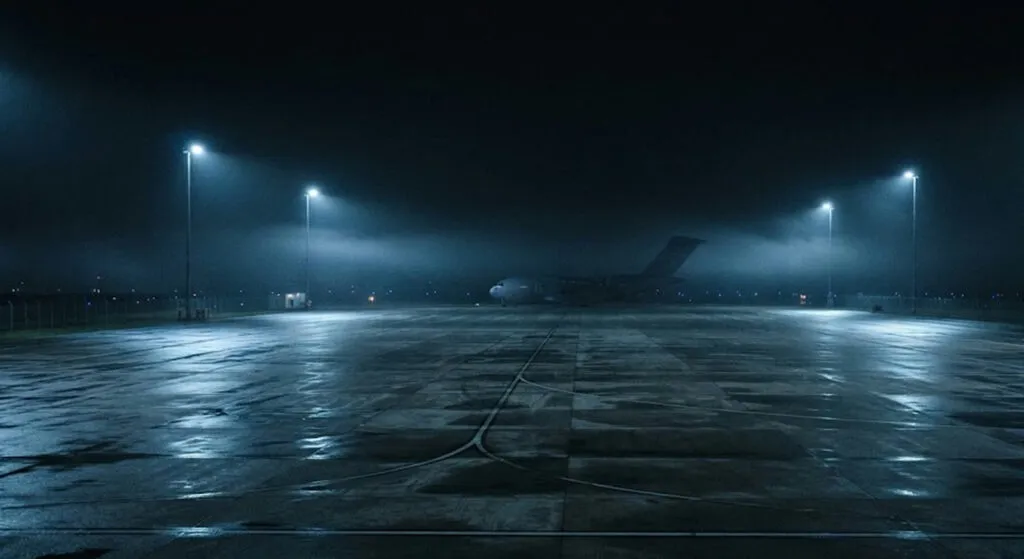
Since the invasion of Ukraine in 2022, relations between Moscow and European states have deteriorated steadily. But over the past few days something in the tone has changed - and it is not rhetoric, but concrete events on European soil.
The attempted drone attack on a Ukrainian Antonov transport aircraft at Leipzig-Halle airport has produced the most serious crisis between Berlin and Moscow so far. The government of German chancellor Friedrich Merz directly accused Russia. Moscow responded with a denial.
The reaction from Brussels and NATO was sharp. European Commission president Ursula von der Leyen said that "Leipzig represents a new escalation on EU territory directly attributable to Russia". NATO secretary general Mark Rutte expressed "full solidarity with Germany".
Germany answers with weapons, not with a note
Hours after the German accusation, the German military successfully tested an Israeli-made ballistic missile with a range of 500 kilometres over the North Atlantic. Berlin is simultaneously increasing defence spending and announcing a plan to build the strongest conventional army in Europe.
Russian foreign minister Sergei Lavrov responded to those plans: "When chancellor Merz said he would once again make Germany the main military power in Europe, I was simply astonished." He then linked the statements to the history of Nazi Germany - a move that comes out of Moscow so routinely that it is no longer an argument, it is a reflex.
It is not only Leipzig
The list of incidents across Europe in recent times is longer than one news item suggests: two attacks on electrical substations in Germany, in the east and in the west; suspected arson at a Polish drone factory, which prime minister Donald Tusk also spoke about; a warning from Danish authorities that they had uncovered preparations for Russian sabotage aimed at defence companies.
None of those events on its own is a war. Together they are something else - systematic testing of where the line runs and what can be done without a response following.
Four scenarios, none of them comfortable
The analyses offered by the European press come down to four possible directions. First: a long-term hybrid war with no direct confrontation, becoming the "new normal". Second: an incident that gets out of control. Third: Russia deliberately testing NATO's readiness. Fourth: open war between Russia and NATO - for now the least likely.
Foreign policy analyst Denis Avdagić called the events in Germany "terrorism" and "terrorist attacks", on the grounds that "things must be called by their real names". His warning is direct: "If there is no sufficiently strong message, we can expect this to continue and such incidents to spread across the whole of Europe." On direct confrontation, Avdagić believes Russia does not want an open conflict because it cannot open a second front while it is tied up in Ukraine - but he stresses that Moscow is excellent at information warfare, and that threatens the cohesion of the EU and NATO.
The Balkans knows this scene by heart
A hybrid war does not begin with tanks. It begins with sabotage nobody admits to, with a fire that is a "technical fault", with an incident everyone knows the author of and nobody can prove. The Balkans lived through that phase - and knows how long it can last before somebody names it out loud.
Which is exactly why Avdagić's point matters: the target is cohesion, not territory. A divided Europe does not have to be beaten with missiles. It is enough for each state to start treating an attack on its neighbour as somebody else's problem. And that unravelling of a common position is something our region has watched at close range more than once.
The latest 10 news from this category
Not sanctions, but collection on an arbitration ruling. The mechanism has just shown that it works - and the Balkans...

One day more than Berlusconi's second government. But its two most ambitious reforms failed - which means longevity and success...
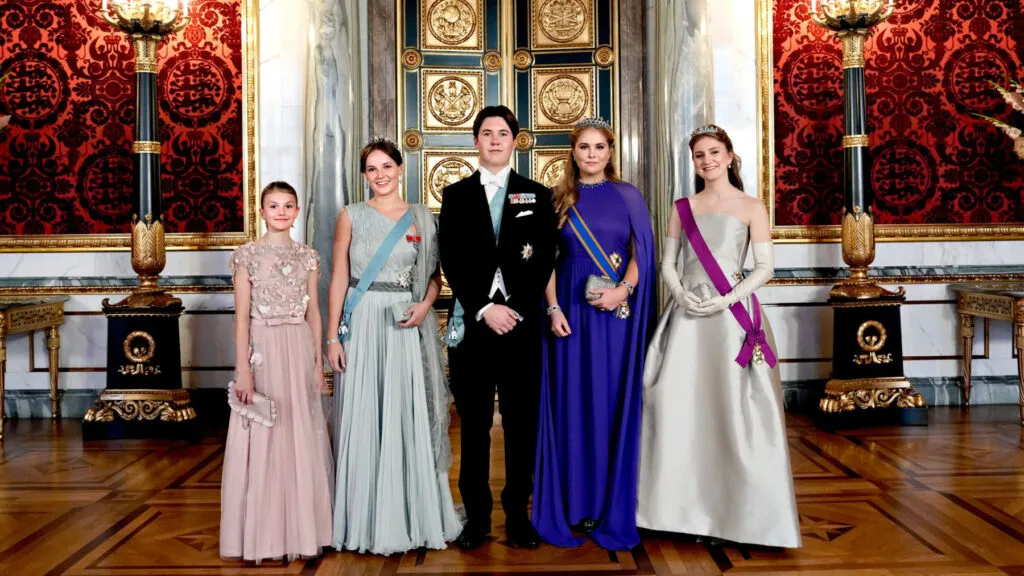
Ingrid, Amalia, Christian, Elisabeth and Estelle will stand together in Oslo. Not one of them reigns yet, and all of...
A small country paid 70 million for ammunition from a firm that had never sold a weapon. The minister resigned...

The officer said he was attacked. His own body camera showed otherwise. He is charged with murder, and one recording...
A short circuit near Cologne, downed power lines near Berlin. The German minister says sabotage and rules nothing out. And...
Queen Mette-Marit's son has been convicted on 34 counts and has been in custody since February. Instead of seeking release,...
Three drones at one airport, a hit substation in Brandenburg and two states that already know who is guilty. Only...

When Moscow wants to prove why it does not want a ceasefire, it reaches for our nineties. The Balkans is...

Pashinyan announced an EU membership bid and five years away from the CSTO. The Kremlin responded calmly - and that...
This site uses cookies - is that okay? Learn more
Be the first to know when Metla launches something new
Leave your email and we will write when there is a new guide or something new on Metla.