

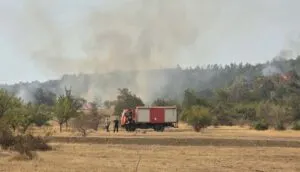
The smoke over Skopje is coming from Kosovo: for the first time our helicopter is fighting a fire outside the country
04.09.2026


04.09.2026

04.09.2026

04.09.2026

04.09.2026
04.09.2026

04.09.2026

04.09.2026

03.09.2026

02.09.2026

04.09.2026

04.09.2026

03.09.2026

04.09.2026

04.09.2026

04.09.2026

04.09.2026

03.09.2026

02.09.2026

04.09.2026

04.09.2026

04.09.2026

04.09.2026
03.09.2026
02.09.2026

09.03.2026

27.02.2026

19.02.2026

04.09.2026

03.09.2026

02.09.2026

23.04.2026

23.04.2026

12.04.2026
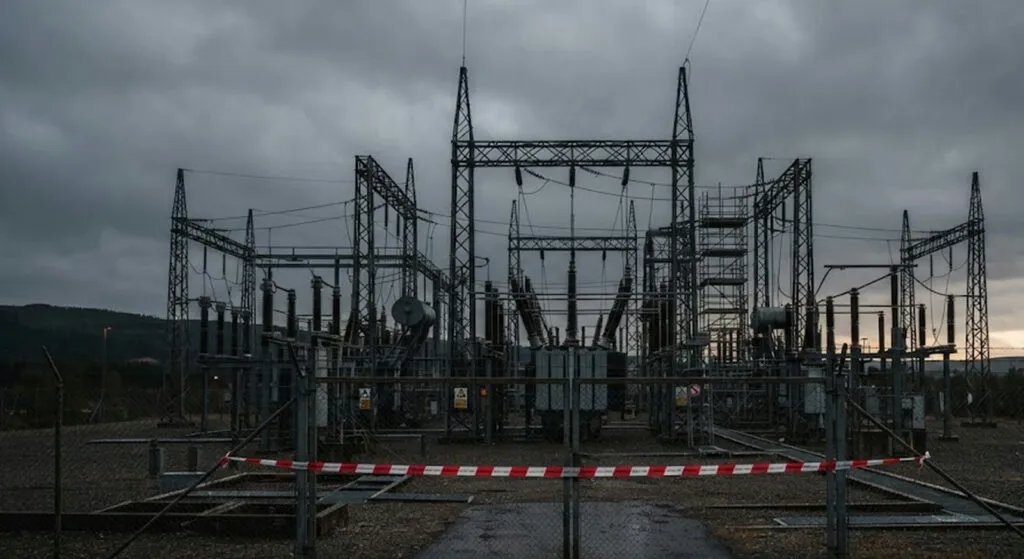
Two attacks on the German power grid in less than 24 hours. Not hacking, not digital - people who physically reached cables and substations and cut them. That is a distinction many miss, and it is the crucial one: you do not need to be a state with a cyber army to leave hundreds of thousands of people without electricity. Wire cutters and a map will do.
The second strike happened at a substation near Cologne. Unknown persons deliberately caused a short circuit on high-voltage cables, and several units of the Bergheim power plant were cut off from the grid. The day before, in Brandenburg south of Berlin, an explosion destroyed power lines near another plant. Two different points, two different federal states, the same method - which is exactly why investigators are looking at both cases together.
Herbert Reul, interior minister of North Rhine-Westphalia, did not shy away from the word "sabotage". "On current knowledge, we assume this is an attack carried out either by foreign perpetrators or by people from the far-left scene," he said, adding that for now nothing is being ruled out. Both investigations are being run as offences against Germany's constitutional order - a designation that in German law means the case is no longer simple criminal damage.
Three versions, none confirmed
The German services are currently working with three hypotheses: Russia, domestic left-wing extremists, or a coordinated attack on critical infrastructure by a third party. That is nearly the whole palette - which means that, at least for now, they do not know. And when a state with Germany's resources admits it does not know who is cutting its power lines, that in itself is news.
Relations between Berlin and Moscow are at their lowest in years, since Germany began openly accusing Russia of running hybrid operations on its territory. On the same day as the second sabotage attack, the German navy tested an Israeli ballistic missile with a range of around 500 kilometres. That is a response that says more than any statement - Berlin is no longer behaving like a country that merely comments.
And the point that is rarely said out loud: a substation is not a military base. It has no walls, no guard, no radar. There are hundreds of them in every European country, and most are enclosed by a wire fence and a padlock. If two people with basic tools can knock units of a power plant offline in one of the richest countries in the world - what is protecting the same kind of substation in the Balkans?
The question is less rhetorical than it looks. The region's infrastructure is older, less closely monitored, and has already gone down several times for entirely prosaic reasons - a storm, an old cable, a sudden overload. The difference between a fault and an attack matters for an investigation. For the person sitting in the dark, that difference means nothing.
The latest 10 news from this category
An attempted drone attack in Leipzig, a ballistic missile test hours later, sabotage in Poland and Denmark. The Balkans knows...
Not sanctions, but collection on an arbitration ruling. The mechanism has just shown that it works - and the Balkans...

One day more than Berlusconi's second government. But its two most ambitious reforms failed - which means longevity and success...

Ingrid, Amalia, Christian, Elisabeth and Estelle will stand together in Oslo. Not one of them reigns yet, and all of...
A small country paid 70 million for ammunition from a firm that had never sold a weapon. The minister resigned...
The officer said he was attacked. His own body camera showed otherwise. He is charged with murder, and one recording...

Queen Mette-Marit's son has been convicted on 34 counts and has been in custody since February. Instead of seeking release,...
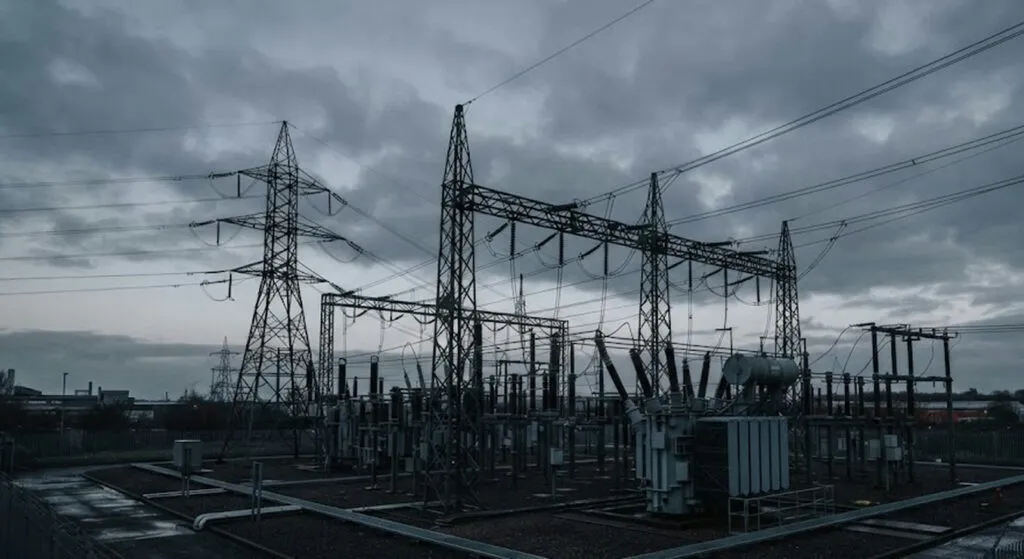
Three drones at one airport, a hit substation in Brandenburg and two states that already know who is guilty. Only...

When Moscow wants to prove why it does not want a ceasefire, it reaches for our nineties. The Balkans is...
Pashinyan announced an EU membership bid and five years away from the CSTO. The Kremlin responded calmly - and that...
This site uses cookies - is that okay? Learn more
Be the first to know when Metla launches something new
Leave your email and we will write when there is a new guide or something new on Metla.
