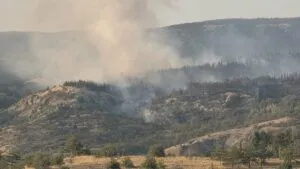
34 fires in 24 hours: three still burning, and the warnings put out nothing
09.09.2026


09.09.2026
09.09.2026
09.09.2026

09.09.2026

09.09.2026

09.09.2026
09.09.2026
08.09.2026
07.09.2026

09.09.2026

08.09.2026
08.09.2026

08.09.2026

08.09.2026

08.09.2026

08.09.2026

07.09.2026
06.09.2026
09.09.2026

09.09.2026
09.09.2026

09.09.2026

09.09.2026
08.09.2026

09.03.2026

27.02.2026

19.02.2026

23.04.2026

23.04.2026

12.04.2026

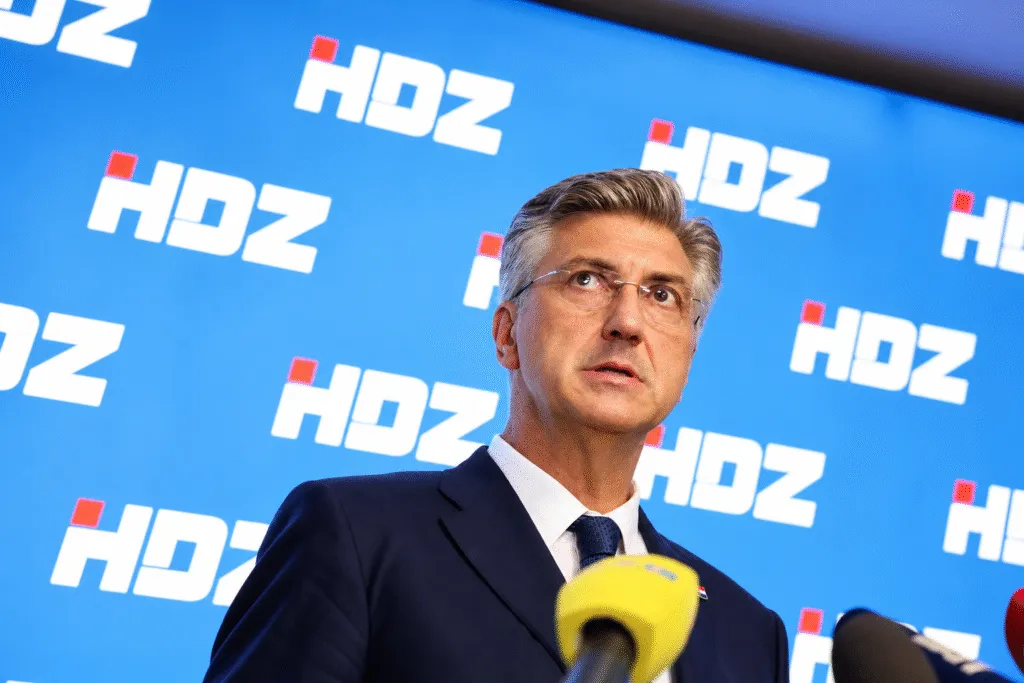
Ratko Mladić, convicted of genocide in Srebrenica, was buried in Belgrade with military honours. The Serbian state then claimed these were not state honours. That play on words did not land with everyone - Croatian prime minister Andrej Plenković named the three most senior officials in Brussels directly and told them their reaction had been too small.
"A reaction only at spokesperson level is very poor. I think there has to be a reaction at a higher level here, that Ursula von der Leyen, Marta Kos and Kaja Kallas should also react," Plenković said after a meeting of his party's bodies. Marta Kos, the enlargement commissioner, reacted by cancelling an announced visit - but for Plenković that is not enough: "This is their mistake and we will tell them so clearly."
Official Belgrade chose a formula familiar to anyone who has followed Balkan politics: the leadership of the state - the president, the prime minister and the speaker of parliament - did not appear, so on paper the ceremony was not a state one. But as Plenković lists, ministers were there in numbers, so was a member of the Presidency of Bosnia and Herzegovina, so was Milorad Dodik, so was the mayor of Banja Luka.
"That attempt to be there and not be there, we understand perfectly well why it is," Plenković said. That is the sentence that tells the whole story. When a state wants both the honours and the alibi, it sends the ministers and keeps at home the three men whose signatures would have made it official.
Same party family, opposite position
The most awkward question for Plenković was a domestic one: his HDZ and Aleksandar Vučić's Serbian Progressive Party sit in the same European political family, the European People's Party. The answer was short: "That means nothing. Being in the same political family does not mean we agree on everything."
He recalled exactly what the man buried yesterday with gun salutes had commanded - the massacre in Škabrnja, on the same day Vukovar fell, 18 November. "We have no ear for that, none at all." The question nonetheless hangs in the air: what is European party discipline worth if two members of the same family hold diametrically opposed views on a convicted war criminal?
Plenković also announced that Croatia will raise the Dodik question "at all levels." The remark he added is more interesting than the announcement itself: since Dodik stepped back from his posts, he has noticed that Dodik is more accepted in the international community than he was before. The man got out of the chair and found a door open.
And Brussels? So far it has reacted through a spokesperson. The Balkans know this scene by heart - a statement with no signature, strong enough to show someone noticed, weak enough to commit nobody to anything. The question hanging over all of it is simple: if a man convicted of genocide gets gun salutes from the army of a candidate country, what exactly remains of the conditions for entry?
The latest 10 news from this category

Belgrade kept the last direct air link between Russia and Europe, and is now opening a route to an enclave...

The opposition is attacked not for what it proposes but for what it would hypothetically do. A mechanism the whole...
A government plane, a coffin draped in the Serbian flag and a minister in the hall - but no state...
Convicted with final effect of the Srebrenica genocide, Ratko Mladić is receiving state and military honours in Belgrade. That is...
The constitution does not allow him a third presidential term, so the post changes - not the holder. Elections are...
Sanctions are written in Brussels but enforced on a quay in Durrës. One ship said no - and the route...
Two prime ministers of member states said they will not vote for sanctions that harm them. The argument looks like...
He crossed the border eight times in six days and no service flagged him as a risk. In the end...
A flag-draped coffin, people on the bridges and a state protocol for a man who died a convicted génocidaire. What...
After nearly a year of protests since the canopy collapse in Novi Sad, Belgrade has a date. Elections are a...
This site uses cookies - is that okay? Learn more
Be the first to know when Metla launches something new
Leave your email and we will write when there is a new guide or something new on Metla.