НАУЧНИЦИТЕ ОТКРИЈА: ТАЈНАТА НА ПОБАВНОТО СТАРЕЕЊЕ МОЖЕ ДА СЕ КРИЕ ВО НАШИТЕ ЦРЕВА!
27.10.2026


27.10.2026
27.10.2026
27.10.2026
27.10.2026
27.10.2026
27.10.2026

27.10.2026
27.10.2026
26.10.2026

27.10.2026

27.10.2026

26.10.2026

27.10.2026

27.10.2026

27.10.2026

27.10.2026
26.10.2026
25.10.2026

27.10.2026

27.10.2026

27.10.2026

27.10.2026
26.10.2026
26.10.2026
27.10.2026
26.10.2026
24.10.2026

23.04.2026

23.04.2026

12.04.2026

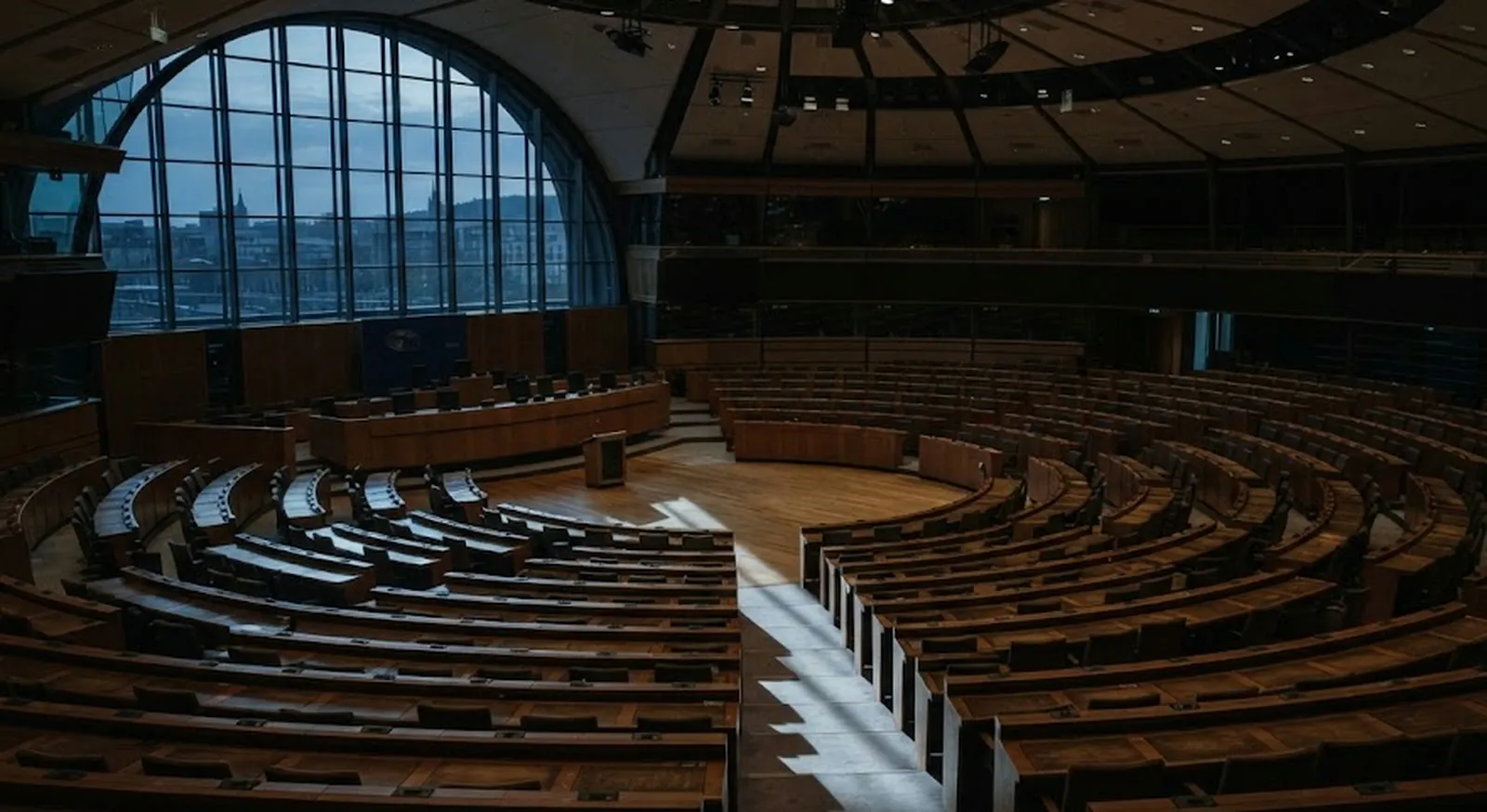
The state send-off for Ratko Mladic in Belgrade shook up German politics - and the split between the parties turned out sharper than expected. Almost all of them condemned the Serbian government over its treatment of a convicted war criminal. All except one: Alternative for Germany. The far-right party suddenly found sympathy for Belgrade.
Anton Hofreiter, Green MP and chair of the Bundestag's Committee on European Union Affairs, was the most direct. In his view, transporting Mladic's body on a government plane and the presence of ministers at the commemoration show that the Serbian government is turning the man responsible for the genocide in Srebrenica into a national hero.
"The Serbian government's conduct is a clear message to Europe that the country under Vucic has turned away from the European course. Whoever glorifies war criminals is moving outside the European order of values and has no place in the European Union," Hofreiter said in response to a question from a German outlet. He criticised his own government too, for its silence. "Whoever stays silent on war crimes does serious damage to international law," he said, and added a sentence that goes straight to money: "Whoever celebrates war criminals cannot at the same time be collecting European funds."
Who stayed silent, and who spoke
Asked about the events in Belgrade, politicians from the governing Christian Democratic Union who normally deal with the region either declined to answer or did not react at all. That is a data point in itself.
Jasmina Hostert, a Social Democrat MP and chair of the German-Southeast European parliamentary group, comes from Bosnia and Herzegovina and did not mince words. "A state funeral for the 'butcher of Srebrenica' is not only entirely unacceptable, but unfortunately also shows how far Serbia is from confronting the crimes and from the European Union," she said. For her it is a step backwards and an obstacle to EU accession.
Hostert added something rarely heard in debates like this - solidarity with the people in Serbia itself who do not share the official narrative. "I am sorry that the ones who suffer most because of this are those in Serbia who work for the truth to be established, who want closer ties with the EU and who criticise the government."
The AfD's sympathy
Sascha Lensing of the AfD came at it from the opposite side. He recalled that by arresting Mladic and handing him over to the Hague tribunal Serbia had fulfilled its international obligations, and therefore sees no reason for today's debate to grow into a fundamental questioning of Serbia's relationship with international courts.
Lensing says the differing perception of Mladic within Serbian society itself shows how deep historical conflicts and differing cultures of remembrance run. Formally, he added that heroising convicted war criminals does not contribute to reconciliation - but he ended the same sentence by saying that blanket condemnations of Serbia would not help either. The balance is there so that nothing gets said.
This is not a new position. At last year's Bundestag debate marking 30 years since Srebrenica, the sole exception in describing the crime as genocide was the AfD. Their MP Alexander Wolf disputed that classification, claiming that the Serbs there shot men but as a rule spared women and children.
There will be no blockade, because there is nothing left to block
The most sober analysis came from Adi Cerimagic, senior analyst at the Berlin think tank European Stability Initiative. He criticises above all the European Commission and what it expected from Serbia in the run-up to the funeral.
"Those expectations were very quickly reduced to one thing: that there be no formal, legal or administrative decision by the state of Serbia to give Mladic a state funeral. The Commission not only accepted that fact as sufficient, it presented it at the press conference as a success of its own leverage," Cerimagic says. And at the funeral itself it turned out the state had taken part after all.
His conclusion is the one every reader in the region needs: it will not change much, but not because there is no will - because there has been no progress for a long time anyway. Since 2021 Serbia has not opened a single cluster in its negotiations with the European Union. The Commission recommends opening Cluster 3, but member states are blocking it - some over Serbia's misaligned foreign policy, above all towards Russia and the war in Ukraine, others over the state of the rule of law and attacks on demonstrators and civil society organisations, and occasionally over the situation in northern Kosovo.
That is the picture worth looking at from Skopje too. Enlargement has long since stopped being decided by reports and recommendations, and started being decided by vetoes and the mood in individual capitals. Serbia is learning this through Mladic. Macedonia has been learning it for decades, through entirely different occasions - with an identical outcome.
The latest 10 news from this category
The mother of Stefan Hrka, killed under the collapsed canopy in Novi Sad, came for an apology, while the editor...
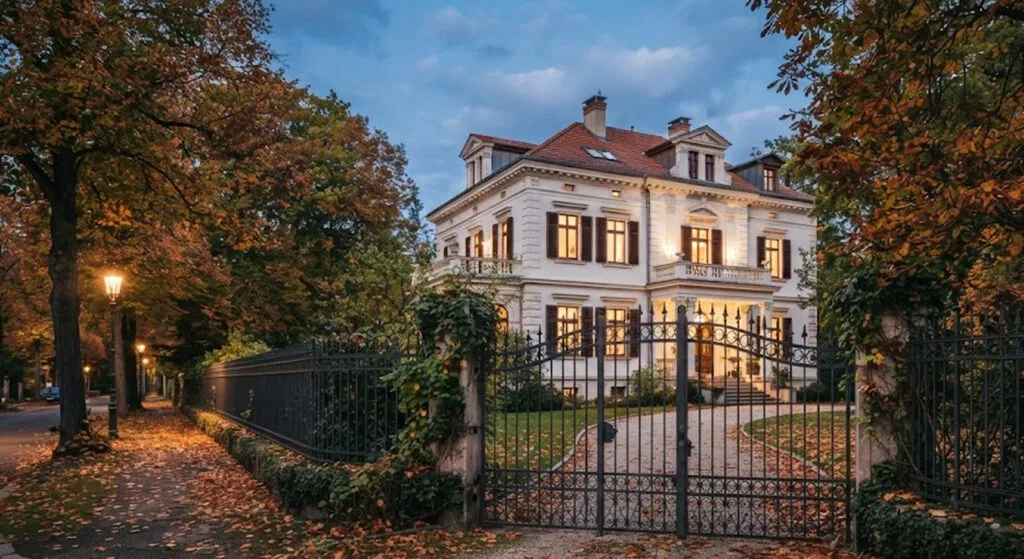
Nikolić has lived in a state villa for nine years after his term ended, Brnabić in Jovanka Broz's former home....
Vučić conceded on election night itself, and his people are already writing the winner's agenda: Russia, NIS, devaluation. How many...
The winner of Serbia's election says the undiplomatic outbursts towards the region were born in Vučić's head. His first conversation...
Germany's far right mourns Vučić's defeat with the words "we've lost" - as if Serbia were its property. Moscow, meanwhile,...
Doctors, professors, actors and one engineer who warned before the canopy fell. A list without a leader has toppled the...
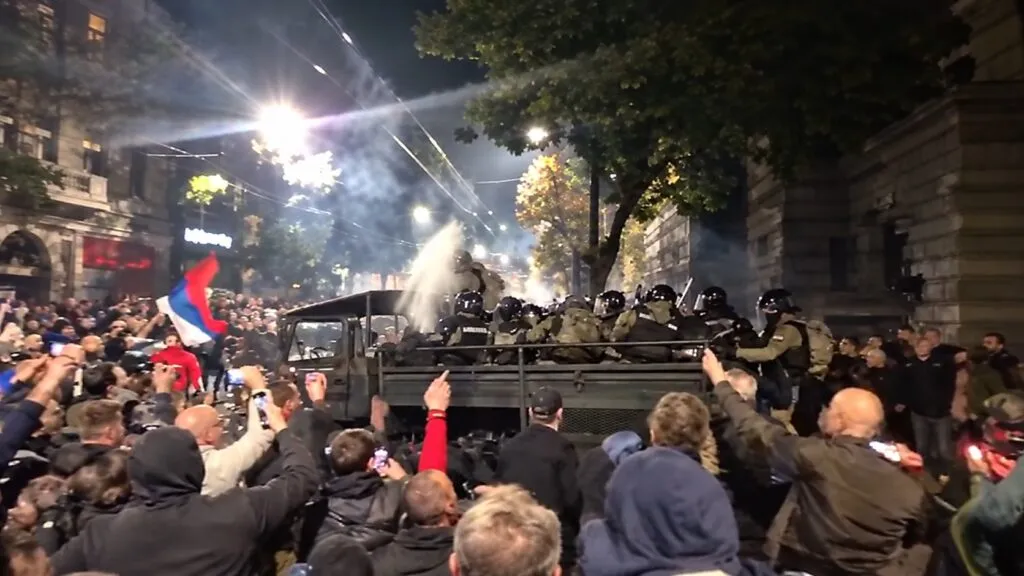
The police that spent two years breaking up protests left to whistles and jeers, and the park of Vučić's supporters...

The man who ran Serbia for more than a decade read out the numbers himself: around 1.72 million votes for...

He lost the election, and one of his first messages was about Moscow. Serbia has so far refused sanctions on...
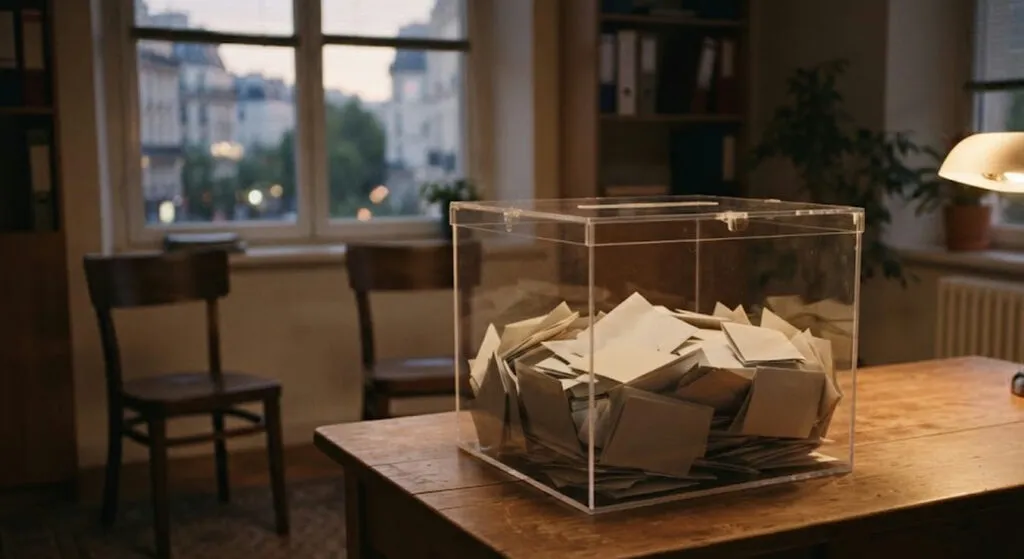
In Bijeljina 1,543 to 335, in Lopare 533 to 47. And Vučić himself announced changes in relations with Republika Srpska...
This site uses cookies - is that okay? Learn more
Be the first to know when Metla launches something new
Leave your email and we will write when there is a new guide or something new on Metla.