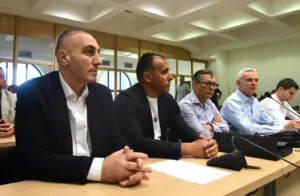
After 19 Months on the Run, Bajrami Handed Himself In at Blace at 5:35 AM: Same Crossing, Same Early Hour as Grubi
10.09.2026


10.09.2026

10.09.2026

10.09.2026
10.09.2026

10.09.2026

10.09.2026

10.09.2026
09.09.2026
08.09.2026

10.09.2026

10.09.2026

09.09.2026
10.09.2026

10.09.2026

10.09.2026

10.09.2026

08.09.2026

07.09.2026

10.09.2026

10.09.2026
10.09.2026

10.09.2026

10.09.2026

09.09.2026

09.03.2026

27.02.2026

19.02.2026

23.04.2026

23.04.2026

12.04.2026

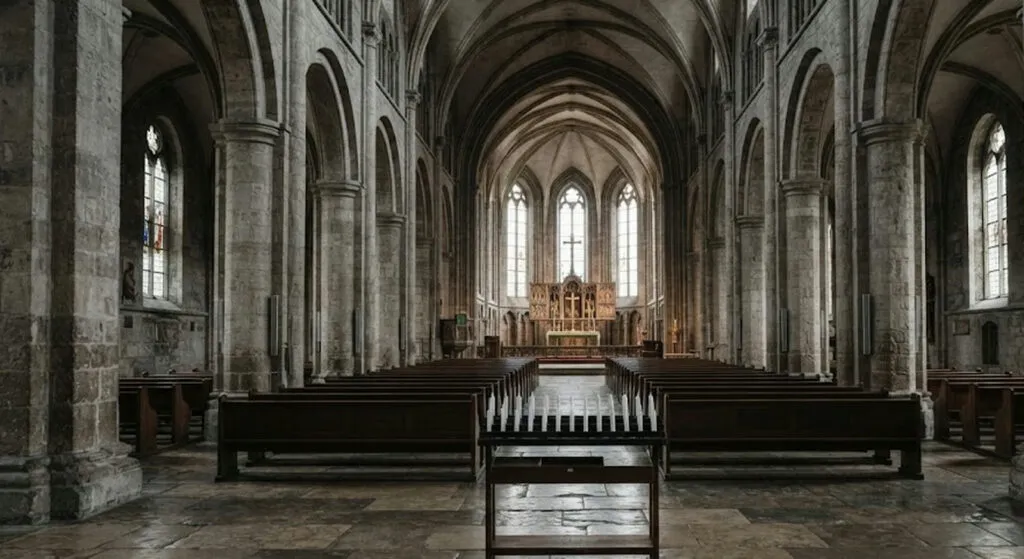
Thirty-five years on the throne end tomorrow in a cathedral in Oslo. King Harald V will be carried from the Royal Palace to Oslo Cathedral in a military procession - escorted by police, the armed forces band, an honour company of the Royal Guard and the court marshal. The funeral service begins at one in the afternoon, led by Bishop Olav Fykse Tveit together with the Bishop of Oslo.
The country stops. Three strikes of the bell mark a national minute of silence - then the president of the Storting and the prime minister speak. Norway improvises none of this: every step is written out in advance, down to the final lighting of candles by representatives of different religious and philosophical communities. It is a protocol familiar to the people watching it, not a spectacle being explained to them.
Who is coming - and who is sending a stand-in
The guest list is almost the entire map of European monarchy. Felipe VI and Letizia with Queen Sofía of Spain, Willem-Alexander and Máxima with Princesses Amalia and Beatrix of the Netherlands, Frederik and Mary with Prince Christian of Denmark, Philippe and Mathilde of Belgium. Liechtenstein, Monaco, Luxembourg and Japan are sending their representatives, as are the presidents of Iceland and Finland.
From Britain come Prince William and Princess Anne - but not Charles III. When a monarchy sends the heir and a sister instead of the king himself, that is a message anyone who reads protocol understands without it being said aloud. Health is the official explanation and it is probably the real one. But the fact that every other country is sending its head of state makes the absence visible.
What 35 years in one place means
Harald V had been on the throne since 1991. That is a period in which a state fell apart in the Balkans, several wars were fought, new borders were drawn and dozens of governments changed. In that same period Norway had one king and one oil fund that grew into the largest in the world. The difference is not in the people - the difference is that the institutions there did not pretend to start from zero every four years.
After the service, the family withdraws to the church at Akershus Castle, where the coffin is lowered into the royal crypt. Then the crown princess, Queen Sonja and Prince Sverre Magnus appear on the palace balcony - the last public appearance of the day. Haakon VIII is already king; the title passed to him the moment his father died, not tomorrow at the ceremony.
The ceremony does not make the king. It only acknowledges what has already happened - and gives people a place to stand and look at it. How many institutions here could do that without someone starting an argument about protocol?
The latest 10 news from this category

Three people killed by a strike on a boat, with no trial and no names. Since September 2025 the total...

Norway has five and a half million people, and yesterday it gathered leaders who have not been in the same...

CENTCOM hit four ships in the Gulf of Oman and one near Hormuz. The retaliation did not go towards Washington...
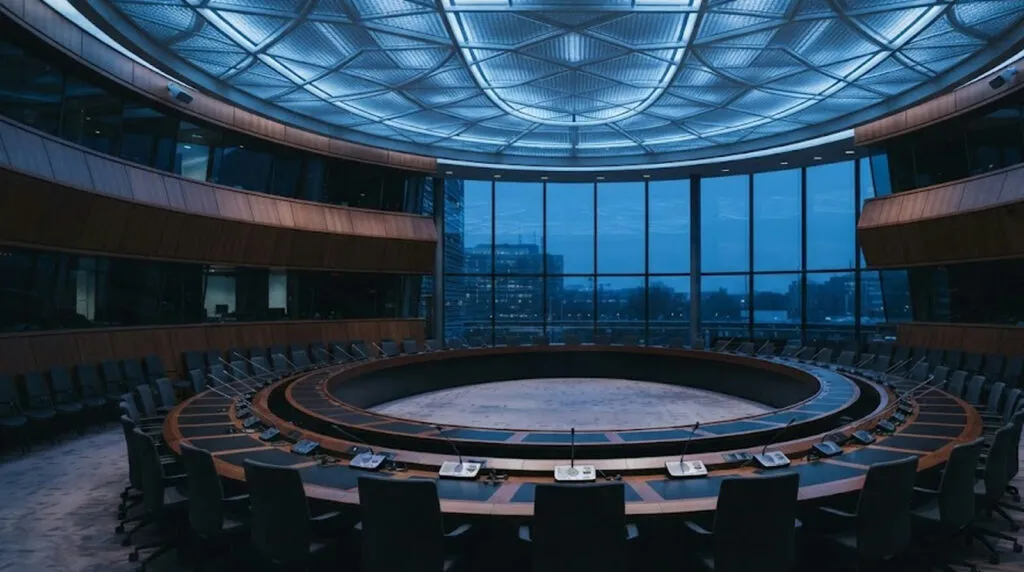
The EU wanted the brightest minds for European defence. Italy read who was on the list and the initiative was...
For decades Germany lectured everyone else about outside interference. Now it gets congratulations from an ally, posted on a network...

It took twenty-five years and a lawsuit to bring into the open what was written down in the very first...
The party that held Saxony-Anhalt for decades fell to 17.2 percent. Merkel did not blame the voter - she blamed...
For sixteen years Hungary was Moscow's closest ally in NATO. Then the people running it changed - and within a...
Thirty-five years on the throne and not one scandal to fill a front page. Half of Europe's royalty sat in...

Plus 23 percentage points for one party, the CDU halved twice over, record turnout of 77.8 per cent. And a...
This site uses cookies - is that okay? Learn more
Be the first to know when Metla launches something new
Leave your email and we will write when there is a new guide or something new on Metla.