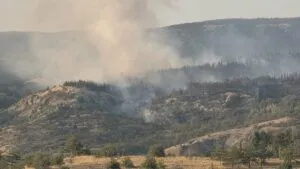
34 fires in 24 hours: three still burning, and the warnings put out nothing
09.09.2026


09.09.2026
09.09.2026

09.09.2026

09.09.2026

09.09.2026

09.09.2026

09.09.2026
08.09.2026

07.09.2026

09.09.2026

08.09.2026
08.09.2026

08.09.2026

08.09.2026

08.09.2026

08.09.2026

07.09.2026

06.09.2026
09.09.2026

09.09.2026
09.09.2026

09.09.2026

09.09.2026
08.09.2026

09.03.2026

27.02.2026

19.02.2026

23.04.2026

23.04.2026

12.04.2026

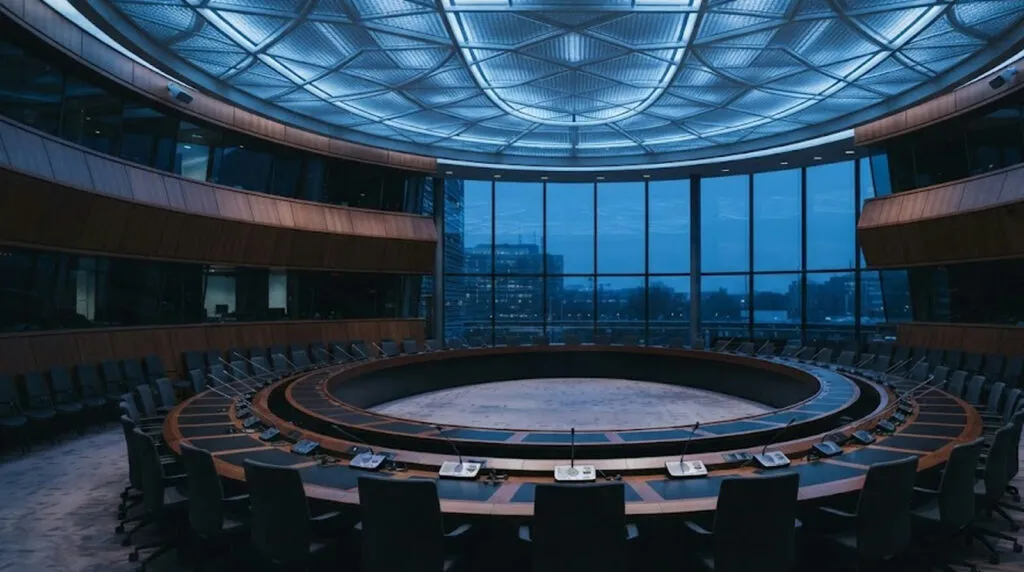
Kaja Kallas wanted to gather what she called "some of the brightest minds in security and defence" into an expert group that would write a report on how Europe should strengthen its own defence. The group never made it to a first session. Member states blocked it, and the European External Action Service cancelled the presentation at the last minute, on Sunday.
The official explanation is brief to the point of rudeness. "We decided not to proceed with that initiative," said an unnamed EU official, adding that some states felt the moment was not right.
It fell over a single name
According to sources, Italy led the resistance after learning who had been included. Roberta Pinotti, a former defence minister in left-wing governments and a political rival of the current minister Guido Crosetto, was among those selected. France and several other countries objected that the decision had not been discussed at ministerial level at all and had caught nearly every European government off guard.
Diplomats did not hold back in their descriptions: bad management, an unfortunate set of circumstances, a serious blunder. The Service replied that an advisory group was not seeking state representatives, so former officials were a logical choice. Formally - correct. Politically - somebody still forgot to inform the people who pay.
Neither the report nor Pinotti is the problem
The argument for haste is real: with the Munich Security Conference in February and American military reviews expected by the end of the year, Europe does not have unlimited time to think about its own defence. The problem is that the initiative was run as though there were not 27 governments that need to agree.
This is not Kallas's first stumble. Last year her 40-billion-euro military aid package for Ukraine collapsed. In May she claimed the US had evacuated its embassy in Kyiv over warnings of an imminent Russian attack - Washington later denied it. That same month China compared her to a disease. In June the Israeli foreign minister Gideon Sa'ar cut off contact with her after reports that she had privately compared Israel to apartheid South Africa.
The most revealing line came from one diplomat: member states want the Service to be a service for them, not an institution running a policy of its own. And it is precisely the small states, the ones now defending its position against full absorption into the Commission, who are among the dissatisfied.
For a country waiting at the EU's door, this is an instructive scene. A Union that demands a single foreign-policy voice from its candidates cannot itself assemble a working group of twenty-odd people without one member state killing it over a name on the list. The question is not whether Europe needs stronger defence. The question is who actually has the mandate to say so on its behalf.
The latest 10 news from this category
CENTCOM hit four ships in the Gulf of Oman and one near Hormuz. The retaliation did not go towards Washington...
For decades Germany lectured everyone else about outside interference. Now it gets congratulations from an ally, posted on a network...

It took twenty-five years and a lawsuit to bring into the open what was written down in the very first...
The party that held Saxony-Anhalt for decades fell to 17.2 percent. Merkel did not blame the voter - she blamed...
For sixteen years Hungary was Moscow's closest ally in NATO. Then the people running it changed - and within a...
Thirty-five years on the throne and not one scandal to fill a front page. Half of Europe's royalty sat in...

Plus 23 percentage points for one party, the CDU halved twice over, record turnout of 77.8 per cent. And a...
Practically the whole map of European monarchy is coming to Oslo Cathedral. Charles III is not - and that is...
The party that has never once run a German state took almost half the vote, while Merz's CDU fell to...
The palace says she is in good spirits and recovering well given the circumstances. Three words that guarantee nothing.
This site uses cookies - is that okay? Learn more
Be the first to know when Metla launches something new
Leave your email and we will write when there is a new guide or something new on Metla.