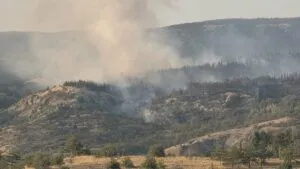
34 fires in 24 hours: three still burning, and the warnings put out nothing
09.09.2026


09.09.2026

09.09.2026
09.09.2026

09.09.2026
09.09.2026

09.09.2026

09.09.2026
08.09.2026

07.09.2026

09.09.2026

08.09.2026

08.09.2026

08.09.2026

08.09.2026

08.09.2026

08.09.2026

07.09.2026

06.09.2026

09.09.2026

09.09.2026

09.09.2026

09.09.2026

09.09.2026
08.09.2026

09.03.2026

27.02.2026

19.02.2026

23.04.2026

23.04.2026

12.04.2026

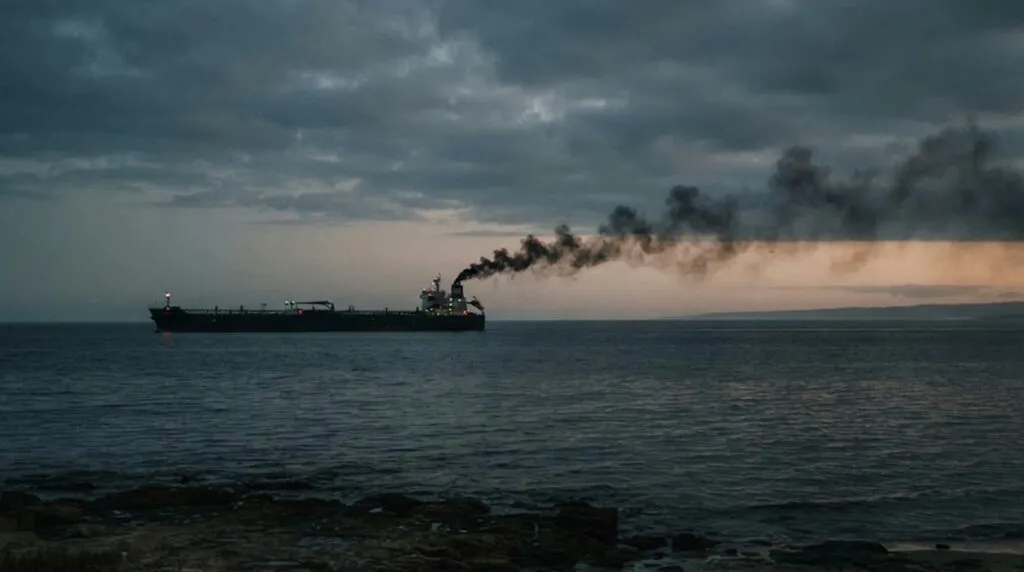
Five Iranian tankers hit, one sunk. US Central Command announced that its forces struck four vessels in the Gulf of Oman and another near the island of Hormuz - after Iran twice in two days attempted to hit an American destroyer with ballistic missiles.
The video CENTCOM released shows the tanker M/T Riesco burning and sinking in the Gulf of Oman. The American message is that the crews were ordered to abandon the ships before the strikes and that no US serviceman was hurt. So: the oil burns, the people are moved aside, and the war is fought through cargo vessels.
The retaliation went to Amman, not Washington
Iran did not hit back at the American ship. It fired missiles at Jordan, claiming the target was the Muwaffaq Salti air base. The Jordanian army said its air defences intercepted 20 ballistic projectiles and destroyed 18, with two landing in an uninhabited area without casualties.
This is worth pausing on. Jordan is not a party to this fight - somebody else's base sits on its territory, and that alone is enough for the country to take twenty missiles in one morning. The Balkans know this logic by heart: when the big players quarrel, the first to pay the price is the neighbour with no vote.
Hormuz is the currency again
One of the tankers hit was four miles from Kharg Island, the export throat of Iranian oil. Another was struck near Jask on the Gulf of Oman. Both crews were rescued. From the Iranian side came a threat of attacks on tankers at the ports of Bahrain and Kuwait, with a message to all crews to evacuate immediately.
Secretary of State Marco Rubio put it most bluntly: every time Iran attacks an American warship, it will lose tankers. That is a bill written in advance, and both sides know what every move costs.
In parallel, the Trump administration imposed broad sanctions on Iranian aviation - 27 Iranian airlines and nine service companies linked to the already-sanctioned Mahan Air, accused of supplying the Revolutionary Guard. The strikes are visible on video; the sanctions work slowly and without cameras, but they squeeze the artery of those same structures.
The Gulf of Oman and Hormuz are the door through which an enormous share of the world's oil passes. When that door starts burning, the price does not stay where the missile fell. Whether this reaches us depends on how long this exchange of tankers for destroyers goes on.
The latest 10 news from this category
The EU wanted the brightest minds for European defence. Italy read who was on the list and the initiative was...
For decades Germany lectured everyone else about outside interference. Now it gets congratulations from an ally, posted on a network...
It took twenty-five years and a lawsuit to bring into the open what was written down in the very first...
The party that held Saxony-Anhalt for decades fell to 17.2 percent. Merkel did not blame the voter - she blamed...

For sixteen years Hungary was Moscow's closest ally in NATO. Then the people running it changed - and within a...

Thirty-five years on the throne and not one scandal to fill a front page. Half of Europe's royalty sat in...

Plus 23 percentage points for one party, the CDU halved twice over, record turnout of 77.8 per cent. And a...

Practically the whole map of European monarchy is coming to Oslo Cathedral. Charles III is not - and that is...
The party that has never once run a German state took almost half the vote, while Merz's CDU fell to...

The palace says she is in good spirits and recovering well given the circumstances. Three words that guarantee nothing.
This site uses cookies - is that okay? Learn more
Be the first to know when Metla launches something new
Leave your email and we will write when there is a new guide or something new on Metla.