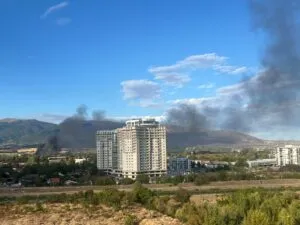
Black Smoke Over Skopje: A Paint and Varnish Warehouse Burned Inside the Old Steelworks
23.09.2026


23.09.2026

23.09.2026
23.09.2026

23.09.2026

23.09.2026
23.09.2026
23.09.2026
22.09.2026

21.09.2026

23.09.2026

23.09.2026

22.09.2026

23.09.2026

23.09.2026

23.09.2026

23.09.2026

22.09.2026

21.09.2026
23.09.2026

23.09.2026

23.09.2026

23.09.2026

23.09.2026

23.09.2026

09.03.2026

27.02.2026

19.02.2026

23.09.2026
22.09.2026

21.09.2026

23.04.2026

23.04.2026

12.04.2026

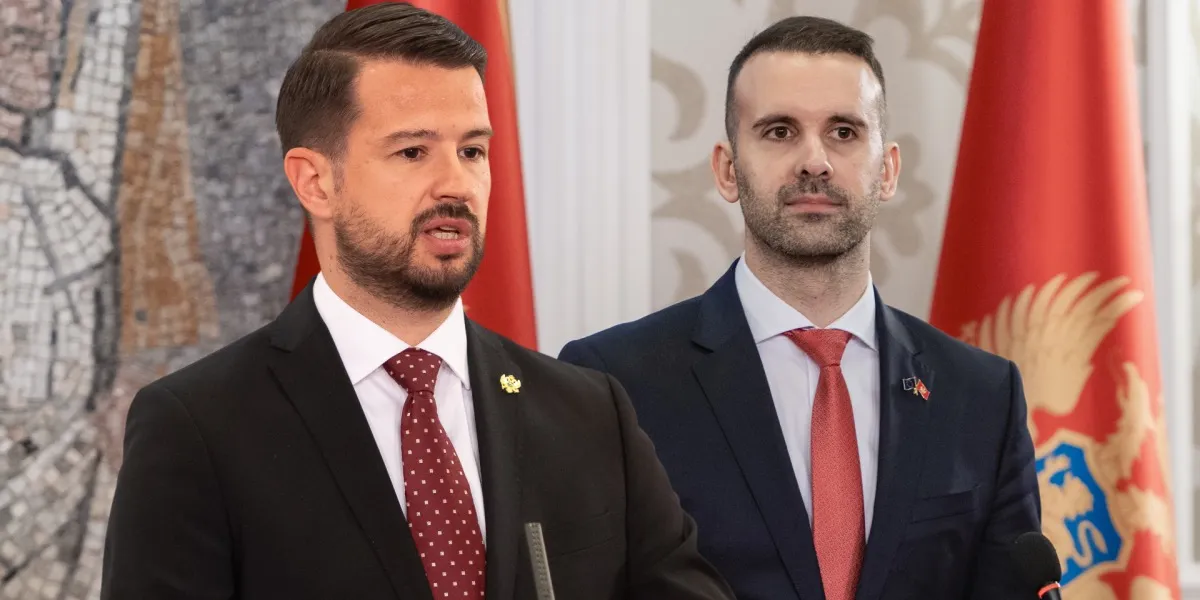
Podgorica has spent these days arguing about something that officially does not exist. The claim that Montenegro is considering joining the military format of Croatia, Albania and Kosovo travelled through regional media, reached opposition statements and the commentary of retired officers - and not one government has confirmed it.
What is confirmed and what is not
This is confirmed: in March 2025 Croatia, Albania and Kosovo signed a declaration on military cooperation. The document talks about a joint defence industry, greater operational alignment through joint exercises, countering hybrid threats and support for Euro-Atlantic integration. That is a public text, not a secret.
It is also confirmed that Montenegro is a member of the US-Adriatic Charter, the so-called A5, where together with Croatia and Albania it regularly takes part in joint exercises, with Kosovo holding observer status. During this year representatives of those countries met in that format and took part in cyber training and a series of manoeuvres.
What is not confirmed is exactly the thing all the noise revolves around - that Podgorica is joining the three-way pact. There is no official confirmation of that from any side. There is only a claim that it is „being discussed in political and defence circles”.
How the unconfirmed becomes an alarm
Opposition politician Vladislav Dajković demanded the government answer the question immediately, calling the case a political scandal. From the Serbian side, older assessments are being cited that the Zagreb-Tirana-Pristina alliance is aimed at Belgrade, and the articles line up comments from retired members of former military and state services.
This is worth pausing on. A retired officer is not a source of fact about current state policy - he is a source of opinion, and that opinion usually matches the newsroom looking for it. When a story leans mainly on voices like that rather than on a document or a ministry statement, that tells you something about the story.
Why this concerns us
Macedonia knows both sides of this mechanism. It knows what it looks like when regional security architecture is rearranged without much explanation to the public, and it knows what it looks like when an unconfirmed story spins for a few days until it starts functioning as fact.
There is nothing objectionable about Western Balkan states concluding defence agreements - that is their right and part of the daily business of any military alliance. What is objectionable is when citizens learn the content of those arrangements through anonymous „circles” instead of through their own institutions. The silence of ministries is not neutral - it is space somebody else fills.
So the most useful question is not whether Montenegro is joining, but which of the official addressees will answer that clearly and with a signature. Until there is an answer, everything else is an assumption dressed in military terminology.
The latest 10 news from this category

The question is not emotional but institutional: what does accepting European criteria mean if the verdicts of a court whose...

An economic normalisation signed in 2020 is now filed as a finished war before the General Assembly. A conflict does...
Under the trailer there is not one claim that anything in the film is untrue. There is a ledger: you...
Regimes do not spend tabloid artillery on candidates they are not worried about. Ilija Srdanović got that treatment ahead of...

The president who dissolved parliament himself is now resigning too, promising a cabinet of no more than 12 ministers and...
Eight countries, 120 million people, a motorway to Timisoara and energy connections. And one cancelled visit that says more than...
The call was about damaged furniture on a terrace. Armin Dzutovic died three days later. The internal investigation found first...

Four KLA leaders received 81 years in prison, and Albania's parliament immediately adopted a declaration calling the verdict unjust. The...
The court established responsibility for 96 killed, 303 tortured and 385 unlawfully detained. The prosecution asked for 45 years. Serbia...
Thaci and Krasniqi got 25 years each, Veseli 18, Selimi 13. The court established 385 unlawfully detained, 303 tortured and...
This site uses cookies - is that okay? Learn more
Be the first to know when Metla launches something new
Leave your email and we will write when there is a new guide or something new on Metla.