
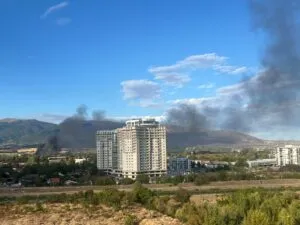
Black Smoke Over Skopje: A Paint and Varnish Warehouse Burned Inside the Old Steelworks
23.09.2026


23.09.2026
23.09.2026
23.09.2026

23.09.2026

23.09.2026
23.09.2026
23.09.2026

22.09.2026

21.09.2026

23.09.2026

23.09.2026

22.09.2026

23.09.2026

23.09.2026

23.09.2026

23.09.2026

22.09.2026

21.09.2026
23.09.2026

23.09.2026
23.09.2026
23.09.2026

23.09.2026

23.09.2026

09.03.2026

27.02.2026

19.02.2026
23.09.2026
22.09.2026

21.09.2026

23.04.2026

23.04.2026

12.04.2026

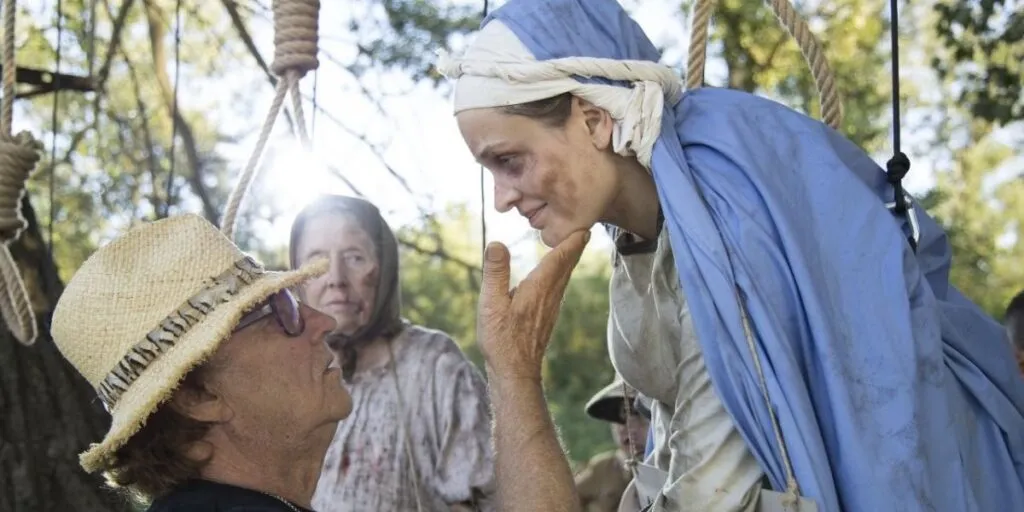
The trailer for director Lordan Zafranovic's film "Golden Section 42: The Children of Kozara" went up on YouTube and within a day drew the reaction everyone expected - but not from critics. It came from the comments under the video, and it was not aimed at the film. It was aimed at two actors.
Rene Bitorajac and Leon Lucev, both Croatians, took roles in a work about Ustasha crimes at the Jasenovac camp. Under the trailer, people are telling them they should renounce their Croatian citizenship themselves.
The argument that collapses on its own
One of the comments is worth reading to the end, because it contains the whole logic. Zafranovic, it says, spent fifty years filming nothing but propaganda; this serves only Greater Serbian ideology; let him make a film about Bleiburg, about Srebrenica, about Vukovar; and let Bitorajac and Lucev renounce their citizenship for acting under such a director.
Note what is missing from that entire list. Not one fact about the camp. Not one claim that anything in the film is untrue. Only a ledger - you talk about ours, talk about theirs too, otherwise you are not one of us.
Jasenovac was established in 1941 within the Independent State of Croatia, under the patronage of Nazi Germany. For decades, as reports on the film note, Croatia has denied the genocide against Serbs, Jews and Roma carried out in that state. That is not the subject of this film. It is the subject of the reaction to it.
What the script is, and what the context is
Zafranovic, according to the project description, opens up the "anatomy of evil" through interwoven perspectives - of both the victims and the executioners. The screenplay is credited to Arsen Diklic and Zafranovic himself, working with co-writer Uroska Tatomir and dramaturge Slobodan Terzic.
The cast is regional in a sense that word has long stopped being used: Leon Lucev, Rene Bitorajac, Milan Maric, Milivoj Beader, Aleksej Bjelogrlic, Milica Stankovic, Vuk Trnavac, Anica Dobra, Irfan Mensur, Katarina Radivojevic, Dusanka Glid Stojanovic, Pavle Mensur, Miodrag Misa Dragicevic, Jadranka Nanic Jovanovic, Gorica Popovic, Bojan Navojec, Hana Hegedusic, Slobodan Milovanovic, Ivica Klemenc, with Predrag Miki Manojlovic appearing as a special guest.
The lead producer is TS Media from Serbia, with co-producers Net Film Productions from Republika Srpska and Art and Popcorn from Serbia; executive production is entrusted to Kosutnjak Film, headed by Zoran Jankovic. The premiere is set for 2 October at the Sava Centre in Belgrade, opening the FEST festival.
Why this is not only a Croatian matter
When a historical event is debated through the citizenship of the actors instead of through what actually happened, the debate is already lost. This is not about whether something in the film is false - nobody raised that question. It is about who is permitted to depict it, and in whose language.
Bitorajac and Lucev are not accused of acting badly. They are accused of appearing in a frame they should not be in. That is the only line held against them - and it is not one they speak.
The latest 10 news from this category
The question is not emotional but institutional: what does accepting European criteria mean if the verdicts of a court whose...
An economic normalisation signed in 2020 is now filed as a finished war before the General Assembly. A conflict does...
Regimes do not spend tabloid artillery on candidates they are not worried about. Ilija Srdanović got that treatment ahead of...
The president who dissolved parliament himself is now resigning too, promising a cabinet of no more than 12 ministers and...
Eight countries, 120 million people, a motorway to Timisoara and energy connections. And one cancelled visit that says more than...
The call was about damaged furniture on a terrace. Armin Dzutovic died three days later. The internal investigation found first...
Four KLA leaders received 81 years in prison, and Albania's parliament immediately adopted a declaration calling the verdict unjust. The...
The court established responsibility for 96 killed, 303 tortured and 385 unlawfully detained. The prosecution asked for 45 years. Serbia...
Thaci and Krasniqi got 25 years each, Veseli 18, Selimi 13. The court established 385 unlawfully detained, 303 tortured and...
"If it is acceptable to the participants" - that is the entire offer. What gets negotiated is the format, not...
This site uses cookies - is that okay? Learn more
Be the first to know when Metla launches something new
Leave your email and we will write when there is a new guide or something new on Metla.