Smugglers Dragged a Police Officer With Their Vehicle at Blace: the Second Car Is What Tells You This Wasn't an Accident
14.09.2026


14.09.2026

14.09.2026

14.09.2026

14.09.2026

13.09.2026

12.09.2026
14.09.2026

14.09.2026

13.09.2026

14.09.2026

14.09.2026

14.09.2026

14.09.2026

13.09.2026

12.09.2026
14.09.2026

14.09.2026

14.09.2026

14.09.2026

14.09.2026
13.09.2026

09.03.2026

27.02.2026

19.02.2026

23.04.2026

23.04.2026

12.04.2026

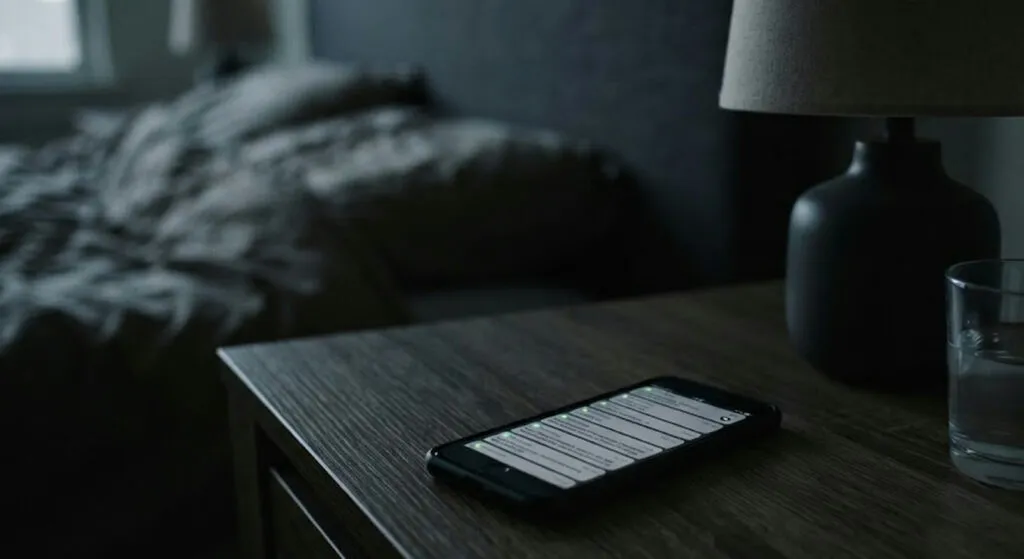
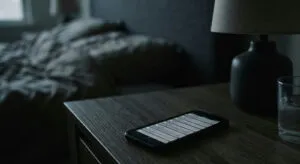
A message arrives. You have not read it, you do not know who it is from, you do not know whether it matters. And already it is harder to return to what you were doing three seconds ago. Ana Asensio, a psychologist with a doctorate in neuroscience, puts it without any drama: "Notifications may look like something very small, but for our brain they are not always small."
The issue is not the message, but what comes before it. "The brain enters a dynamic of constant interruption and anticipation", she says. Every ping opens a blank that demands closing, and until it is closed, part of your attention stays stuck there. Gather ten of those blanks in one afternoon and you no longer finish anything.
The second part is more social than technological. Many people believe they have to reply instantly, as if receiving carried an obligation. Asensio demolishes that with a sentence plenty of people should read twice: "Receiving a message does not mean you have to reply immediately." And more bluntly still: "We can love someone very much and reply to them three hours later or the next day."
Here is the real knot. Response time has become a measure of how much you care about someone, though it measures nothing of the kind. "I am not available right now" does not mean "I do not care about you", the psychologist says, but that is exactly the translation people perform on themselves while they wait.
The suggestions require no new app and no digital detox up a mountain. Switch off the notifications you do not need. Agree on one channel that is genuinely urgent, so you know the rest can wait. Send a short acknowledgement that you have seen it when you cannot reply straight away. And decide consciously when you are available, instead of letting somebody else's phone decide it.
Asensio's conclusion ought to hang above the screen in every office: "Technology should make communication easier for us, not make us feel permanently on call." The question is who introduced that on-call shift, if nobody ever asked for it.
The latest 10 news from this category

Whoever beat all the eggs together made a different cake. And the glaze must not pass 45 degrees, or the...

If your day revolves around what you are allowed to eat, maybe you do not need more willpower. Maybe the...

One rule applies to all three and it is the one most often skipped. It is not a recommendation to...
A psychologist explained the mechanism the food industry has no way of selling: the decision made in front of the...

One single ingredient separates melitzanosalata from mutabal - tahini. Three aubergines, one clove of garlic, and an oven at 220...

The algorithm gets it wrong and corrects itself on the next question. If the mistake is in your diet for...

The chicken ends up in the pan anyway. The salad that was sitting half a metre away does not.

Love can be there and there can still be distance and loneliness. A psychologist names the three things that die...

This year the season started as early as August because of the heat. From breakfast to pizza - everywhere a...
When it is chaos outside, a person looks for a small space where they still get to decide. The problem...
This site uses cookies - is that okay? Learn more
Be the first to know when Metla launches something new
Leave your email and we will write when there is a new guide or something new on Metla.