Smugglers Dragged a Police Officer With Their Vehicle at Blace: the Second Car Is What Tells You This Wasn't an Accident
14.09.2026


14.09.2026

14.09.2026

14.09.2026

14.09.2026
13.09.2026

12.09.2026

14.09.2026

14.09.2026
13.09.2026

14.09.2026

14.09.2026

14.09.2026

14.09.2026

13.09.2026

12.09.2026

14.09.2026

14.09.2026

14.09.2026

14.09.2026

14.09.2026

13.09.2026

09.03.2026

27.02.2026

19.02.2026

23.04.2026

23.04.2026

12.04.2026

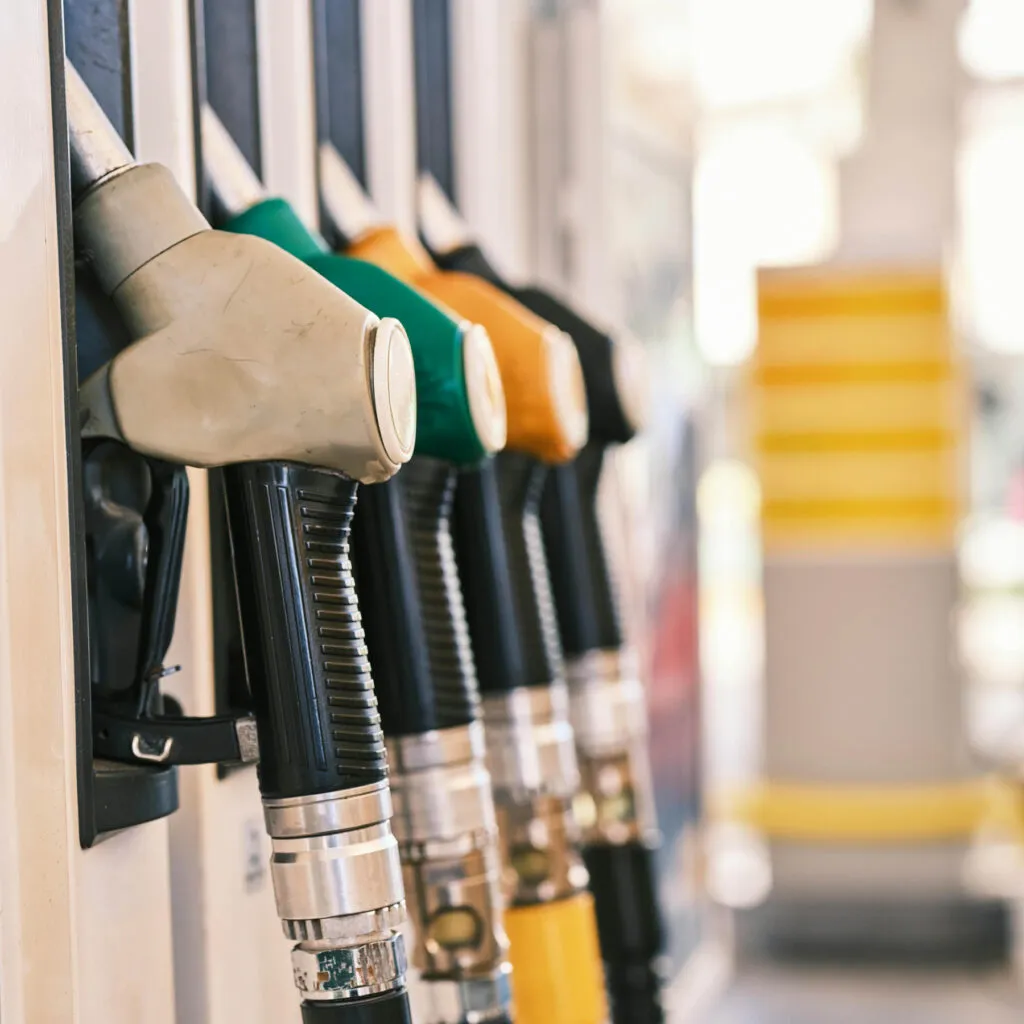
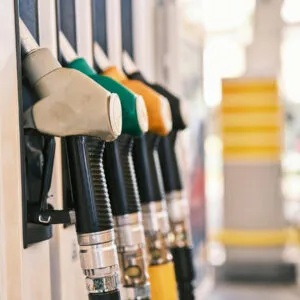
The government has cut value added tax on fuel from 18 to 10 percent. The measure runs from 15 to 28 September - exactly fourteen days. And while the headline sounds like relief for everyone, the arithmetic says something else: diesel will get cheaper by about two denars, while petrol will get more expensive by about three and a half.
Yes, you read that correctly. The tax falls and petrol goes up.
Why a lower tax does not mean cheaper fuel
The explanation is not political, it is arithmetical. VAT is only one item in the structure of the retail price. The final price also depends on the exchange price of refined products, the currency rate, transport and storage, excise duty, margins and the methodology of the Energy Regulatory Commission.
On top of that, cutting the tax rate by eight percentage points does not mean the price at the pump falls by eight percent. If the base stays the same, moving from 18 to 10 percent reduces the final amount by around 6.8 percent. And when purchase prices are rising in the meantime, part of the tax relief is consumed simply preventing an even bigger increase.
According to government calculations, diesel should see a drop of around two denars instead of the expected rise of around five - meaning a total cushioning effect of about seven denars per litre, with a new price near 99 denars. For petrol, the lower tax only limits the increase: EUROSUPER BS-95 is expected to cost around 100.5 denars a litre, and BS-98 around 102.5 denars.
The argument about the neighbours
Prime Minister Hristijan Mickoski defends the measure by pointing out that the price of oil on world markets has passed 100 dollars a barrel and that Macedonia still has lower prices than its neighbours. "Is it low when you pay 95-96 denars a litre of diesel, or 100 denars? It isn't, but it is cheaper than what they pay in the neighbourhood", he said.
That is an accurate comparison and a clumsy argument at the same time. The person filling a tank does not pay with the difference relative to Albania - they pay with denars out of their own wages. The opposition wants VAT on fuel cut to five percent and excise duty scrapped entirely, calling the measure late and half-hearted.
Fourteen days
The weakest point of the measure is its duration. Two weeks are enough to survive the sharpest blow, but not enough for companies to shift their calculations. A haulier planning quarterly contracts is not going to change service pricing because of a fourteen-day tax breather.
The region uses different mechanisms. Serbia intervenes through excise duty - for the period from 14 to 20 September, excise on diesel was set at 55.53 dinars and on petrol at 54 dinars. Montenegro cut excise by 50 percent in March, so diesel rose by around four cents instead of around 31. Albania has a conditional mechanism that kicks in when the price passes a predetermined threshold. The Macedonian model combines excise and VAT.
None of those models changes the basic sum: a country that imports energy cannot permanently insulate itself from the world price. Tax measures postpone the blow - they do not remove it.
The real test is not the price on 15 September. It is 29 September, when the reduced rate expires. If oil keeps rising until then, restoring VAT to 18 percent means a fresh jump at the pumps - and a new question the government will have to answer. Until then it would be worth publishing how much revenue the budget loses and where the difference is made up from, because somebody always pays for an intervention in an energy crisis.
The latest 10 news from this category
Two calls offer up to 500,000 denars per company, with a university as a mandatory partner. The idea is good...
Nobody pulls out a vine out of spite. You pull it out when the numbers stop adding up - and...
Sixteen thousand tonnes of copper a year against ten years of resistance around Strumica. The question is not mine or...
A researcher quit because the firms are gambling with our lives. Instead of denying it, Anthropic confirmed it - with...
A technology sold for decades as the answer to the climate is now taking money from the defence industry. The...

Write a sentence, get a game. Until now it worked only in New Zealand, now in Belgrade too. Creators on...
The deficit target raised from 3.5 to 4.1 percent of GDP, spending growing faster than revenue, and the growth forecast...
On euro loans with a variable rate, the rise comes due at the next reset. On fixed ones, it does...
The agreed price for first class is 40 denars. At the collection points they pay 15 to 18. Across the...
A Skopje company owes 14.87 million euros and there is nothing to recover it from. In one month the total...
This site uses cookies - is that okay? Learn more
Be the first to know when Metla launches something new
Leave your email and we will write when there is a new guide or something new on Metla.