Mickoski celebrates a 4-to-1 win over SDSM in Brvenica, but his candidate got 445 fewer votes than a year ago
19.10.2026


19.10.2026

19.10.2026
19.10.2026

19.10.2026

19.10.2026
19.10.2026

19.10.2026

19.10.2026

18.10.2026

19.10.2026

19.10.2026

18.10.2026

19.10.2026

19.10.2026

19.10.2026

19.10.2026

18.10.2026

17.10.2026

19.10.2026

19.10.2026

19.10.2026

19.10.2026

19.10.2026

19.10.2026

19.10.2026

18.10.2026
18.10.2026
19.10.2026

17.10.2026

15.10.2026

23.04.2026

23.04.2026

12.04.2026

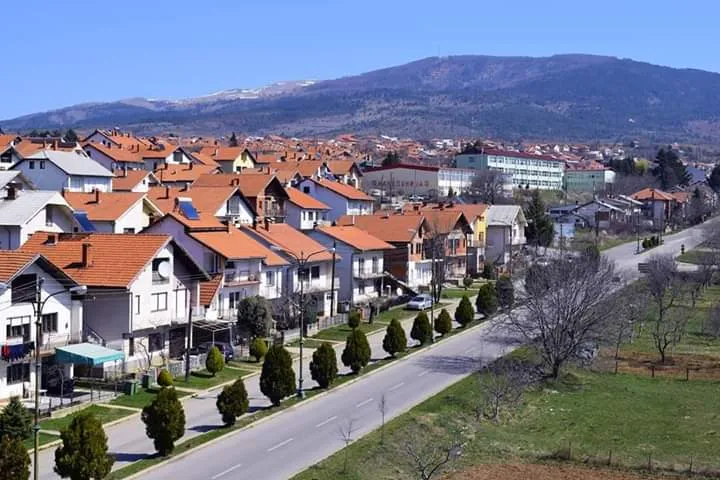
Nine councillors. Five from VMRO-DPMNE and its coalition, three from SDSM and its coalition, one from the ZNAM Movement. All nine voted against.
In a country where party lines on municipal councils can usually be read off the seating plan, a unanimous vote against a private investor's initiative is rare enough to note. The council of Pehčevo municipality rejected the initiative to launch a procedure for drafting urban planning documentation for a data centre on plots in Pančarevo.
What was actually on the agenda
Formally, the councillors were not deciding on construction. The second item on the agenda of the 11th session concerned accepting an initiative that would start the procedure for an urban planning project outside the scope of a zoning plan - forming a building plot for a facility with the designation G4.7, structures for storing and warehousing digital data. Five cadastral plots in the Pančarevo cadastral municipality are covered.
That is the technical description. In language anyone understands: the first step in a procedure that can end with a data centre.
SDSM council group coordinator Nikolčo Jovčev asked for the item to be withdrawn right at the start, arguing that the initiative had not been adequately explained either to the councillors or to the public.
"I cannot disclose the investor's name"
Mayor Aleksandar Kitanski also asked for the item to be taken off. He defends the procedure as routine - the initiative is only a beginning and does not constitute a building permit, and any eventual construction would have to pass through several institutions and procedures, including environmental protection processes. If any competent institution issued a negative opinion, the process would be halted.
But then comes the sentence the whole case turns on: under the law, as he explained, he cannot disclose the investor's name.
That is probably a correct reading of the regulations. And that is precisely why it is a problem. When the residents of a municipality are asking who wants to build on their land, and the mayor faces a legal barrier to telling them, then the law is working against the very public the planning procedure is supposed to protect.
"We cannot speculate without relevant data and expert analyses," Kitanski said. True - but the absence of data is not a natural state. It is a product of how the procedure is set up.
Power and water, but nobody says how much
The objections that came from every side are practically identical, which is why the vote was unanimous. How much electricity the facility would consume. How much water. What the benefit to the municipality is. What the environmental impact is.
The Green People's Guard demanded the procedure be halted, stating that no data has been published on the investor, on the planned electricity and water consumption, on the value of the investment or on the environmental impact. Levica and DOM raised similar objections.
And the VMRO-DPMNE council group - the governing party at local level - put it in terms that are hard to argue with: "We are not against development and investment, but projects like this should be supported only when there are clear guarantees that the interest of Pehčevo municipality and its citizens is fully protected."
A question bigger than Pehčevo
Data centres are among the hungriest facilities for electricity and water that exist. That is not a local circumstance of Pančarevo - it is the definition of the technology. Which is why the questions from Pehčevo's councillors are not local questions.
Jovčev called for broader public information on investments of this kind in future, and noted that his council group supports a moratorium on investments of this type where they are unknown to the public and to councillors.
What happened in Pehčevo is a council that did its part of the job: it asked for data, did not get it, and did not vote for it. If that is the model, the question is whether the next municipality handed the same initiative will have nine councillors ready to repeat it.
The latest 10 news from this category
The opposition is counting: 4 billion euros of new debt in two years, a deficit above 900 million and interest...

On paper, Macedonia is doing better than Europe. But 2.7 percent is the speed at which prices rise, not the...
The EU average is 26.3, and young people in Croatia and Greece are the last to move out. There is...

The company that sells automation has published the numbers on its own staff: the beginners are disappearing, while the experienced...

Blood tests and ice baths will no longer be a privilege of the rich - or so the Hollywood actor...
The woman who fooled Silicon Valley with blood tests that didn't work is now filling cinemas. The Musk film, meanwhile,...
In August Macedonia had 131,076 foreign guests, while the Belgrade region alone had 154,267. Foreigners stay with us for about...
Only 19 percent of households with children receive child benefit, compared with 88 percent in the EU. The Platform Against...

One of Anthropic's five biggest customers turned its back on stage, then started softening the words. When the default choice...

From unicorn to bankruptcy in five years: Google took the founders back, Disney takes part of the assets, and the...
This site uses cookies - is that okay? Learn more
Be the first to know when Metla launches something new
Leave your email and we will write when there is a new guide or something new on Metla.