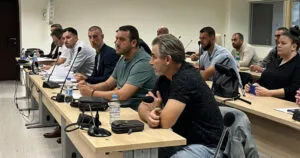
"That's not my job": the trial of the 13 Puls police officers restarted from scratch, and witnesses describe help being refused
22.09.2026


22.09.2026

22.09.2026

22.09.2026

22.09.2026

22.09.2026

22.09.2026

22.09.2026

21.09.2026

20.09.2026

22.09.2026

22.09.2026

21.09.2026

22.09.2026

22.09.2026

22.09.2026

22.09.2026

21.09.2026

20.09.2026

22.09.2026

22.09.2026

22.09.2026

22.09.2026

22.09.2026

22.09.2026

09.03.2026

27.02.2026

19.02.2026
22.09.2026

21.09.2026

21.09.2026

23.04.2026

23.04.2026

12.04.2026

A pilot with 25 years of experience. A plane with 10 passengers. A flight of only 20 minutes between two Bahamian airports. On a routine like that, catastrophes do not happen - except when they do, and then everything depends on a single decision. Ian Nixon made that decision. And that is why everyone is alive.
The flight between Marsh Harbour and Freeport, in the Bahamas, was meant to be a plain piece of routine. But shortly after takeoff the systems began to fail one by one - navigation went, radio comms went silent, the engines were cutting in and out. Nixon could not reach a single controller on the ground. The plane went deaf and blind in the middle of the sky.
Then he made the decision that pilots rarely get a chance to tell anyone about - ditching the aircraft on water. About 289 kilometres north of Miami, in the Atlantic Ocean. After the impact, his first thought was: "We're not dead." A sentence that can define the rest of life for anyone who has said it after a moment like that.
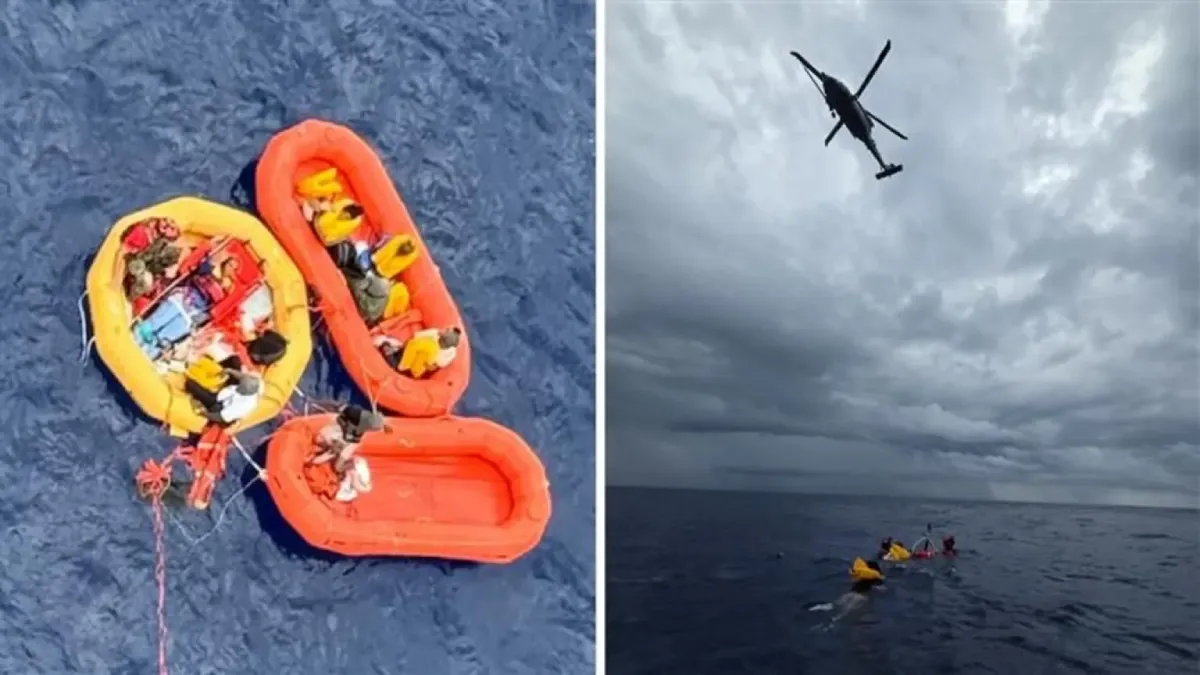
Then came five hours in an inflatable life raft, in uncertain conditions. Nixon kept morale up by repeating the same line: "A plane will be here in ten minutes." He had no way to know that. But leadership in a disaster looks exactly like this.
Once one passenger heard a helicopter in the distance, the miracle happened - the 920th Rescue Wing of the US Air Force had been diverted to the scene after the emergency radio beacon activated automatically. All 11 people were successfully evacuated before the helicopters had to leave because of fuel.
Three passengers had minor injuries. All were taken to a hospital in Florida. One of the passengers, Olympia Auten, described the scene as something from a film. Commander Elizabeth Pjovati from the rescue crew said she did not know of any other survivors from a similar forced ocean landing - and called the event "a true miracle."
The story is not just about the pilot's heroism. It is a story about how thin the margins in civil aviation really are - and how everything sometimes hangs on a single cool head in the cockpit. For Balkan readers, it is a reminder that no flight is "routine" in the literal sense. Only until it stops being one.
The latest 10 news from this category

Washington, Copenhagen and Nuuk are signing off on a military presence on an island of 56,000 people - and the...

Phones in Krāslava rang by themselves, the fighters took off, and what exactly triggered the alert - nobody is saying....

In Mecklenburg the CDU finished on 4.9 percent and, for the first time in the history of the Federal Republic,...

Tisza took 16 years of power off Fidesz and won 141 of 199 parliamentary seats. Orbán now says Brussels is...
With 75 percent of protocols counted, the governing party leads in 208 of the 225 single-mandate districts. A parliament of...

He never sat on the throne, and the emirate is lowering its flags for ten days. Sometimes the surname says...

Three options on the table in Washington - military pressure, economic strangulation or a deal - and the president frames...

The party of Adenauer and Kohl slid to the electoral threshold in Mecklenburg, the AfD is already demanding the chancellor's...
Two prime ministers in the same Union, the same month, completely opposite diagnoses of who is provoking whom. There is...
A broken aircraft in a field usually ends up in a police note. This one ended up with federal investigators,...
This site uses cookies - is that okay? Learn more
Be the first to know when Metla launches something new
Leave your email and we will write when there is a new guide or something new on Metla.