


Studeničani: 35-year-old dies after being electrocuted while washing his car with a pressure washer
18.09.2026


18.09.2026

18.09.2026

18.09.2026

18.09.2026

18.09.2026
18.09.2026

18.09.2026

17.09.2026

16.09.2026

18.09.2026

18.09.2026

17.09.2026

18.09.2026

18.09.2026

18.09.2026

18.09.2026

17.09.2026

16.09.2026

18.09.2026

18.09.2026

18.09.2026

18.09.2026

17.09.2026

17.09.2026

09.03.2026

27.02.2026

19.02.2026

18.09.2026

17.09.2026
16.09.2026

23.04.2026

23.04.2026

12.04.2026

The lab Prentis has existed since April this year. It has a little over 25 employees. And it is negotiating to raise 100 million dollars (around 92 million euros) at an estimated valuation of one billion dollars. Four months of existence, a billion in value - that is maths that works in exactly one industry on earth.
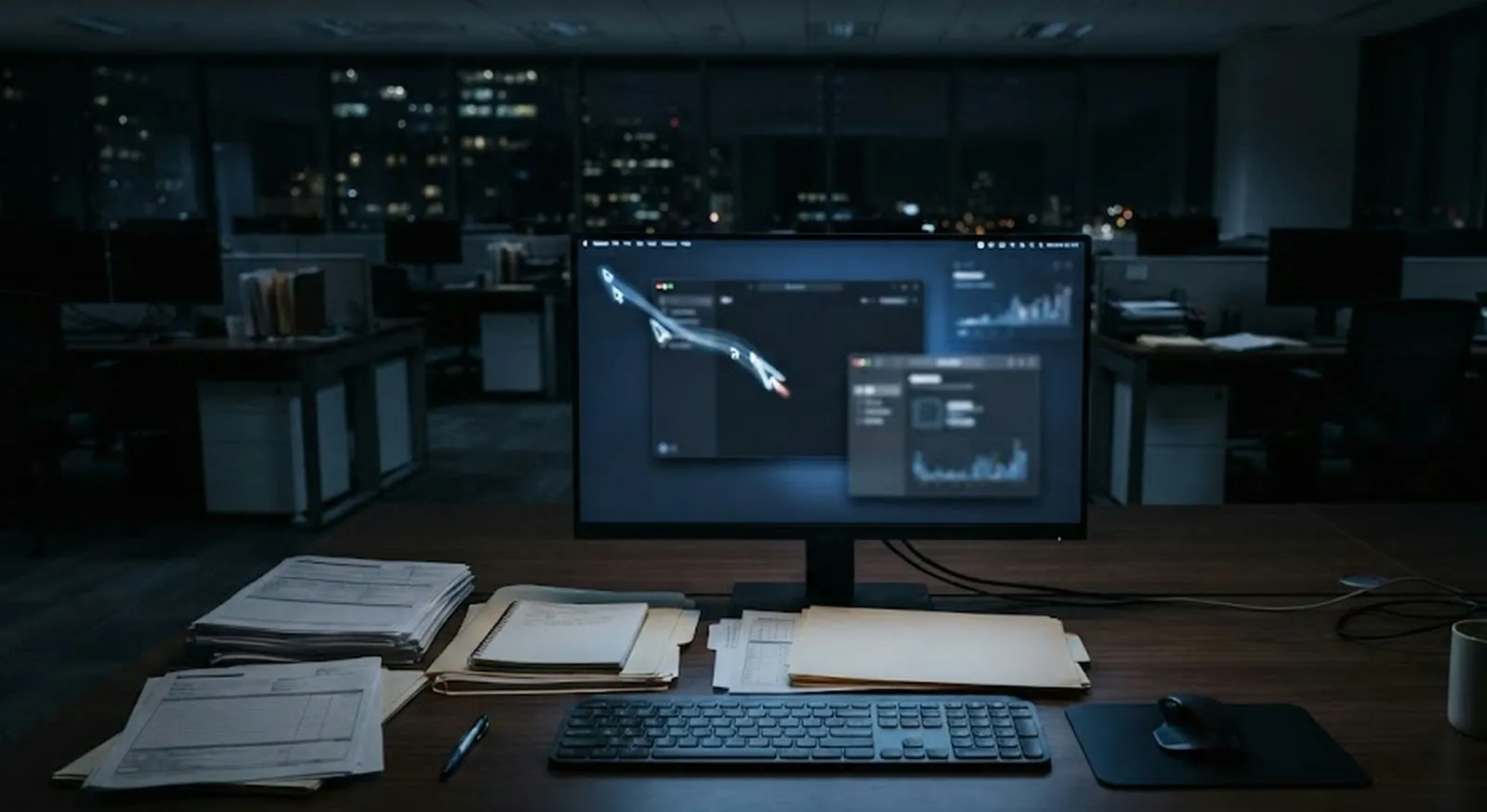
What Prentis is building is not another conversational model. The company trains its models by watching office workers click through documents and systems, in order to build agents that will operate the computer themselves and finish the job. Insurance claims processing. Customs refunds. Precisely those tasks where a human today searches folders and enters data into three different systems.
The founder and chief executive is Ritankar Das, aged 31. The youngest recipient of Berkeley's University Medal in more than a century - he graduated at 18 with a double major, then a master's at Oxford, then an abandoned doctorate at Cambridge. Since 2014 he has run a holding company called Titan, which he describes as a deliberate return to the old Berkshire Hathaway model - a holding financed from its own sales rather than from outside funds.
The other two names on the business card carry more weight. Reid Hoffman, co-founder of LinkedIn and partner at Greylock, an early investor in OpenAI, the man who stepped down from Microsoft's board last month after nearly a decade. And Mark Pincus, founder of Zynga, who now runs an investment firm with Hoffman as an adviser. For both of them, Prentis is a side project. For the valuation, their names are half the argument.
The figures the company puts on the table itself
According to people familiar with the negotiations, Prentis has already signed contracts worth up to 50 million dollars with several clients - a healthcare management organisation, a manufacturer, and producers of goods and clothing. Investor materials project an annual revenue run rate of around 75 million dollars by the third quarter of this year.
Here it is worth reading the small print, because the company wrote it. Those figures, its own presentation states, are an estimated annual value calculated on the basis of a contracted fee of 20 percent of the savings - not recognised revenue - and are "outcome-dependent and subject to final execution". In other words: if the software saves money, there will be revenue. If it does not, the figure is a wish on paper. That is not fraud, it is a normal way of calculating in this industry - but it is not the same as money in the account, and headlines routinely treat it as though it were.
The company claims its Hive-32B model outperforms OpenAI's GPT-5.4 and Anthropic's Claude Opus 4.6 on two computer-use benchmarks. It also claims it costs about ten times less per task than the leading models because it is smaller and cheaper to run. None of those results has been independently verified.
The market it is entering is not empty. Anthropic, OpenAI and Mira Murati's lab are working on the same thing, and this year Anthropic bought the Seattle startup Vercept outright, kept the founders and shut down its product. When the giants buy people and switch off products, that is a signal of how seriously they take this field.
The work these agents automate - data entry, claims processing, administrative searching - is exactly what the region sells as a service to foreign clients. This is not a distant American venture capital story. If a billion dollars is flowing into a machine that does that work more cheaply, the question coming is not whether, but when.
The latest 10 news from this category
An eight-year-old firm that started out mining crypto has tripled its value in ten months. It did not discover anything...

The price of uranium has jumped 75 percent in five years, and the list of countries that mine it reads...
Exein raised 270 million dollars and its valuation jumped thirtyfold in two years. The European regulation coming into force in...
A startup valued at 94 million dollars changed hands, and both sides said openly what was being bought - not...
A technology sold for decades as the answer to the climate is now taking money from the defence industry. The...
The board voted, the founder kicked the administrators out of Slack and held out for three days. What does a...

Three months ago the company raised 60 million. Now it is worth almost ten times that, and its product is...

After Ohridska Banka, Sparkasse has gone after a second one. The approvals come from Podgorica, Belgrade and Frankfurt. The market...

They had offers and visas to stay in the US. They went back to Munich because the numbers worked better...

A signed term sheet in venture capital is treated as a word of honour. When the buyer offers sixty-seven years...
This site uses cookies - is that okay? Learn more
Be the first to know when Metla launches something new
Leave your email and we will write when there is a new guide or something new on Metla.
