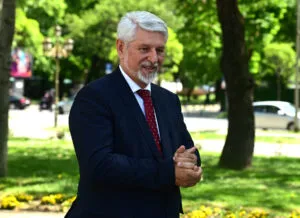
A New Criminal Complaint Against Jakimovski: A Building Permit Based on a Plan Struck Down Back in 2018
16.09.2026


16.09.2026
16.09.2026

16.09.2026
16.09.2026
16.09.2026
16.09.2026
16.09.2026
15.09.2026

14.09.2026
16.09.2026
16.09.2026

15.09.2026

16.09.2026

15.09.2026

14.09.2026

16.09.2026

16.09.2026

16.09.2026

16.09.2026

15.09.2026
15.09.2026

09.03.2026

27.02.2026

19.02.2026
16.09.2026

15.09.2026
14.09.2026

23.04.2026

23.04.2026

12.04.2026

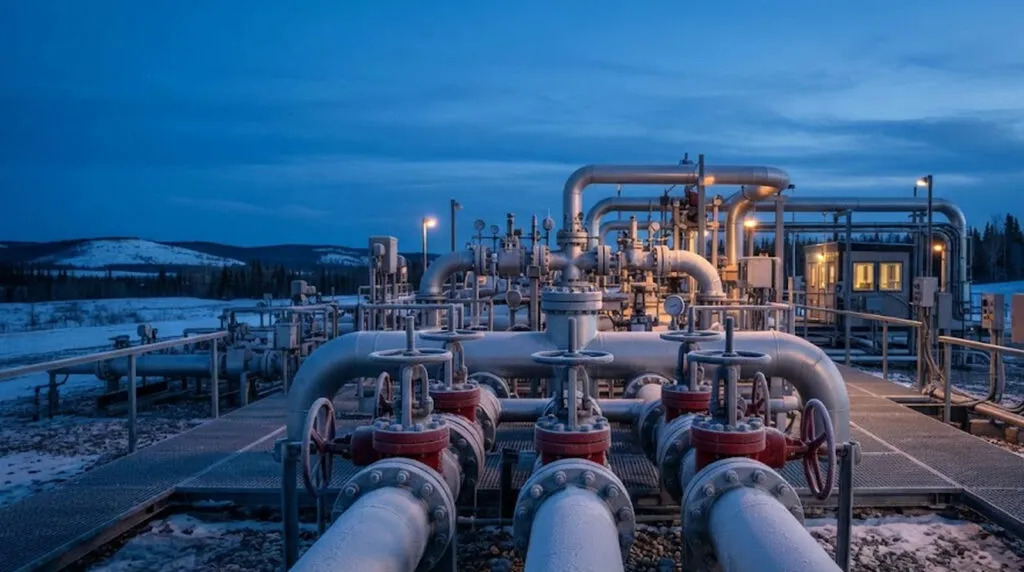
Germany must start buying cheap oil and gas from Russia again and join peace talks with Moscow as soon as possible - that is the message from Alice Weidel, co-leader of the Alternative for Germany, just days after her party won a commanding victory in the Saxony-Anhalt election.
The numbers from that election are what make the statement hard to ignore. The AfD took 43.8 percent of the vote. Chancellor Friedrich Merz's Christian Democratic Union fell to 17.2 percent. The party won 39 of 83 seats in the regional parliament, finishing a few mandates short of an outright majority.
"Where they are cheapest"
"We have to buy fossil fuels where our Asian colleagues are doing it so successfully - where natural gas and oil are cheapest. And that is Russia," Weidel said.
The position is not new. Weidel has openly called before for resuming imports of cheap Russian gas, arguing that access to affordable Russian energy was for decades one of the foundations of the "made in Germany" industrial model. Last week in the Bundestag she again accused the government of endangering energy security by abandoning Russian gas, and warned of possible supply problems over the winter.
Merz sharply rejected her performance. He said Berlin will continue to support Ukraine and accused the AfD of pursuing a policy towards Moscow that is not in Germany's interest.
An argument that works even when the source is unpalatable
This is the moment where it is easy to go wrong. The most convenient way to dismiss an uncomfortable argument is to point at who is making it - and Weidel is, for Germany, exactly as contentious as she sounds. But it does not follow from that that the electricity bill in Leipzig comes out any different.
That is why the party is growing. Not because Germans have suddenly warmed to Moscow, but because four years after the decision to break with Russian gas, someone on the ballot paper is offering a version in which the bill is smaller again. Whether that version is realistic is the second question. The first is who put it on the table at all, and why everyone else left that ground vacant.
The nuclear plants and Mao
Weidel attacked the decision to shut down Germany's nuclear plants most fiercely of all. She recalled that the country once had 19 nuclear plants connected to the grid and judged that closing them was a deliberate destruction of Germany's technological advantage.
"Germany once had the most modern nuclear plants. We were world leaders, and those plants produced electricity with no carbon dioxide emissions. They deliberately switched them off, destroyed them. I call that deliberate technological vandalism. Mao would be proud of this federal government," Weidel said.
The comparison refers to the Chinese communist leader Mao Zedong. The rhetoric is aimed at effect, but the point underneath it is the one even the AfD's opponents struggle with: the nuclear decision was taken in one energy reality and remained in force in an entirely different one.
What the party is demanding now
The AfD is now trying to convert its electoral triumph in Saxony-Anhalt into pressure for a policy shift at federal level. The demands are clear: halting or drastically reducing German aid to Ukraine, normalising relations with Russia, returning to Russian energy and leaning on nuclear power again.
For four years Europe built its energy policy on the assumption that a return to Russian gas was politically impossible. In Saxony-Anhalt that assumption got 43.8 percent.
The latest 10 news from this category
Sanctions imposed over one war are being offered as currency in an entirely different dispute. Most member states are against...
El Nino in the Pacific shifts the currents that decide where snow falls. An area that usually gets a metre...
The appeals court ruled the entire trial must start over. The son of Norway's queen is waiting for it on...
Trump scaled back the military exercises to ease the tension, and Wonsan answered in the form of projectiles. What does...
The sanctions list got a seven-day extension instead of one measured in months, a move diplomats themselves call unprecedented. Two...
Switzerland offered a table for talks on Ukraine, Moscow replied that the table stopped being neutral once Bern adopted EU...
The will says one thing, a committee of twenty-one men decided another. The queen mother says the army pulled the...
A country that was Europe's byword for stability for decades now has a parliament split into two blocs by a...
Sixteen years in power, defeat at a regular election, five months of quiet - and now the election result is...

When an institution with a legal department and a palace apparatus has to publish a list of its verified accounts,...
This site uses cookies - is that okay? Learn more
Be the first to know when Metla launches something new
Leave your email and we will write when there is a new guide or something new on Metla.