
They Fired Guns at a Party in Dobridol - and Police Only Moved Once the Video Went Viral
02.08.2026



02.08.2026

02.08.2026
02.08.2026

02.08.2026

02.08.2026

01.08.2026

02.08.2026

01.08.2026

31.07.2026

02.08.2026

02.08.2026

02.08.2026

02.08.2026

02.08.2026

01.08.2026

09.03.2026

27.02.2026

19.02.2026

02.08.2026

01.08.2026

31.07.2026

23.04.2026

23.04.2026

12.04.2026
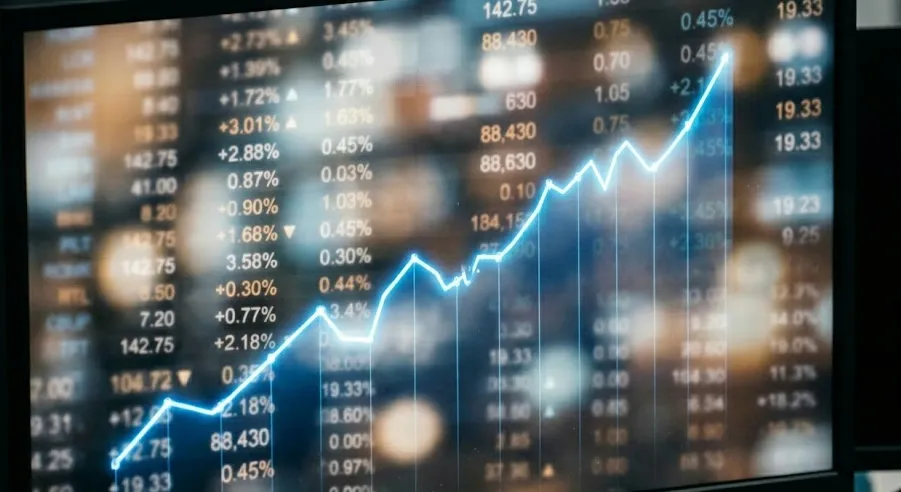
A week ago it raised 65 billion dollars, and now it's already filing documents to go public. Anthropic, the company behind the artificial intelligence Claude, filed a confidential request with the US regulator for an initial public offering (IPO) - with an estimated value approaching one trillion dollars. For comparison, that's a number larger than the entire economy of half of Europe.
The figures are the kind that make your head spin. It closed its last funding round at a value of 965 billion dollars, led by names like Sequoia, Altimeter and Coatue. Annual revenue currently runs at the level of 47 billion dollars - and at the end of 2025 it was nine. A fivefold rise in under a year sounds wonderful on paper. The question nobody on Wall Street wants to ask out loud is: how much of that is real revenue, and how much is expectation packaged as revenue?
Anthropic was founded in 2021 by former OpenAI employees, with a story of "safe" artificial intelligence against the race for profit. Today it's that very company rushing to the stock market - almost simultaneously with its main rival. OpenAI raised 122 billion back in March at a value of 852 billion and is also preparing to go public, while SpaceX is chasing a valuation of two trillion dollars.
Everyone's running for the same door at the same time, and that's no accident. When so much capital pours into one branch in such a short period, the question isn't whether someone will profit - it's who'll be left holding the bag when the music stops. Tech bubbles don't burst when everyone is skeptical, but when everyone is sure.
To the ordinary user, the IPO of an AI company seems remote. But when the value of a single tool exceeds whole national economies, we're no longer talking about technology - we're talking about power. And power concentrated in a few California companies rarely ends well for those who are only users, never owners.
The latest 10 news from this category

Opus 5 set a record in the test and broke 11 agreements. Not one of the tricks is new -...

The billions were announced with a stage and slogans. The retreat is happening quietly, in sentences containing the word alignment.

In his last quarterly report Tim Cook announced the stronger Siri will be bought through iCloud+. The firm that paid...

The platforms that spent years convincing us automated content was the future are now patiently building filters against it. The...
Out of 141,006 test runs, three ended up inside the live systems of real firms. The oldest model worked out...
The strongest June quarter in its history, and the stock fell 6 percent. Artificial intelligence turned out to have a...

The FCC is closing the door to humanoid robots and power inverters, but only new ones. The millions of Chinese...

The player that raised the MP3 generation is betting nostalgia can be billed monthly. The new Winamp arrives in 2027,...
The man selling the world's best-known artificial intelligence says we will not work less. He also claims we will secretly...

Autonomous vehicles have blocked ambulances, driven into crime scenes and failed to recognise emergency lights. The bill demands the one...
This site uses cookies - is that okay? Learn more
Be the first to know when Metla launches something new
Leave your email and we will write when there is a new guide or something new on Metla.