

They Rode In on Scooters, Torched the Shops and Left: The Fire in Shuto Orizari Burned for Three Hours, Setting It Took Fifty Seconds
13.09.2026


13.09.2026

13.09.2026
13.09.2026

13.09.2026

13.09.2026

13.09.2026

13.09.2026

12.09.2026

11.09.2026

13.09.2026

13.09.2026

12.09.2026

13.09.2026

13.09.2026

13.09.2026

13.09.2026

12.09.2026

11.09.2026

13.09.2026

13.09.2026

13.09.2026

13.09.2026

13.09.2026

12.09.2026

09.03.2026

27.02.2026

19.02.2026

13.09.2026

12.09.2026

11.09.2026

23.04.2026

23.04.2026

12.04.2026

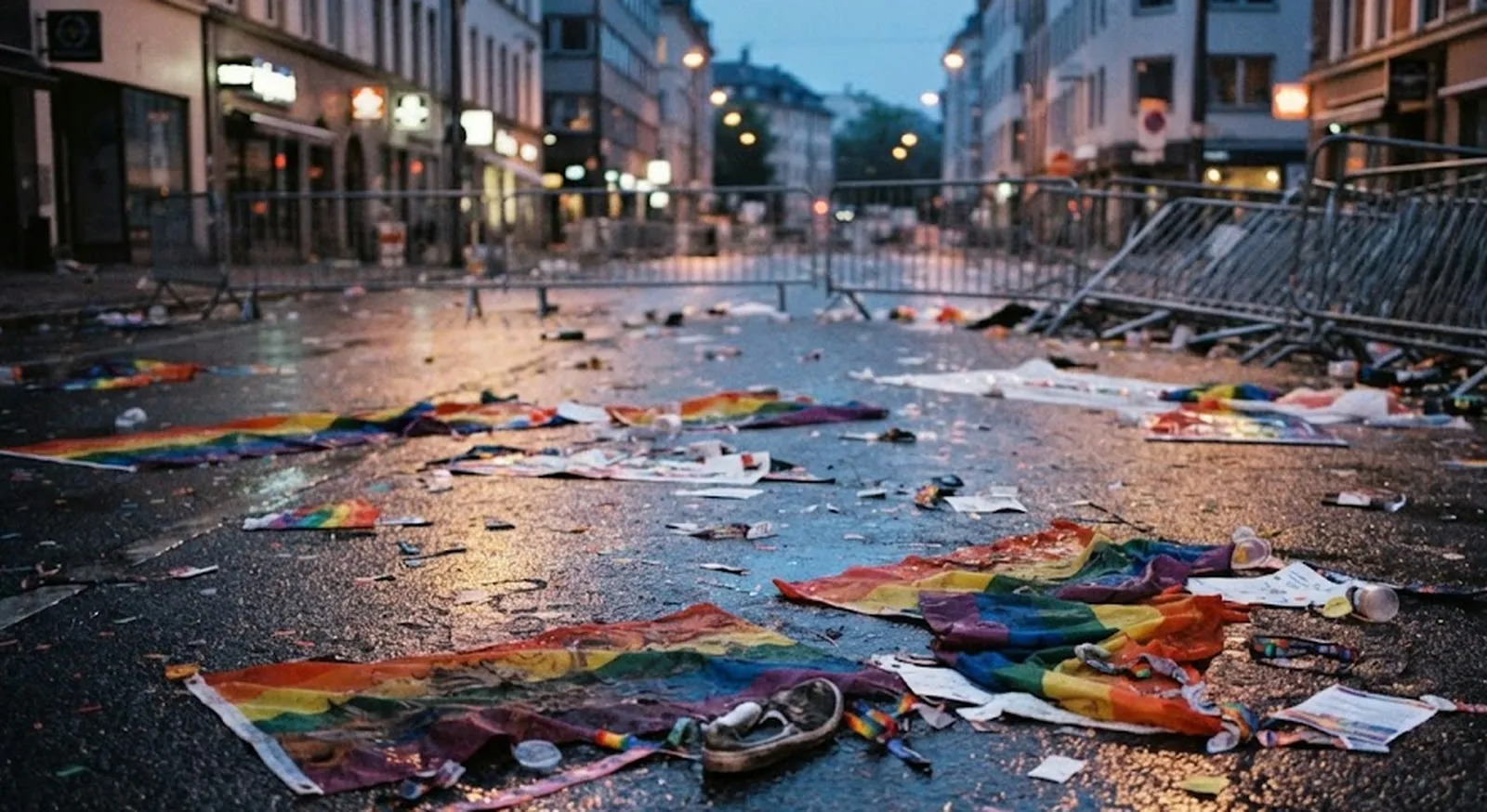
One man is dead, 29 are injured, several of them seriously. A van drove into the crowd at the Pride parade in Berlin's Tiergarten on Saturday evening, and the driver fled with a machete in his hand. As this text is published he is still at large, with Berlin under an intensive manhunt.
German Interior Minister Alexander Dobrindt named what anyone who saw the footage already knew: a terrorist attack with an Islamist motive. „All the evidence indicates that the suspect acted from a position of Islamic extremism”, Dobrindt said. „We are dealing with a man who had already been in focus over numerous criminal offences, radicalisation and links to the Islamist scene.”
And this is where the story stops being about one attacker and becomes a story about a state.
The state knew. For years.
The suspect is Abdul Balut, a 21-year-old German citizen of Lebanese origin. He was not unknown - he had already been sentenced to one year and ten months in prison for preparing terrorist attacks. The sentence was later suspended. According to German media, he radicalised online from the age of sixteen and openly sympathised with Islamic State. He was under state surveillance. And - this is the part that needs reading twice - on Monday he was due to continue a deradicalisation programme.
So: convicted of preparing terrorist attacks, released, monitored, enrolled in a deradicalisation programme. And on Saturday evening, the day before that programme, he drove a van into a crowd of people. Who signed off on the suspended sentence? Who assessed the surveillance as sufficient? Will anyone be held to account, or will a statement about „systemic failures” be enough?
Another man, an Iranian citizen, was found in the vehicle and detained.
The target was not random
Christopher Street Day is not an ordinary event in the German calendar. It is the country's largest Pride event, a symbol of everything the German state has spent the last three decades presenting as its own value. An attack on that crowd is an attack on that symbol - and the attacker knew it.
Berlin's mayor called it „a blow to our way of life”. Chancellor Merz addressed participants in the upcoming parades with a message not to let themselves be intimidated. Dobrindt, meanwhile, did not try to reassure anyone: „We cannot rule out the possibility of further terrorist attacks.” That is a rarity in the diplomatic vocabulary of European ministers - usually the lie is that everything is under control.
What is left of control
Germany is a country with some of the most developed security services in Europe, with budgets and legal mechanisms the Balkans only read about. And still: a man already inside the system, with a file, with surveillance and with a booked deradicalisation appointment, passed through every filter and drove into a crowd.
This is not a story about incompetence - it is a story about a limit. There is a point where surveillance stops being protection and becomes paperwork. Germany crossed that point on Saturday evening, and will now ask its citizens to trust the same system that was not even stopped by that suspended sentence.
The Balkans have their own scheduled appointments nobody follows up, their own suspended sentences nobody checks and their own files quietly gathering dust. The only difference is that here it usually does not get an interior minister in front of the cameras. Would the news even reach the minister in our case?
The manhunt continues. The message has been sent. And one deradicalisation programme in Berlin has been left without its participant, because the day before he decided otherwise.
The latest 10 news from this category

Nobody said they do not trust Washington. Everyone is behaving as though they do not - gold, weapons, the cloud...

The warning reached the president three years before 9/11. The problem was not a lack of information, but that nobody...

In 1976 tradition demanded the future king choose a bride with no past. Thirty years later that same king married...

Five institutions declined to comment on damaged infrastructure the global oil market depends on. When that many addresses have nothing...

One unidentified object on the tracks, 180 passengers on board, 140 firefighters on site. The difference between railways is not...
We are preparing for war so that it does not come, Lukashenko says. Put the neighbours' numbers side by side...

Three years ago the Polish army waited twenty days for satellite images, today it gets them in minutes. And one...

At 22 she had to become Norway's first lady because her mother had died. At 29 she married a divorced...

The tool lets you draw an area on a map and returns a list of everyone who posted to Instagram...

The Athens declaration of friendship lasted less than three years. Now the Aegean is being divided through ecological zones, while...
This site uses cookies - is that okay? Learn more
Be the first to know when Metla launches something new
Leave your email and we will write when there is a new guide or something new on Metla.
