


Studeničani: 35-year-old dies after being electrocuted while washing his car with a pressure washer
18.09.2026


18.09.2026

18.09.2026

18.09.2026

18.09.2026

18.09.2026
18.09.2026

18.09.2026

17.09.2026

16.09.2026

18.09.2026

18.09.2026

17.09.2026

18.09.2026

18.09.2026

18.09.2026

18.09.2026

17.09.2026

16.09.2026

18.09.2026

18.09.2026

18.09.2026

18.09.2026

17.09.2026

17.09.2026

09.03.2026

27.02.2026

19.02.2026

18.09.2026

17.09.2026

16.09.2026

23.04.2026

23.04.2026

12.04.2026

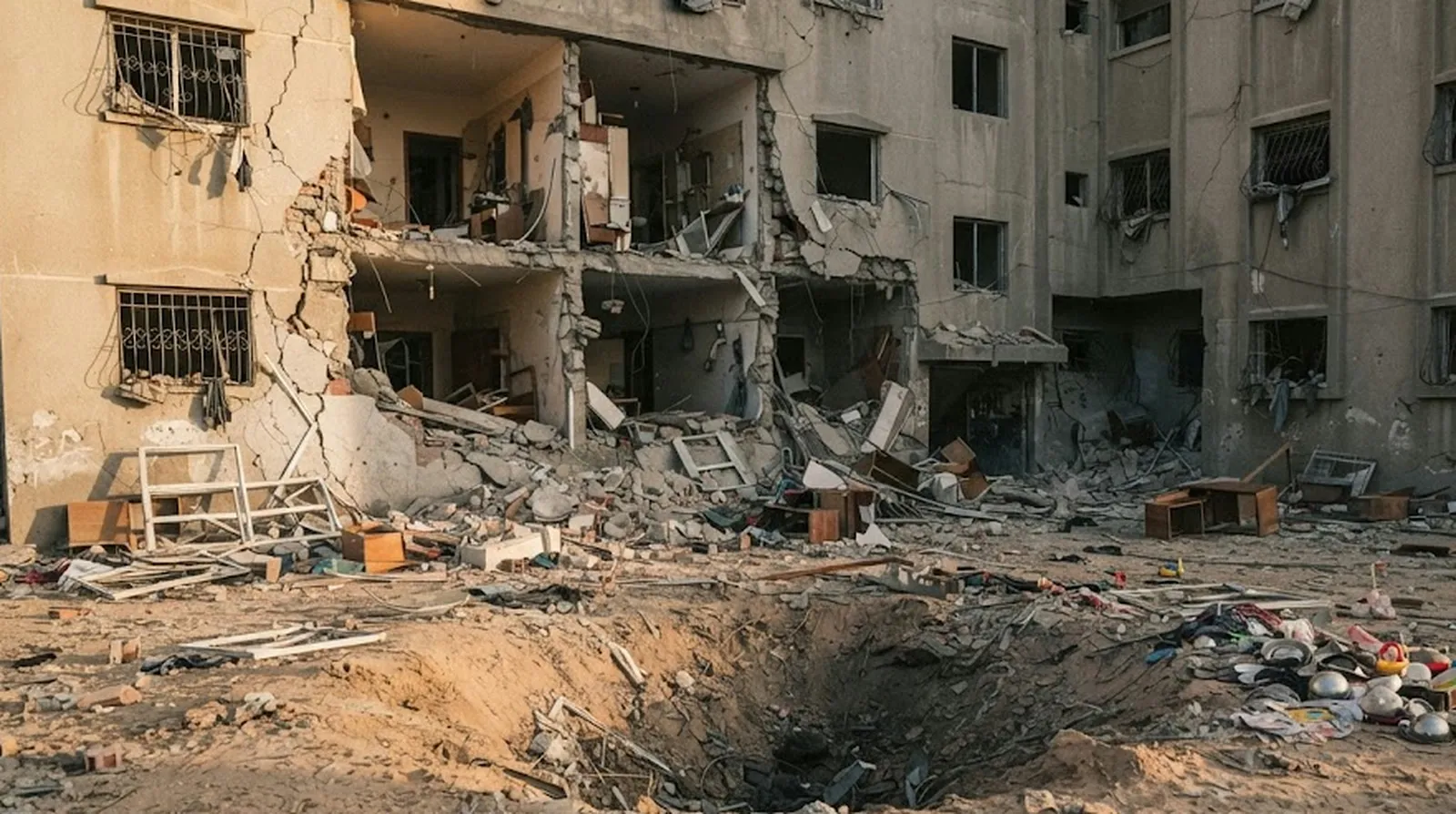
The crater is at least nine metres across. The house is gone. A taxi driver, his wife and their two-year-old child lived in it - all three are dead. Two more children were pulled alive from the rubble and are in hospital. This is not a scene from a front line, but from a densely populated neighbourhood on the Iranian island of Qeshm, in the Strait of Hormuz.
An analysis of video footage, photographs and satellite imagery, carried out by weapons experts together with an American newspaper, found this was a Mark-84 bomb - around 900 kilograms, one of the largest conventional weapons in the US arsenal. This is not a precision round sent into a single room. This is a bomb that erases everything within its radius.
What is exactly missing from this story
The biggest hole is not the crater. The analysis found no evidence of any military facility near the house that was hit. Iranian authorities reported no military dead - a figure they routinely publish when they have one. Twenty households were left without a roof. Debris and damaged vehicles were thrown more than sixty metres from the point of impact.
Trevor Ball, a former US Army technical expert and analyst, said the size of the crater and the damage match a two-thousand-pound bomb fitted with a JDAM guidance kit - a system that turns an ordinary bomb into a GPS-guided weapon. French weapons consultant Frédéric Gras, after reviewing the footage, assessed that the bomb most likely detonated below the surface, with the sandy soil absorbing part of the force and redirecting it downwards.
Note what that means. Had the sand not swallowed that energy, the destruction would not have stopped at one house.
The answer that is not an answer
US Central Command confirmed it is reviewing reports of civilian casualties, but declined to answer questions about the target, the munition used and the measures taken to protect civilians. "We are aware of the reports and are reviewing them," the spokesperson said, adding that the US military never targets civilians.
Never targets civilians. Three dead in their own home, no military facility nearby, not one military fatality - and the sentence stands unchanged. Who checks it?
International humanitarian law requires attackers to weigh expected civilian harm against the concrete military advantage in advance. Law professor Tom Dannenbaum said the thing institutions avoid saying: authorising a strike with a 900-kilogram bomb in a densely populated area is "very difficult to reconcile" with that obligation.
The clock stopped at 3:40
Iranian media broadcast footage of a wall clock from one of the destroyed houses. It stopped at 3:40 in the morning - minutes after US Central Command announced the operation had begun. That is the most precise document in the whole story, and no spokesperson wrote it.
The strike was part of a series of operations Washington confirmed as retaliation for earlier Iranian attacks on a US base in Jordan. Retaliation, then. On whose ledger is it measured when a taxi driver and his two-year-old child are entered into it?
The Balkans know this sentence by heart - everyone who ever dropped bombs on cities had worked-out and approved reasons, and everyone insisted civilians were not the target. The question that remains is not whether there is a justification. The question is whether anyone will answer for it at all.
The latest 10 news from this category

The bill passed with 262 votes, and the key to it has been handed to a man who has already...
Ukraine adapts in weeks, the Alliance in decades. Europe is paying for Patriot systems from 1991 and is only now...
Missiles and drones on the Ukrainian capital, damaged water mains and residential buildings. The same night, Ukrainian drones set the...

Trump hopes the war is ending and is preparing to gather the Gulf leaders. Oil prices have jumped, and the...
Ukraine says when, where and which unit did it. Russia's defence ministry has not a single sentence about the circumstances....

Norway's prime minister talks about a plane a drone "almost hit". Moldova, the only party holding the figures, reported that...
Ukraine was shooting down nine out of ten of the old drones. Then Russia changed the drone - and in...
It was shot down a few minutes after midnight, and all of Vilnius got a warning on their phones. Two...
The entire story comes from one side, and the headlines turn it into a turning point. The difference between the...
Between 2,300 and 3,000 North Korean soldiers have died in Kursk so far. Kim Jong Un has found an export...
This site uses cookies - is that okay? Learn more
Be the first to know when Metla launches something new
Leave your email and we will write when there is a new guide or something new on Metla.
